HomeShopDiving Equipment › Weight Systems

Weight Systems

Trim and buoyancy start with your weight system. Integrated BCD weight pockets, traditional weight belts, ankle weights and trim weights each position ballast differently — and where you carry weight directly affects horizontal trim and air consumption across your whole dive.


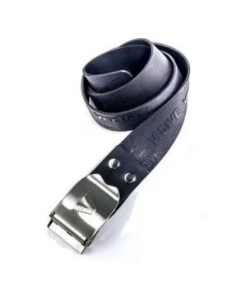
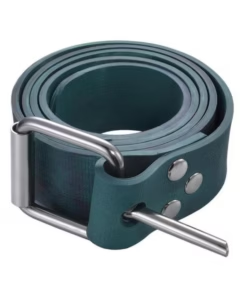
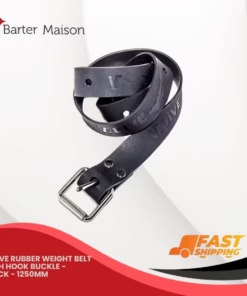
V.Dive Rubber Weight Belt with Hook Buckle - Black - 1250mm
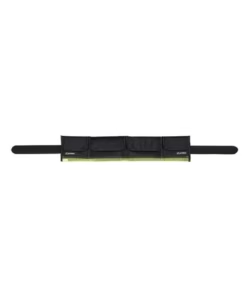
Poseidon Weights and Weight Belt
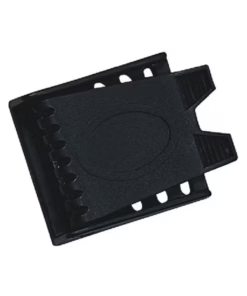
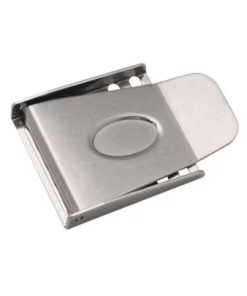
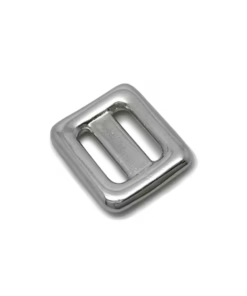
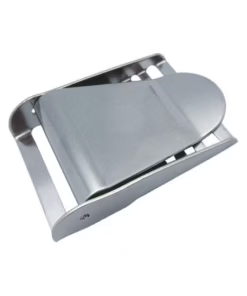
Problue AC-09-6 Weight Belt Buckle - Metal with 3 slots

✓  Free Shipping Over RM150|✓  Manufacturing Defect Exchange Guaranteed|✓  Expert Dive Advice Before & After Purchase|✓  100% Authentic Equipment Every Item

Filter By

Price Range


RM 5 RM 630

Filter By

Sub Categories


Filter By

Brands


Showing 1–20 of 34 products
Sort:

RM199.00

Diving Equipment

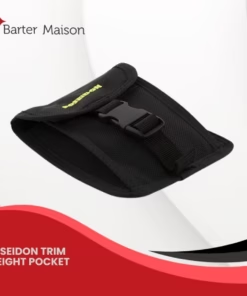
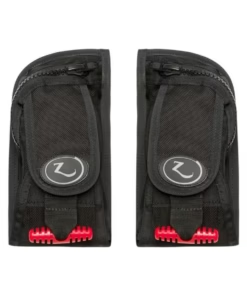
Poseidon Trim Weight Pocket

RM98.00
RM29.00
RM127.00
RM90.00

Diving Equipment

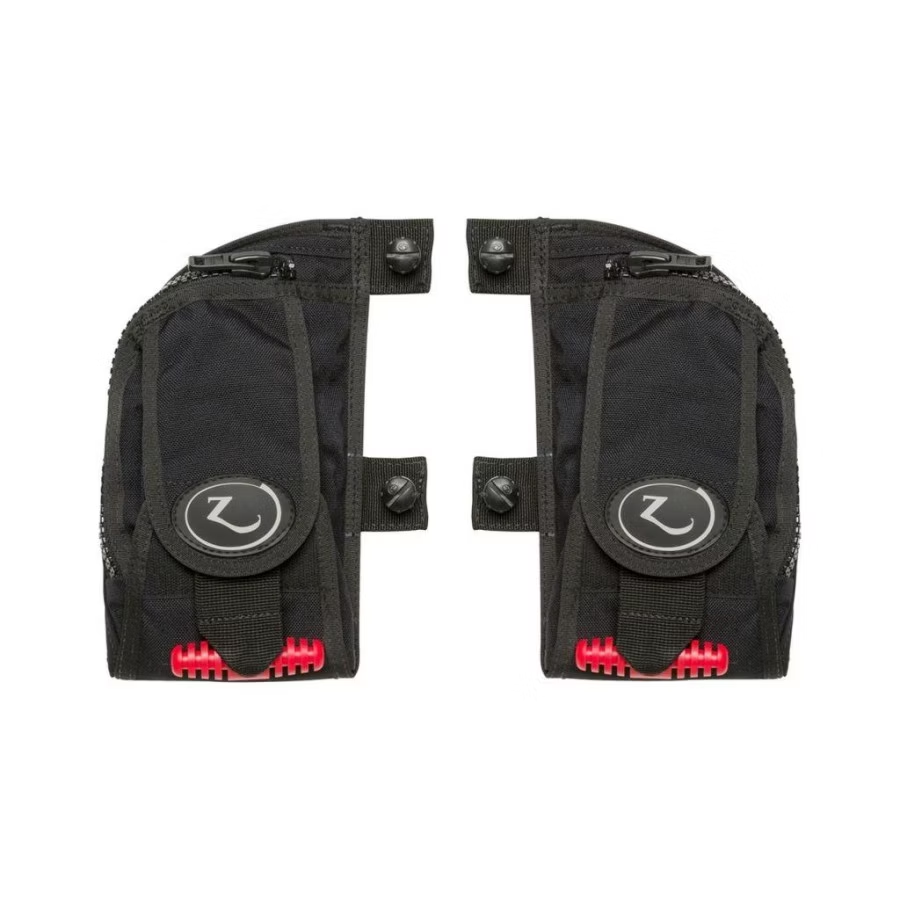
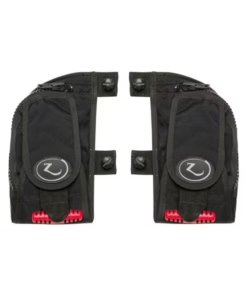
Zeagle Weight SYSTEM

RM145.50
RM99.00
RM529.00
RM18.00
RM490.00
RM37.00
RM14.00
RM490.00
RM25.00
RM9.00
RM360.00
RM20.00

Buyer's Guide

Get Your Buoyancy Right From the Start

Correct weighting is the foundation of neutral buoyancy. Integrated weight pockets eliminate the weight belt altogether; ankle weights correct foot-heavy trim; soft weights and shot weights accommodate every BCD configuration.

Get Weighting Advice

Calculation

How to Calculate Your Starting Dive Weight in Malaysian Waters

Start with 10% of your body weight in salt water with a 3mm wetsuit. Adjust by adding 2kg for a 5mm wetsuit. Perform a buoyancy check with an empty cylinder at 1m before committing to a weight configuration for the trip.

Trim

Ankle Weights and Trim Weight: Correcting a Feet-Up Position

A feet-up position in the water indicates too much buoyancy at the legs — caused by oversized fins, thick booties, or air trapped in the wetsuit legs. Small ankle weights (0.5–1kg per side) correct trim more efficiently than adding lead to the BCD.

Soft Weights

Soft Weights vs Traditional Lead Blocks: Which to Choose?

Soft weight bags conform to the hip and feel more comfortable over a long dive day. Lead blocks pack more weight per volume and suit divers who need high ballast on technical profiles. Both work with standard and integrated weight systems.

Ditching

Weight Ditching in Emergency: Why Integrated Weights Are Safer

BCD integrated weight pockets release with a single pull on the weight pouch handle — dumping ballast instantly for an emergency ascent. A weight belt requires a separate buckle release step. In a low-gas emergency, fewer steps is safer.

You Might Also Like

Recommended Products

Hand-picked products based on all categories

Wetsuits & Exposure Suits

Subgear Element XXL 3MM

RM240.00
RM72.00

Diving Mask

Mares Samurai Mask

RM56.00
RM262.00

FAQ

Frequently Asked Questions

Everything you need to know before making a purchase

How much weight do I actually need for neutral buoyancy in Malaysian warm water?
Weight requirements vary with cylinder type, BCD buoyancy, wetsuit thickness, and individual body composition u2014 the only accurate method is a buoyancy check at the surface at the specific dive site before descending. A starting reference for a Malaysian recreational diver in a 3mm wetsuit with an aluminium 12-litre cylinder is 6 to 8 kg for a diver of medium build. Divers who have exclusively used rental equipment at Malaysian operators may be carrying more weight than necessary, as rental desk staff often over-weight guests to prevent buoyancy issues rather than fine-tuning for each individual.
What is the practical difference between a weight belt and integrated BCD weight pockets for Malaysian diving?
A weight belt sits low on the hips and drops clear of the body with a single right-hand buckle release in an emergency. Integrated BCD weight pockets are more comfortable to wear during surface intervals and liveaboard gearing-up, where a separate weight belt requires managing as an additional item during the donning sequence. Most modern Malaysian recreational divers use integrated pockets for the convenience advantage, accepting that the emergency weight drop requires deliberately releasing the pocket handles rather than the single intuitive buckle of a weight belt.
How do I fine-tune my weighting at a new Malaysian dive site?
Perform a full buoyancy check at every new Malaysian site by hovering motionless at the surface with a fully exhaled lung, an empty BCD, and approximately half a tank of gas u2014 the correct weight allows the waterline to sit at eye level in this position. Adding or removing 0.5 kg increments and repeating the check narrows in on the precise weight for that site. Sites with different salinity u2014 such as the less saline northern Straits of Malacca compared to open ocean Sabah dive sites u2014 require a fresh check because salinity affects buoyancy measurably at recreational diving weights.
Are soft weight pouches or hard lead blocks more practical for Malaysian boat diving?
Hard lead blocks in standard 1 and 2 kg rectangular sizes are the universal format at Malaysian dive operators and are compatible with the integrated weight pockets and weight belts used across all major BCD brands. Soft weight pouches filled with lead shot are more comfortable against the body than hard blocks but are not routinely stocked as spare replacements at Malaysian operators u2014 if a soft pouch splits mid-trip, the replacement available will be hard blocks. For divers who travel with personal weights, hard blocks are the more practical choice given their universal compatibility with Malaysian operator equipment.
How does cylinder type affect the total weight needed for Malaysian recreational diving?
Aluminium cylinders are close to neutral buoyancy when full and become slightly positively buoyant as gas is consumed, requiring the diver to carry additional ballast weight to account for this end-of-dive positive buoyancy. Steel cylinders remain negatively buoyant throughout the dive, reducing total ballast needed but requiring the diver to offset the cylinder's negative buoyancy throughout the dive with BCD inflation. Switching from an aluminium to a steel cylinder at a Malaysian liveaboard that offers both can reduce required weight by 2 to 4 kg u2014 always re-check buoyancy before the first dive with a new cylinder type.
What safety considerations apply to weight belt buckles on Malaysian dive boats?
The weight belt buckle must release reliably with a single right-hand pull even when the diver is negatively buoyant and in a stressed emergency u2014 the industry standard is a right-hand release buckle specifically so this motion is instinctive and consistent regardless of conditions. Plastic buckles corrode less in Malaysian saltwater than unprotected metal alternatives but degrade from UV exposure, becoming brittle and prone to fracture under load. Inspect the buckle before every dive trip and replace any buckle that feels stiff, shows surface cracking, or does not click positively into a locked position when fastened.
How much weight do I actually need for neutral buoyancy in Malaysian warm water?
Weight requirements vary with cylinder type, BCD buoyancy, wetsuit thickness, and individual body composition u2014 the only accurate method is a buoyancy check at the surface at the specific dive site before descending. A starting reference for a Malaysian recreational diver in a 3mm wetsuit with an aluminium 12-litre cylinder is 6 to 8 kg for a diver of medium build. Divers who have exclusively used rental equipment at Malaysian operators may be carrying more weight than necessary, as rental desk staff often over-weight guests to prevent buoyancy issues rather than fine-tuning for each individual.
What is the practical difference between a weight belt and integrated BCD weight pockets for Malaysian diving?
A weight belt sits low on the hips and drops clear of the body with a single right-hand buckle release in an emergency. Integrated BCD weight pockets are more comfortable to wear during surface intervals and liveaboard gearing-up, where a separate weight belt requires managing as an additional item during the donning sequence. Most modern Malaysian recreational divers use integrated pockets for the convenience advantage, accepting that the emergency weight drop requires deliberately releasing the pocket handles rather than the single intuitive buckle of a weight belt.
How do I fine-tune my weighting at a new Malaysian dive site?
Perform a full buoyancy check at every new Malaysian site by hovering motionless at the surface with a fully exhaled lung, an empty BCD, and approximately half a tank of gas u2014 the correct weight allows the waterline to sit at eye level in this position. Adding or removing 0.5 kg increments and repeating the check narrows in on the precise weight for that site. Sites with different salinity u2014 such as the less saline northern Straits of Malacca compared to open ocean Sabah dive sites u2014 require a fresh check because salinity affects buoyancy measurably at recreational diving weights.
Are soft weight pouches or hard lead blocks more practical for Malaysian boat diving?
Hard lead blocks in standard 1 and 2 kg rectangular sizes are the universal format at Malaysian dive operators and are compatible with the integrated weight pockets and weight belts used across all major BCD brands. Soft weight pouches filled with lead shot are more comfortable against the body than hard blocks but are not routinely stocked as spare replacements at Malaysian operators u2014 if a soft pouch splits mid-trip, the replacement available will be hard blocks. For divers who travel with personal weights, hard blocks are the more practical choice given their universal compatibility with Malaysian operator equipment.
How does cylinder type affect the total weight needed for Malaysian recreational diving?
Aluminium cylinders are close to neutral buoyancy when full and become slightly positively buoyant as gas is consumed, requiring the diver to carry additional ballast weight to account for this end-of-dive positive buoyancy. Steel cylinders remain negatively buoyant throughout the dive, reducing total ballast needed but requiring the diver to offset the cylinder's negative buoyancy throughout the dive with BCD inflation. Switching from an aluminium to a steel cylinder at a Malaysian liveaboard that offers both can reduce required weight by 2 to 4 kg u2014 always re-check buoyancy before the first dive with a new cylinder type.
What safety considerations apply to weight belt buckles on Malaysian dive boats?
The weight belt buckle must release reliably with a single right-hand pull even when the diver is negatively buoyant and in a stressed emergency u2014 the industry standard is a right-hand release buckle specifically so this motion is instinctive and consistent regardless of conditions. Plastic buckles corrode less in Malaysian saltwater than unprotected metal alternatives but degrade from UV exposure, becoming brittle and prone to fracture under load. Inspect the buckle before every dive trip and replace any buckle that feels stiff, shows surface cracking, or does not click positively into a locked position when fastened.