HomeShopDiving Equipment › Surface Marker Buoys

Surface Marker Buoys

An SMB signals your position to the dive boat during a safety stop or ascent — inflated from a spool, it rises from 5 metres and makes you visible on the surface before the crew starts counting heads. A mandatory carry for drift diving and open-water ascents.
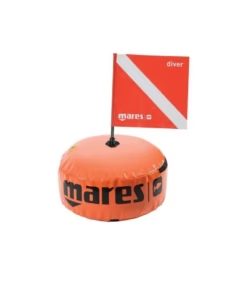
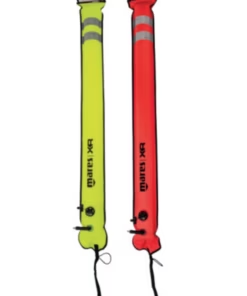
Mares Diver's Alert Marker Buoy
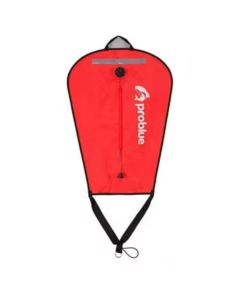
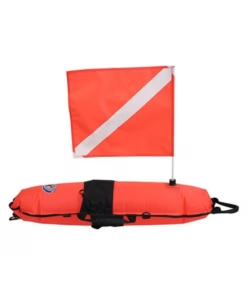
Problue AC-37-9 Alert Marker 4 ft
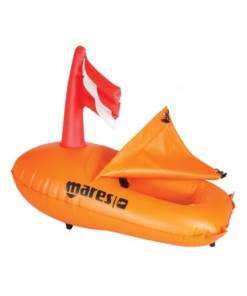
Mares Standard Marker

✓  Free Shipping Over RM150|✓  Manufacturing Defect Exchange Guaranteed|✓  Expert Dive Advice Before & After Purchase|✓  100% Authentic Equipment Every Item

Filter By

Price Range


RM 12 RM 894

Filter By

Sub Categories


Filter By

Brands


Showing 1–20 of 55 products
Sort:

Surface Marker Buoys

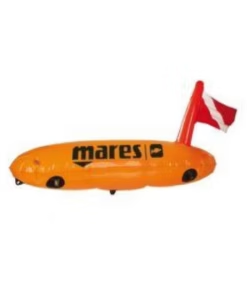
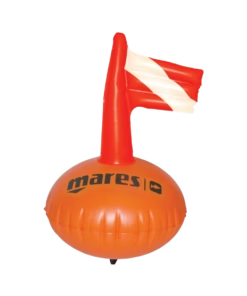
Mares Torpedo SF Buoy

RM20.00
RM160.00

Surface Marker Buoys

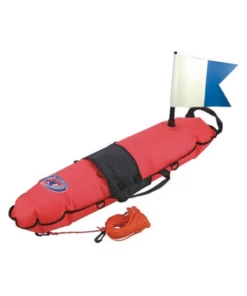
Problue AC-107-3 Torpedo Buoy

RM139.00

Surface Marker Buoys

Mares Lift Bag – 30kg / 80lbs

RM164.00
RM249.00

Surface Marker Buoys

Mares Dive Flag for Tech Buoys

RM51.00

Surface Marker Buoys

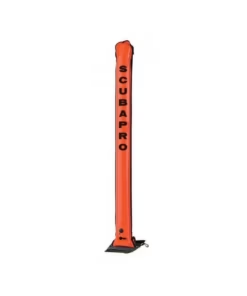
Mares Diver’s Alert Marker Buoy

RM108.00
RM149.00

Surface Marker Buoys

Mares SMB Training Orange – 1m

RM92.00
RM199.00

Surface Marker Buoys

Mares Diving Center Flag – big

RM12.00

Surface Marker Buoys

Mares Compact Buoy

RM64.00

Surface Marker Buoys

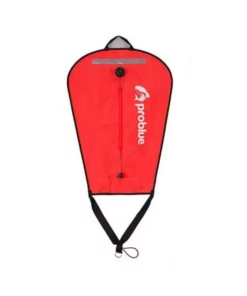
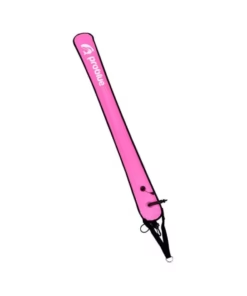
Problue AC-37-9 Alert Marker 4 ft

RM96.00

Surface Marker Buoys

Mares Training Buoy

RM894.00

Surface Marker Buoys

Problue AC-107-4 Torpedo Buoy

Price range: RM269.00 through RM329.00
RM167.00

Surface Marker Buoys

Mares Standard Inflatable SMB

RM30.00
RM249.00

Surface Marker Buoys

Mares Tech Sphere Buoy

RM60.00
RM135.00

Expert Advice

Be Visible on Every Ascent

An SMB at the end of every open water dive signals your position to boat crews and surface traffic. In Malaysian drift dive conditions — Layang Layang, Sipadan, Mabul — a bright orange SMB is your most important safety piece.

Ask About Dive Safety

DSMB vs SMB

Surface SMB vs Delayed SMB: Understanding the Difference

A surface SMB is deployed before descending to mark your entry point for the boat. A Delayed SMB (DSMB) is deployed from depth at the safety stop to signal your ascent position. Recreational divers primarily need a DSMB and spool.

Inflation

Two Methods to Inflate a DSMB at Depth

Oral inflation requires a breath from your regulator into the SMB while managing the spool. BCD-exhaust inflation routes gas from the BCD overpressure valve — useful in a low-gas emergency ascent. Practise both in a pool before open water deployment.

Colour

SMB Colour Standards: What Orange, Yellow, and Dual-Colour Mean

International convention uses orange for standard diver below. Some regions use yellow to signal diver needs assistance. Dual-colour SMBs cover both signals in one buoy. Always carry an orange SMB as minimum standard in Malaysian waters.

Malaysia

SMB Use in Malaysian Drift Dive Conditions

Drift diving at Layang Layang, Sipadan, and the current-exposed pinnacles of the Coral Triangle relies entirely on SMBs for boat recovery. Without a visible SMB, drift divers in Malaysian open water are essentially invisible to their boat crew.

You Might Also Like

Recommended Products

Hand-picked products based on all categories

RM270.00
RM344.00

Diving Equipment

Tusa Solla Open Heel Fins

RM617.00
RM480.00
RM1,826.00

FAQ

Frequently Asked Questions

Everything you need to know before making a purchase

Why is a surface marker buoy mandatory equipment for drift diving at sites like Sipadan?
At drift dive sites including Sipadan, Barracuda Point, and the channel passes at Layang-Layang, divers surface at unpredictable locations determined entirely by the current u2014 often far from the boat's last known position and frequently out of visible range. An SMB deployed at the start of the ascent gives the boat crew a moving visual reference to track and allows a safe pick-up without requiring a search. Without an SMB, a diver surfacing in Malaysian open water in a running current risks not being located promptly, particularly in the swell and chop that typically accompanies current-driven sites.
What is the difference between a surface float and a delayed surface marker buoy?
A surface float is deployed at the beginning of the dive and towed on a line throughout, marking the diver's position continuously u2014 appropriate for snorkelling and shallow training dives at Malaysian resort sites. A delayed SMB is carried deflated and inflated from depth at the start of ascent, then rises to the surface ahead of the diver. DSMBs are the standard for Malaysian drift diving because they function in open water where a surface-towed float would create unmanageable drag in current and interfere with the dive itself.
What SMB size is visible enough for Malaysian dive boat crew to spot?
A 120cm to 150cm tall SMB is the practical minimum for daylight visibility at Malaysian dive sites u2014 a taller tube sits higher above the swell and is visible from greater distance. Bright orange or red is the standard safety colour for SMBs and is most visible against Malaysian surface chop and the blue-green open ocean background. Yellow SMBs are sometimes used to signal different diver status signals u2014 confirm the colour convention used by your specific Malaysian liveaboard operator, as colour coding is not universally standardised across all operators.
How do I deploy an SMB correctly during a drift dive ascent at a Malaysian site?
At 5 to 6 metres u2014 the safety stop depth u2014 hold the open end of the SMB downward, introduce a brief gas exhale from the second stage purge button into the tube, and release the SMB to ascend while controlling the spool or reel so the line pays out smoothly without running free. A freely running spool can allow the SMB to ascend faster than the line pays out, creating upward pull on the diver. Maintain tension on the line throughout the ascent so the boat crew can track the SMB's movement accurately and follow your position to the surface.
What is the difference between a closed-end and open-end SMB?
Open-bottom SMBs have a lower opening that allows gas to be introduced by holding the tube downward and exhaling into it, sealed automatically by water pressure when the tube is inverted upright. Closed-end SMBs have a dedicated inflation valve that requires a specific oral tube or LP hose attachment to inflate u2014 they hold gas more reliably in rough surface conditions and at lower fill volumes. Open-bottom SMBs are faster to deploy in an emergency but require practice to inflate cleanly from depth in current, making them slightly less reliable for divers who rarely practise the skill.
How do I store and care for a rolled SMB between Malaysian dive trips?
After every use, rinse the SMB fully in fresh water and unroll it completely to dry before re-rolling u2014 an SMB stored wet accelerates fabric deterioration and valve mildew that shortens the tube's service life significantly in Malaysian humidity. Inspect the oral inflation valve and any low-pressure port for salt deposits or debris that could prevent an airtight seal during an emergency deployment. Roll the SMB with the valve on the outside of the roll so it can be unrolled and inflated quickly without needing to identify orientation at depth during a live ascent.
Why is a surface marker buoy mandatory equipment for drift diving at sites like Sipadan?
At drift dive sites including Sipadan, Barracuda Point, and the channel passes at Layang-Layang, divers surface at unpredictable locations determined entirely by the current u2014 often far from the boat's last known position and frequently out of visible range. An SMB deployed at the start of the ascent gives the boat crew a moving visual reference to track and allows a safe pick-up without requiring a search. Without an SMB, a diver surfacing in Malaysian open water in a running current risks not being located promptly, particularly in the swell and chop that typically accompanies current-driven sites.
What is the difference between a surface float and a delayed surface marker buoy?
A surface float is deployed at the beginning of the dive and towed on a line throughout, marking the diver's position continuously u2014 appropriate for snorkelling and shallow training dives at Malaysian resort sites. A delayed SMB is carried deflated and inflated from depth at the start of ascent, then rises to the surface ahead of the diver. DSMBs are the standard for Malaysian drift diving because they function in open water where a surface-towed float would create unmanageable drag in current and interfere with the dive itself.
What SMB size is visible enough for Malaysian dive boat crew to spot?
A 120cm to 150cm tall SMB is the practical minimum for daylight visibility at Malaysian dive sites u2014 a taller tube sits higher above the swell and is visible from greater distance. Bright orange or red is the standard safety colour for SMBs and is most visible against Malaysian surface chop and the blue-green open ocean background. Yellow SMBs are sometimes used to signal different diver status signals u2014 confirm the colour convention used by your specific Malaysian liveaboard operator, as colour coding is not universally standardised across all operators.
How do I deploy an SMB correctly during a drift dive ascent at a Malaysian site?
At 5 to 6 metres u2014 the safety stop depth u2014 hold the open end of the SMB downward, introduce a brief gas exhale from the second stage purge button into the tube, and release the SMB to ascend while controlling the spool or reel so the line pays out smoothly without running free. A freely running spool can allow the SMB to ascend faster than the line pays out, creating upward pull on the diver. Maintain tension on the line throughout the ascent so the boat crew can track the SMB's movement accurately and follow your position to the surface.
What is the difference between a closed-end and open-end SMB?
Open-bottom SMBs have a lower opening that allows gas to be introduced by holding the tube downward and exhaling into it, sealed automatically by water pressure when the tube is inverted upright. Closed-end SMBs have a dedicated inflation valve that requires a specific oral tube or LP hose attachment to inflate u2014 they hold gas more reliably in rough surface conditions and at lower fill volumes. Open-bottom SMBs are faster to deploy in an emergency but require practice to inflate cleanly from depth in current, making them slightly less reliable for divers who rarely practise the skill.
How do I store and care for a rolled SMB between Malaysian dive trips?
After every use, rinse the SMB fully in fresh water and unroll it completely to dry before re-rolling u2014 an SMB stored wet accelerates fabric deterioration and valve mildew that shortens the tube's service life significantly in Malaysian humidity. Inspect the oral inflation valve and any low-pressure port for salt deposits or debris that could prevent an airtight seal during an emergency deployment. Roll the SMB with the valve on the outside of the roll so it can be unrolled and inflated quickly without needing to identify orientation at depth during a live ascent.