HomeShop › Freediving

Freediving

Breath-hold diving is one of the oldest forms of underwater exploration and one of the fastest-growing dive disciplines in Malaysia. From your first metre down on a reef flat at the Perhentians to competitive depth sessions at Semporna, the right freediving equipment makes every descent more efficient.

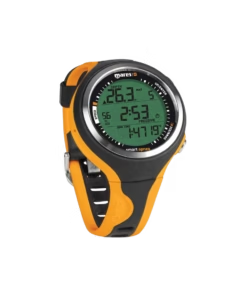
Mares Smart Apnea Dive Computer
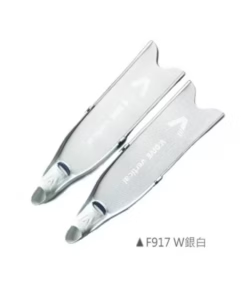
Problue F-745 Rubber Free Diving Fins
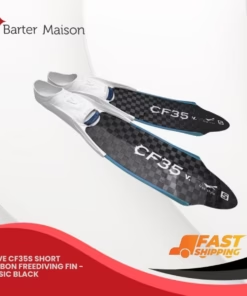
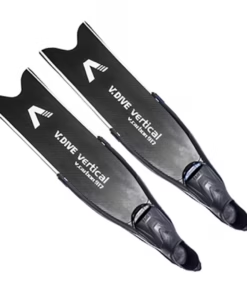
Vdive CF35 Carbon Freediving Fin - Clasic Black

✓  Free Shipping Over RM150|✓  Manufacturing Defect Exchange Guaranteed|✓  Expert Dive Advice Before & After Purchase|✓  100% Authentic Equipment Every Item

Filter By

Price Range


RM 32 RM 1,790

Filter By

Sub Categories


Filter By

Brands


Showing 1–20 of 43 products
Sort:

RM44.00
RM1,790.00
Price range: RM199.00 through RM248.00

Diving Equipment

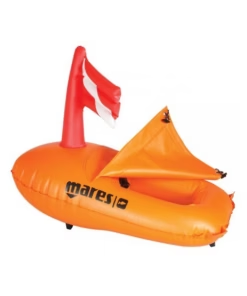
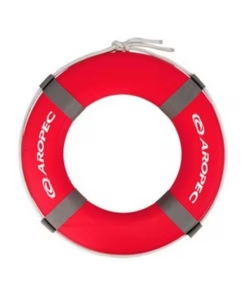
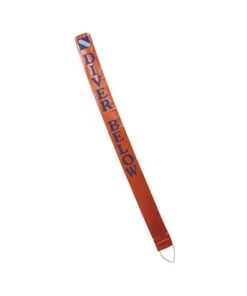
Mares Apnea Buoy

RM32.00
RM1,398.00
RM200.00
RM1,688.00
RM189.00
RM155.00

Diving Equipment

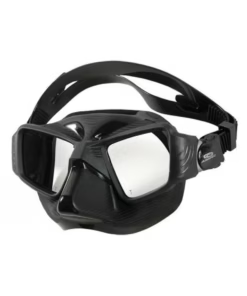
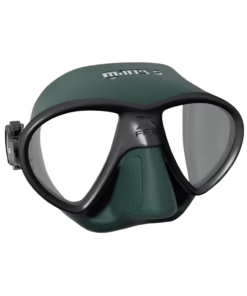
Mares X-Free SF Mask

RM72.00
RM332.00
RM540.00
RM443.00

Complete Guide

Breathe Deep, Dive Free

Freediving is the most elemental form of diving — one breath, maximum depth, minimum equipment. We stock everything for the breathhold diver training in the pool in KL, or pushing personal bests off the Perhentians.

Get Freediving Advice

Physiology

The Mammalian Dive Reflex: How Your Body Is Built for Freediving

Cold water on the face triggers the mammalian dive reflex — heart rate drops up to 50%, blood shifts from the extremities to the core, and the spleen contracts, releasing additional oxygenated red blood cells. Every human has this response from birth.

Training

Pool Training for Freediving: Static vs Dynamic Apnea

Static apnea develops breath-hold duration; dynamic apnea develops underwater distance. Both are foundational training disciplines for freedivers regardless of whether their goal is depth, spearfishing, or photography in Malaysian waters.

Safety

Freediving Safety: Why You Must Never Dive Alone

Shallow water blackout — loss of consciousness caused by hypoxia during ascent — is the leading cause of freediving fatalities. It is silent, instantaneous, and undetectable by the diver. Every session requires a trained buddy watching from the surface.

Malaysia

Freediving Destinations in Malaysia: Perhentians, Redang, and Open Ocean

The crystal-clear waters off Perhentian Kecil and Pulau Redang suit recreational freediving training. Malaysia's offshore seamounts attract pelagic species that freedivers encounter in open ocean conditions unavailable at inshore reef sites.

You Might Also Like

Recommended Products

Hand-picked products based on all categories

Diving Equipment

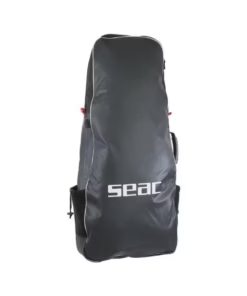
Seac F1 Fins Sling

Price range: RM409.00 through RM729.00
RM3,675.00

Diving Mask

Seac Glamour Mask

RM264.00

FAQ

Frequently Asked Questions

Everything you need to know before making a purchase

How does freediving differ from scuba diving for exploring Malaysian reefs?
Freediving uses a single breath-hold to descend and explore, producing no bubbles and minimal noise u2014 conditions that allow divers to observe undisturbed marine behaviour at Malaysian sites in a way that scuba exhaust bubbles rarely permit. The limitation is bottom time, which is measured in tens of seconds rather than minutes, making freediving most suited to shallow Malaysian reef tops, seagrass beds, and sandy macro sites rather than deeper wall dives. Many Malaysian scuba divers take up freediving as a complement, using it for surface swims, underwater photography in shallow habitats, and improving breath control for scuba.
What equipment categories do I need to start freediving at Malaysian sites?
The core equipment for recreational freediving in Malaysia covers a low-volume freediving mask, a snorkel, long-blade freediving fins, a thin wetsuit or rashguard for UV and abrasion protection, and a weight system configured for neutral buoyancy at the target depth. A freediving buoy and line are required for any open-water training session to mark position and provide a depth reference. Specialised freediving accessories including lanyards, safety reels, and a freediving computer are added as training progresses beyond introductory depth.
What Malaysian sites are suited to recreational freediving?
Tunku Abdul Rahman Marine Park near Kota Kinabalu offers calm, clear, protected water with visibility of 5 to 15 metres and abundant marine life at depths accessible without deep breath-hold experience. The reef slopes at Pulau Tioman and Pulau Perhentian offer shallow-water freediving with good coral cover within 3 to 8 metres. Lankayan Island in Sabah is favoured by more experienced freedivers for its visibility and the possibility of encountering whale sharks and large pelagics at depth without the boat traffic that affects some more commercial Malaysian dive sites.
What freediving certifications are available for training in Malaysia?
AIDA International and SSI Freediving are the two primary certification agencies with certified instructors operating in Malaysia, predominantly in Kuala Lumpur and Kota Kinabalu. A PADI Basic Freediver or SSI Basic Freediving course covers breath-hold technique, duck-diving, and equalisation for depths to 10 metres u2014 an appropriate starting point for scuba divers wanting to add freediving skills. Advanced freediving courses covering freefall, Frenzel equalisation, and deeper depth targets are available from instructors based at Sabah freediving centres for those progressing beyond recreational depth limits.
What safety principles apply to breath-hold diving at Malaysian sites?
Never freedive alone u2014 this is the most important rule and applies at all Malaysian sites regardless of the diver's experience level, as shallow water blackout can occur without any prior warning and is only survivable if a buddy is present and watching. Always perform surface recovery breathing fully between dives to allow blood oxygen to recover before the next descent. At Malaysian sites near boat traffic u2014 including popular snorkel parks around Tioman and the Perhentians u2014 towing a freediving buoy signals your presence to boat operators and reduces the risk of surface collision.
How does recreational freediving compare to snorkelling at Malaysian marine park sites?
Snorkelling keeps the diver at the surface with a continuous air supply via the snorkel tube, which limits observation to what is visible from above u2014 effective for reef overviews but unable to reach the subjects living below 2 to 3 metres. Freediving carries the diver to reef depth for direct, eye-level observation of the same marine life that scuba divers encounter, but without the noise, bubbles, and equipment complexity of scuba. At Malaysian sites like the shallow bays of Pulau Payar, recreational freedivers and snorkellers use the same site simultaneously, with freedivers able to engage with marine life that snorkellers can only observe from distance.