HomeShopFreediving › Freediving Wetsuits

Freediving Wetsuits

Open-cell neoprene grips the skin directly without a fabric lining — it's significantly warmer than closed-cell at the same thickness and essential for competitive breath-hold diving. Cut for streamlined movement during descent and ascent, these aren't interchangeable with standard scuba wetsuits.

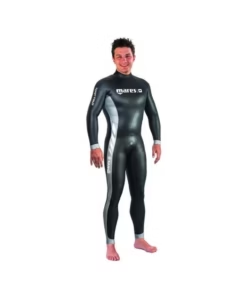
Mares Apnea Infinity 30 3mm Man Steamer
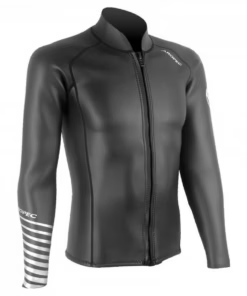
Aropec 2mm Male Skin Jacket - S

✓  Free Shipping Over RM150|✓  Manufacturing Defect Exchange Guaranteed|✓  Expert Dive Advice Before & After Purchase|✓  100% Authentic Equipment Every Item

Filter By

Price Range


RM 407 RM 430

Filter By

Sub Categories


Filter By

Brands


Showing 1–2 of 2 products
Sort:

RM407.00
RM430.00

Expert Advice

Streamlined Thermal Cover for Breathhold Divers

Freediving wetsuits use thinner, open-cell neoprene for a custom-fit feel that reduces restrictive drag on descent. Lined suits for beginners, open-cell suits for experienced freedivers doing deeper sessions.

Ask About Freediving Suits

Open Cell

Open-Cell vs Closed-Cell Neoprene for Freediving

Open-cell neoprene has a raw rubber interior that grips skin directly — creating a vacuum seal and minimising water flushing. Closed-cell (lined) suits are easier to put on but allow more water exchange.

Donning

Using Conditioner to Don an Open-Cell Freediving Wetsuit

Open-cell neoprene grips skin so effectively that donning dry is nearly impossible. Mix a capful of hair conditioner in a bucket of water, wet yourself and the suit interior, then pull the suit on in sections.

Thickness

Freediving Wetsuit Thickness for Malaysian Waters

Malaysian surface temperatures around 28–30°C suit a 1.5–2mm freediving suit for typical sessions. Deeper freediving past 20m benefits from 3mm for extended thermal protection during longer surface intervals.

Sizing

Why Freediving Wetsuits Must Fit Tighter Than Scuba Wetsuits

A freediving suit sized correctly has zero water space at the wrists, ankles, and neck. Any gap allows water flushing, which rapidly strips thermal insulation and shortens session duration in Malaysian open water.

You Might Also Like

Recommended Products

Hand-picked products based on all categories

FAQ

Frequently Asked Questions

Everything you need to know before making a purchase

How does a freediving wetsuit differ from a standard scuba wetsuit in design and construction?
Freediving wetsuits are typically made from open-cell neoprene u2014 a raw foam with an exposed inner surface that adheres directly to the skin and seals against water entry more effectively than the nylon-lined interior of a standard scuba wetsuit. The open-cell construction creates a much tighter thermal seal with minimal water circulation inside the suit, which is critical for freedivers who must maximise warmth without the weight and bulk that thicker neoprene adds. Standard scuba wetsuits use a closed-cell nylon-lined interior that is easier to put on but allows more water to flush through the suit during diving activity.
What freediving wetsuit thickness suits Malaysian water temperatures?
A 1.5mm to 3mm open-cell freediving wetsuit covers the full range of Malaysian freediving conditions u2014 3mm suits the thermocline-exposed sessions at deeper Sabah sites like TARP and offshore reefs, while 1.5mm or even a single long-sleeve rashguard may suffice for very warm, shallow sites during peak season. Open-cell neoprene at 1.5mm retains warmth equivalent to a 3mm standard scuba wetsuit due to the direct skin-to-foam seal that prevents water flushing. Malaysian freedivers who dive year-round across multiple site types often have a 1.5mm and a 3mm suit for different conditions.
What is an open-cell wetsuit and why do freedivers choose it for Malaysian warm water?
Open-cell neoprene has a raw, sponge-like inner surface that sticks directly to the skin when wet, creating a seal that dramatically reduces the water circulation inside the suit compared to standard nylon-lined wetsuits. This seal means the small amount of water that enters at the neck and wrists is quickly warmed to body temperature and stays in place, providing thermal insulation even at thin neoprene thicknesses. Malaysian freedivers choose open-cell suits because the tight skin-to-neoprene seal allows a thinner, lighter, and more flexible suit to provide warmth equivalent to a much thicker scuba wetsuit.
How do I put on an open-cell freediving wetsuit without damaging the neoprene?
Open-cell neoprene tears easily if pulled dry against the skin u2014 always apply a lubricant to both the inner surface of the wetsuit and the skin before donning. Water with a small amount of hair conditioner mixed in is the standard lubricant for open-cell suits, applied liberally to the suit interior just before putting it on. Never use petroleum-based products or standard soap, which degrade open-cell neoprene over time. Pulling the suit on with a slow, even motion rather than jerking it up the legs or arms prevents the tearing at seams and panel junctions that destroys open-cell suits prematurely.
How do I care for a freediving wetsuit after use in Malaysian saltwater and UV?
Rinse the wetsuit inside and out in fresh water immediately after every session u2014 the open-cell inner surface absorbs saltwater deeply and is harder to flush than a nylon-lined scuba wetsuit, so a thorough soak rather than a quick rinse is needed. Hang the suit inside out in shade, away from direct Malaysian sun, which accelerates the UV degradation of open-cell neoprene faster than on any closed-cell surface. Store flat or loosely rolled without compression u2014 a suit stored folded tightly develops creases in the open-cell foam that cannot be recovered and reduce the suit's thermal effectiveness.
Do I need separate top and bottom pieces for freediving in Malaysia?
Two-piece freediving wetsuit systems u2014 a separate jacket and pants u2014 allow layering flexibility for Malaysian conditions, where a jacket alone provides core warmth for warm shallow sessions and both pieces together suit deeper, colder thermocline exposures. Separate pieces also allow mix-and-match sizing for divers whose torso and leg proportions do not match a single-piece suit's cut, which is common among Malaysian divers. Two-piece systems are easier to put on independently than a single full-length suit and are the configuration preferred by most Malaysian freediving instructors and guides.