HomeShopDiving Equipment › Diving Torches & Lights

Diving Torches & Lights

Natural light disappears quickly below 10 metres, and below 20 metres colour starts washing out entirely. A torch restores the reds and oranges that blue-filtered ambient light removes, making reef colours at Redang's coral walls genuinely look the way they do in photographs.
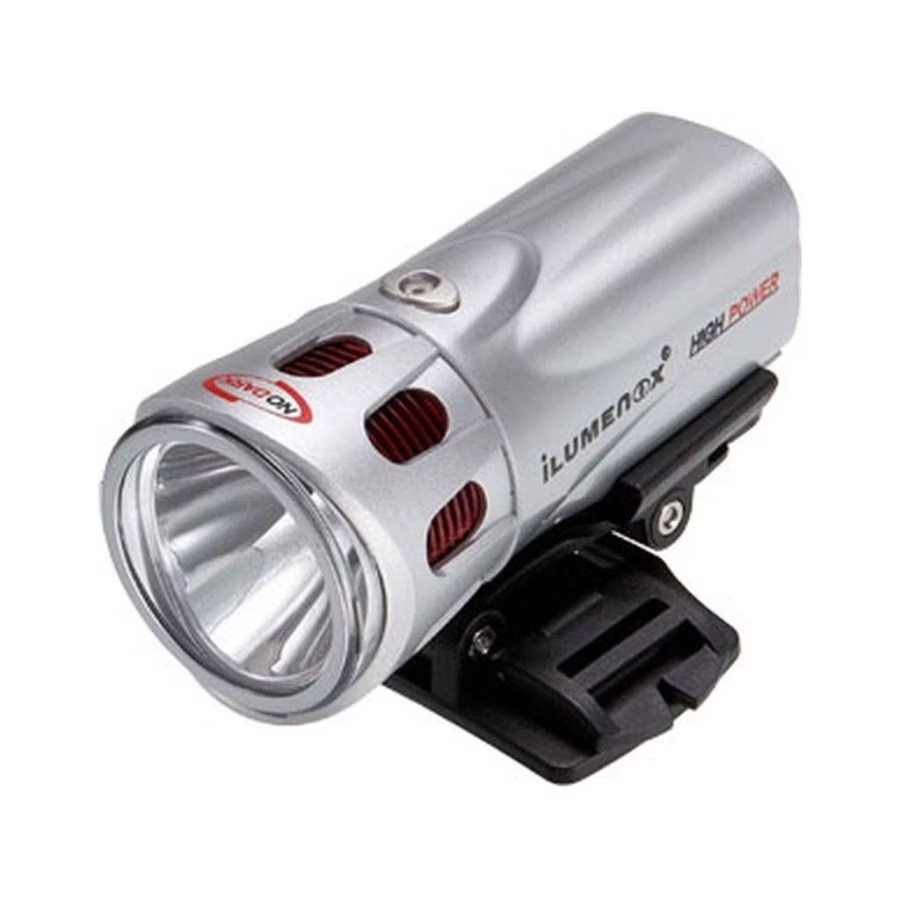

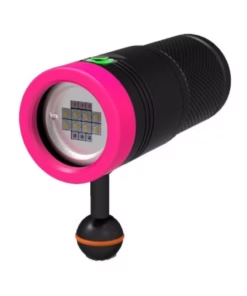
Scubalamp PV40S Photo / Video Light - 1800 Lumens
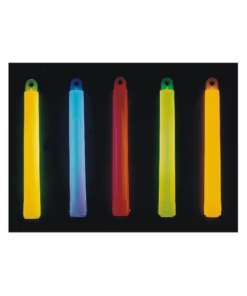
Problue AC-38-1F Underwater LED Light Stick Torch

✓  Free Shipping Over RM150|✓  Manufacturing Defect Exchange Guaranteed|✓  Expert Dive Advice Before & After Purchase|✓  100% Authentic Equipment Every Item

Filter By

Price Range


RM 0 RM 4,588

Filter By

Sub Categories


Filter By

Brands


Showing 1–20 of 89 products
Sort:

Diving Torches & Lights

Teklite Torch – Black

RM99.00
RM178.00

Diving Torches & Lights

Mares EOS 2RZ Torch

RM176.00
RM1,395.00

Diving Torches & Lights

Glo-Toob FX7 Function

RM55.00

Diving Torches & Lights

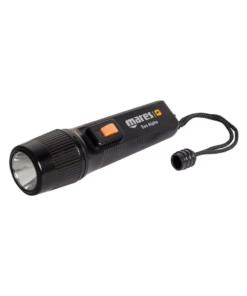
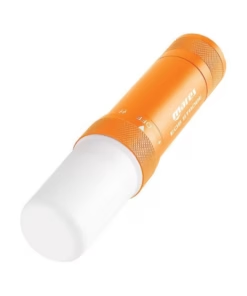
Mares EOS Alpha Torch

RM84.00

Diving Torches & Lights

Nitecore Battery NL188 (3200mAh)

RM28.00
RM49.00

Diving Torches & Lights

Aropec Sparklet Mini LED Torch

RM210.00

Diving Torches & Lights

Mares EOS 2C Torch

RM148.00
RM2,325.00
RM125.00

Diving Torches & Lights

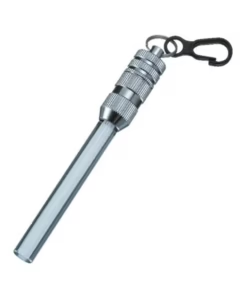
Problue AC-38 Lightsticker Torch

RM12.00

Diving Torches & Lights

Underwater Kinetics C4 LED Dive Light

RM215.00

Diving Torches & Lights

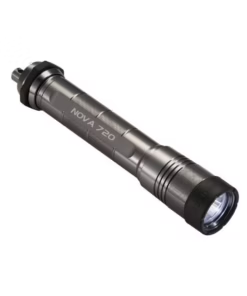
Scubapro Nova Light 220 – LED

RM346.00
RM260.00

Diving Torches & Lights

Snap Sight H2O Man Torch 5LED

RM18.00

1235

Expert Advice

Light Up the Dive, Day or Night

Even in clear Malaysian daylight dives, a torch reveals the colours stripped by depth and illuminates crevices where giant moray eels and nudibranchs hide. For night dives at Tioman or Redang, a torch is non-negotiable.

Ask About Dive Torches

Lumens

How Many Lumens Do You Actually Need for Scuba Diving?

For day dives and crevice illumination, 500–1000 lumens is adequate. Night diving requires 1000–2000 lumens for comfortable visibility. Cave diving and technical diving use primary torches of 3000+ lumens.

Burn Time

Dive Torch Burn Time vs Brightness: The Real Tradeoff

Higher lumen settings drain batteries faster. A torch rated 1000 lumens at 2 hours provides a strong beam for standard night diving. Calculate burn time against your longest planned dive before every night dive.

Malaysia

Night Diving in Malaysia: What Your Torch Reveals After Dark

Night diving at Tioman, Mabul, and the Perhentians transforms the reef — torchlight reveals sleeping parrotfish, hunting octopus, Spanish dancer nudibranchs, and bioluminescent plankton invisible during daylight dives.

Battery Type

Rechargeable vs Replaceable Battery Dive Torches

Rechargeable lithium torches deliver higher output and lower running costs. Replaceable battery torches allow battery swaps mid-trip — useful on liveaboards or remote Borneo dive trips without reliable charging access.

You Might Also Like

Recommended Products

Hand-picked products based on all categories

FAQ

Frequently Asked Questions

Everything you need to know before making a purchase

What torch brightness level suits Malaysian reef and wreck diving conditions?
A primary dive torch with an output of 500 to 1,000 lumens covers most Malaysian recreational diving applications u2014 illuminating the interiors of swim-throughs and wreck compartments at sites off Labuan, revealing the true colours of reef life at depth where red wavelengths have been absorbed by the water column, and providing sufficient throw distance to signal a buddy across a reasonable separation. Torches significantly brighter than 1,000 lumens are primarily relevant for cave diving or deep technical profiles where natural ambient light is completely absent.
What is the practical difference between a primary dive torch and a backup light?
A primary torch is sized and powered to provide working illumination for the full dive u2014 hand-held or canister formats with burn times exceeding the planned dive duration at working brightness. A backup light is a smaller unit designed specifically for the situation where the primary fails u2014 providing enough illumination to navigate safely to the exit and signal for assistance. On Malaysian liveaboards doing multiple dives including night dives at sites like Mabul's night dive corridors, carrying a dedicated backup light clipped to the BCD is standard practice among guides and recommended for all divers.
What battery type and burn time do I need for a full day of Malaysian diving?
For a Malaysian liveaboard day with three or four dives including a night dive, a rechargeable lithium battery system providing a minimum of 90 minutes of run time at working brightness covers all dives with reserve. Disposable alkaline AA or C-cell torches are acceptable for occasional resort diving but generate significant plastic waste across a multi-day trip. Confirm that the charger is compatible with Malaysia's 240V electrical supply before travelling u2014 some torch chargers are built for 110V only and require a voltage converter that is not always available on remote liveaboards.
How do I maintain the O-ring seal on a dive torch used in Malaysian saltwater?
After every dive, rinse the torch body in fresh water, then dry the area around the battery compartment or lens bezel completely before opening it. Inspect the O-ring at every battery change for flat-spotting, cracking, or debris that could break the watertight seal. Apply a thin film of silicone grease to the O-ring before reassembly u2014 petroleum-based grease swells silicone O-rings and causes the same seal failure it is meant to prevent. Replacing torch O-rings annually regardless of visible condition is low-cost insurance against a flooded torch mid-dive.
Are underwater video lights the same as dive torches, and do I need both?
Dive torches produce a focused, long-throw beam for directional signalling, inspecting inside wreck spaces, and illuminating specific subjects at distance. Video lights produce a broad, diffuse, colour-corrected output optimised for capturing accurate colours across a wide field u2014 effective for Malaysian reef photography and videography but with poor throw for navigation. A diver who both shoots video and dives wrecks typically benefits from carrying both rather than using one to substitute for the other, as neither design performs the other's primary function well.
What mounting options keep a dive torch accessible during Malaysian drift dives?
A goodman handle u2014 a strap that mounts the torch on the back of the hand u2014 allows the diver to use the torch without continuously gripping it, keeping the hand free for camera operation, line reeling, and SMB management during complex Malaysian drift dive ascents. A bolt-snap clip attached to the torch lanyard and clipped to a chest D-ring is the alternative for divers who prefer a handheld grip u2014 the clip prevents loss if the torch is dropped during a current-driven entry while keeping it immediately accessible. Wrist lanyards alone are less reliable at Malaysian drift sites where a dropped torch can be dragged by current before recovery.
What torch brightness level suits Malaysian reef and wreck diving conditions?
A primary dive torch with an output of 500 to 1,000 lumens covers most Malaysian recreational diving applications u2014 illuminating the interiors of swim-throughs and wreck compartments at sites off Labuan, revealing the true colours of reef life at depth where red wavelengths have been absorbed by the water column, and providing sufficient throw distance to signal a buddy across a reasonable separation. Torches significantly brighter than 1,000 lumens are primarily relevant for cave diving or deep technical profiles where natural ambient light is completely absent.
What is the practical difference between a primary dive torch and a backup light?
A primary torch is sized and powered to provide working illumination for the full dive u2014 hand-held or canister formats with burn times exceeding the planned dive duration at working brightness. A backup light is a smaller unit designed specifically for the situation where the primary fails u2014 providing enough illumination to navigate safely to the exit and signal for assistance. On Malaysian liveaboards doing multiple dives including night dives at sites like Mabul's night dive corridors, carrying a dedicated backup light clipped to the BCD is standard practice among guides and recommended for all divers.
What battery type and burn time do I need for a full day of Malaysian diving?
For a Malaysian liveaboard day with three or four dives including a night dive, a rechargeable lithium battery system providing a minimum of 90 minutes of run time at working brightness covers all dives with reserve. Disposable alkaline AA or C-cell torches are acceptable for occasional resort diving but generate significant plastic waste across a multi-day trip. Confirm that the charger is compatible with Malaysia's 240V electrical supply before travelling u2014 some torch chargers are built for 110V only and require a voltage converter that is not always available on remote liveaboards.
How do I maintain the O-ring seal on a dive torch used in Malaysian saltwater?
After every dive, rinse the torch body in fresh water, then dry the area around the battery compartment or lens bezel completely before opening it. Inspect the O-ring at every battery change for flat-spotting, cracking, or debris that could break the watertight seal. Apply a thin film of silicone grease to the O-ring before reassembly u2014 petroleum-based grease swells silicone O-rings and causes the same seal failure it is meant to prevent. Replacing torch O-rings annually regardless of visible condition is low-cost insurance against a flooded torch mid-dive.
Are underwater video lights the same as dive torches, and do I need both?
Dive torches produce a focused, long-throw beam for directional signalling, inspecting inside wreck spaces, and illuminating specific subjects at distance. Video lights produce a broad, diffuse, colour-corrected output optimised for capturing accurate colours across a wide field u2014 effective for Malaysian reef photography and videography but with poor throw for navigation. A diver who both shoots video and dives wrecks typically benefits from carrying both rather than using one to substitute for the other, as neither design performs the other's primary function well.
What mounting options keep a dive torch accessible during Malaysian drift dives?
A goodman handle u2014 a strap that mounts the torch on the back of the hand u2014 allows the diver to use the torch without continuously gripping it, keeping the hand free for camera operation, line reeling, and SMB management during complex Malaysian drift dive ascents. A bolt-snap clip attached to the torch lanyard and clipped to a chest D-ring is the alternative for divers who prefer a handheld grip u2014 the clip prevents loss if the torch is dropped during a current-driven entry while keeping it immediately accessible. Wrist lanyards alone are less reliable at Malaysian drift sites where a dropped torch can be dragged by current before recovery.