HomeShopFreediving › Freediving Fins

Freediving Fins

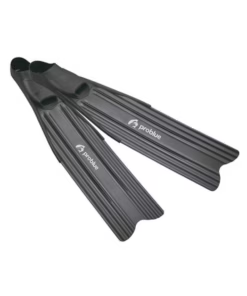
Long-blade bi-fins and monofins convert a single powerful kick into metres of glide with minimal energy expenditure — the opposite of short scuba fins, which prioritise control over efficiency. Fibreglass blades suit recreational freedivers; carbon blades suit competitive athletes.

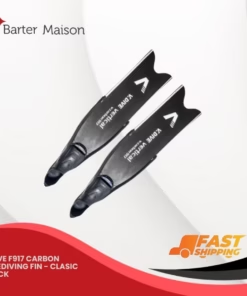
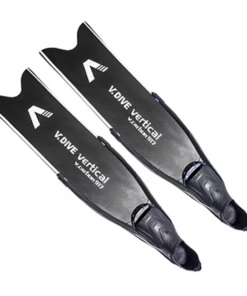
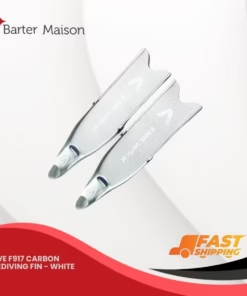
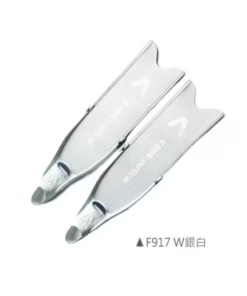
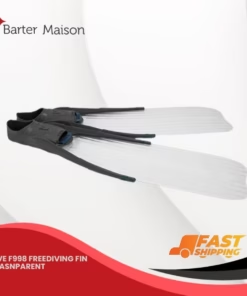
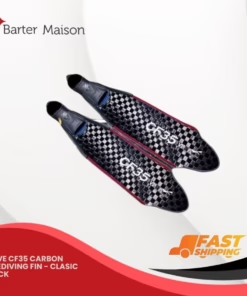
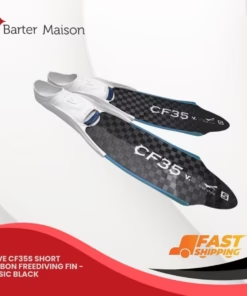
Vdive CF35S Carbon Freediving Fin Short Blade 70cm
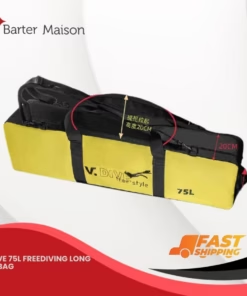
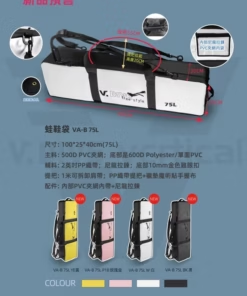
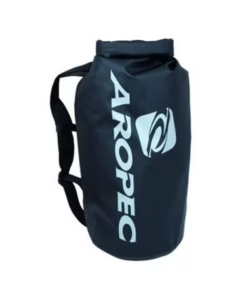
Aropec Nylon Freediving Fin Bag
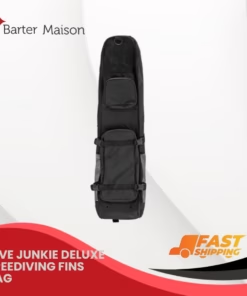
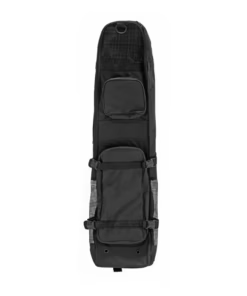
Dive Junkie Deluxe Freediving Fins Bag - Black

✓  Free Shipping Over RM150|✓  Manufacturing Defect Exchange Guaranteed|✓  Expert Dive Advice Before & After Purchase|✓  100% Authentic Equipment Every Item

Filter By

Price Range


RM 188 RM 1,790

Filter By

Sub Categories


Filter By

Brands


Showing 1–17 of 17 products
Sort:

Price range: RM399.00 through RM1,652.00
RM329.00
RM1,790.00
RM1,398.00
Out of stock
RM189.00
RM1,688.00
RM430.00
Price range: RM1,398.00 through RM1,790.00
RM200.00
RM1,700.00

Expert Advice

Maximum Propulsion on Minimum Effort

Long-blade freediving fins translate a single kick into dramatic depth gain — reducing oxygen burn and extending dive time. Fibreglass blades suit intermediate freedivers; carbon fibre blades suit advanced competitors who need maximum stiffness.

Ask About Freediving Fins

Blade Material

Fibreglass vs Carbon Fibre Freediving Fin Blades: Which to Choose?

Fibreglass blades absorb kick energy and return it progressively — forgiving for intermediate freedivers still developing consistent kick technique. Carbon fibre is stiffer, returns energy faster, and rewards advanced technique — poorly suited to beginners.

Blade Length

Freediving Fin Blade Length and Its Effect on Efficiency

Longer blades move more water per kick but require more kick strength to bend. A blade length matched to your leg strength produces the lowest oxygen cost per metre of depth — longer is not automatically better if your legs can't power the full bend.

Foot Pockets

Freediving Fin Foot Pockets: Sizing for Maximum Power Transfer

A foot pocket that fits snugly transfers all kick energy to the blade without slip. Too loose and energy is lost at the heel; too tight and blood circulation is restricted on longer descents. Try foot pockets with thin freediving socks for the best fit.

Malaysia

Using Freediving Fins in Malaysian Dive Conditions

Malaysian freediving sites — the Perhentians, Redang, Sibuan Island — have mild to moderate current. Long-blade freediving fins provide propulsion in current without the high oxygen cost of standard scuba fin kicking, extending comfortable session time significantly.

You Might Also Like

Recommended Products

Hand-picked products based on all categories

RM682.00
RM220.00
RM20.00
RM270.00

FAQ

Frequently Asked Questions

Everything you need to know before making a purchase

What makes freediving fins different from standard scuba fins?
Freediving fins have blades two to three times longer than standard scuba fins, designed to convert a single slow, powerful leg kick into maximum forward thrust with minimum oxygen expenditure u2014 the dominant physical constraint of breath-hold diving. The long blade shape produces efficient propulsion at the slow kick cadence used during freefall descent and ascent, where rapid short kicks like those used in scuba are counterproductive. Standard scuba fins are optimised for the shorter, varied kicks of scuba diving and are far less efficient for freediving, where each kick directly consumes the diver's finite breath-hold reserve.
What blade material suits freediving fins for Malaysian warm water?
Fibreglass blades provide the best balance of performance and affordability for recreational freediving in Malaysia u2014 they are stiffer and more responsive than thermoplastic blades, delivering cleaner thrust transfer, while being significantly less expensive than carbon fibre. Carbon fibre blades are the performance standard for competitive and advanced recreational freedivers, offering the lowest energy expenditure per kick but at a substantial price premium. Soft thermoplastic blades suited to entry-level freediving are the least expensive option and suit the gradual skill development of beginners training at Malaysian sites like TARP.
How long should freediving fin blades be for recreational use at Malaysian sites?
Recreational freediving fin blades of 70 to 80 centimetres total blade length u2014 from the foot pocket to the tip u2014 suit the depth range of 10 to 20 metres used by Malaysian recreational freedivers. Blades significantly shorter than this approach scuba fin dimensions and lose the efficiency advantage that justifies using specialised freediving fins. Competition-length blades above 80 centimetres produce maximum efficiency at depth but are less manoeuvrable in the shallow reef environments common at Malaysian freediving locations and are harder to pack for airline travel.
How do I kick efficiently with long-blade freediving fins in Malaysian conditions?
Long-blade freediving fins require a slow, wide kick cycle u2014 starting from the hips rather than the knees u2014 that allows the blade to flex fully on the power stroke and spring back on the recovery. Rapid, shallow kicks typical of scuba finning do not allow the blade to reach its full flex, wasting both the blade's stored energy and the diver's oxygen. Practising the slow hip-driven flutter kick in the pool before open-water sessions at Malaysian sites like Tunku Abdul Rahman Park allows the muscle memory to develop without the pressure of managing depth and breath simultaneously.
What foot pocket style suits Malaysian freediving u2014 full foot or open heel?
Full foot foot pockets are the standard for freediving fins because they produce a more direct energy transfer from the leg to the blade without the compliance of an open heel strap system, which allows small amounts of flex at the ankle that reduce blade efficiency. Malaysian freediving in warm water of 28 to 30 degrees requires no bootie, making the barefoot full foot pocket comfortable throughout a session without the heat retention issue that barefoot full foot pockets create in colder water. Open heel freediving fins are available but are a niche configuration used primarily for freediving in water requiring thick booties.
How do I transport long-blade freediving fins for budget airline travel to Malaysian dive sites?
Long-blade freediving fins typically extend beyond the maximum dimension of standard airline checked bags and must be packed diagonally across the bag interior or carried in a dedicated fin bag that can accommodate the blade length. Fins exceeding 100 centimetres total may require oversized luggage handling on some Malaysian routes u2014 check the airline's sports equipment policy before travelling with competition-length blades on AirAsia or Batik Air domestic routes. Carbon and fibreglass blades are fragile and should be wrapped individually in clothing and protected from contact with heavy equipment on all sides within the bag.