HomeShopFreediving › Freediving Accessories

Freediving Accessories

Weight belts with rubber buckles, neoprene lanyards, noseclips, ear equalisation devices and freediving training tools that complete a breath-hold setup. The smaller accessories often have a larger effect on performance and safety than the fins and mask combined.

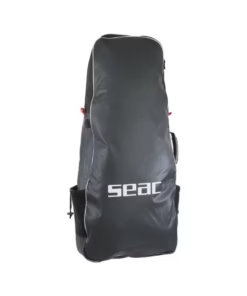
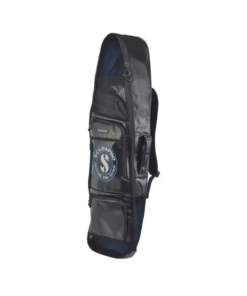
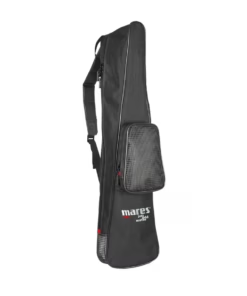
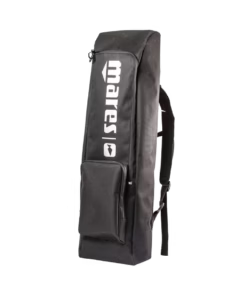
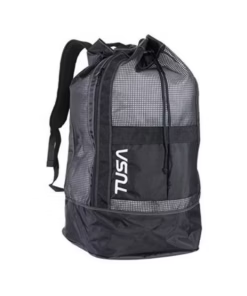
Scubapro Apnea Beach Fins Bag
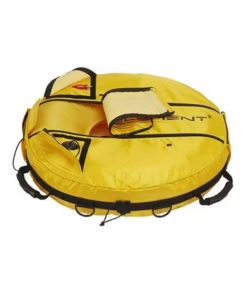
Scubapro Apnea Buoy Complete w/ Hull and Bladder
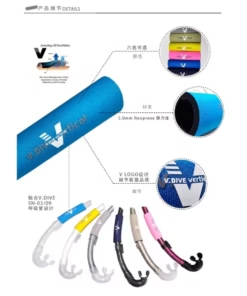
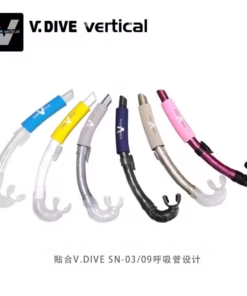
Vdive Freediving Snorkel Float 5mm

✓  Free Shipping Over RM150|✓  Manufacturing Defect Exchange Guaranteed|✓  Expert Dive Advice Before & After Purchase|✓  100% Authentic Equipment Every Item

Filter By

Price Range


RM 32 RM 872

Filter By

Sub Categories


Filter By

Brands


Showing 1–14 of 14 products
Sort:

Diving Equipment

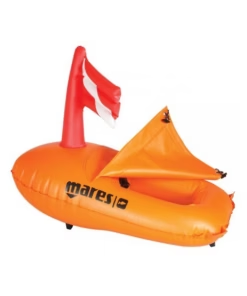
Mares Apnea Buoy

RM32.00
RM200.00
RM59.00
RM60.00
RM332.00
RM44.00
RM443.00
RM204.00
RM298.00
Out of stock
RM189.00
RM200.00
RM240.00

Expert Advice

Complete Your Freediving Accessories

Lanyards, nose clips, weight belts, dive buoys, and safety lines are the operational kit that separates a structured freediving session from a casual swim. Train safely, track depth accurately, and surface with a visible dive buoy every time.

Ask About Freediving Accessories

Lanyards

Freediving Lanyards: Safety Connection Between Diver and Line

A freediving lanyard connects your wrist to the descent line — allowing the safety diver to monitor position and pull a diver in difficulty back to the surface. Lanyards use a quick-release connection that the diver can remove in one motion at any depth.

Weight Belts

Freediving Weight Belts: Rubber vs Nylon and Correct Loading

Rubber weight belts stay in position during descent better than nylon — crucial when a diver is horizontal or inverted at depth. Load weights symmetrically and test the quick-release buckle with the weights loaded before entering the water.

Nose Clips

When to Use a Nose Clip for Freediving Training

Nose clips prevent automatic nose exhalation during breath-hold and are used in static apnea training where water entry into the sinuses is a distraction. Open-water freedivers generally use masks; nose clips are most common in pool training and competitions.

Buoys

Freediving Buoys and Descent Lines: Setting Up a Safe Session

A freediving buoy marks the training site, holds the descent line, and provides a floating safety platform for the surface buddy. The descent line should reach 5m deeper than the planned depth and be weighted with at least 2kg at the base to hang vertically.

You Might Also Like

Recommended Products

Hand-picked products based on all categories

Price range: RM199.00 through RM219.00
RM396.00

FAQ

Frequently Asked Questions

Everything you need to know before making a purchase

What freediving accessories are essential for training sessions at Malaysian sites?
A freediving lanyard attached from the diver's wrist or ankle to the descent line is required for all depth training above entry level, providing an attachment point for rescue if the diver loses consciousness at depth. A freediving buoy and 30 to 40 metres of descent line mark the training station and signal the diver's position to boat traffic at Malaysian open-water sites. A freediving weight belt or neck weight system configured for neutral buoyancy at target depth completes the core setup that instructors at Malaysian freediving operations require of all training participants.
What is a freediving lanyard and when is it required at Malaysian freediving sites?
A freediving lanyard is a safety attachment u2014 typically a short bungee cord with a bolt snap at one end and a wrist or ankle loop at the other u2014 that connects the diver to the descent line throughout the dive. The lanyard is designed to release when the line is pulled from the surface during a rescue, bringing an unconscious diver to the surface without requiring a rescue diver to descend. Any Malaysian freediving training operation following AIDA or SSI safety standards requires lanyard use for all depth training beyond recreational snorkelling depths, making it a non-negotiable safety accessory rather than an optional piece of kit.
How do weight systems differ for freediving versus scuba at Malaysian sites?
Freediving weight systems use lower total weight than scuba configurations because the freediver's compressed lung volume provides progressively less buoyancy as depth increases u2014 a freediver who is correctly weighted is negative at depth without any additional ballast beyond what is needed to overcome surface buoyancy. Neck weights u2014 lead horseshoe shapes worn around the neck u2014 are popular for freediving because they are positioned closer to the diver's centre of gravity than hip weights, reducing the head-heavy imbalance that belt weights create during head-first descent. Scuba weight systems account for full tank buoyancy characteristics that do not apply to freediving.
What is a freediving buoy and when should I use one at Malaysian open-water sites?
A freediving buoy is a highly visible inflatable float u2014 typically torpedo or spherical shaped in bright orange or yellow u2014 attached to a descent line of 20 to 40 metres that is dropped vertically at the training station. The buoy marks the diver's position for boat traffic at Malaysian sites like TARP, where recreational boat traffic is active, and provides the line along which the diver descends and ascends. Freediving without a buoy and line in open Malaysian water is not safe practice u2014 the line provides a reference for depth and a handrail for equalization technique, and the buoy prevents boat strikes.
What safety equipment do Malaysian freediving instructors require on every training dive?
AIDA and SSI certified Malaysian freediving instructors require a minimum of: a freediving buoy and descent line, individual lanyards for each diver, a safety freediver who is not breath-holding and is monitoring from the water surface, and a communication signal system between the surface safety and the diver on the line. A cutting tool is required to release a tangled lanyard in a rescue. These requirements reflect the global freediving safety standard that no diver should breath-hold without a trained safety partner watching continuously u2014 a standard that applies equally at resort-front training areas and remote Malaysian open-water sites.
How does a freediving computer differ from a standard scuba dive computer for use in Malaysia?
Freediving computers are optimised for breath-hold diving parameters u2014 surface interval tracking between dives (rather than continuous bottom time), maximum depth of each breath-hold, dive duration measured in seconds, and alerts for surface interval times that are too short for safe repetitive diving. Standard scuba computers track nitrogen loading and no-decompression limits, which are not meaningful for single breath-holds. Some multi-mode computers handle both scuba and freediving profiles, but dedicated freediving computers provide more detailed surface interval analysis that helps Malaysian freedivers manage hypoxia risk across a full training session.