HomeShopDiving Equipment › Dive Knives & Cutting Tools

Dive Knives & Cutting Tools

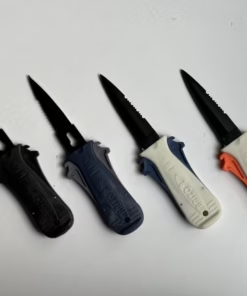
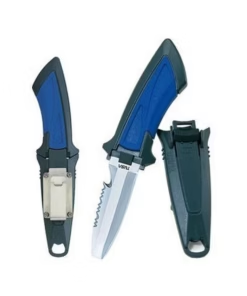
A dive knife is not a weapon — it's an entanglement tool. Monofilament, discarded nets and ghost fishing gear are real hazards on Malaysian reef dives, and a sharp blade or a pair of shears can make the difference between a close call and a serious incident.

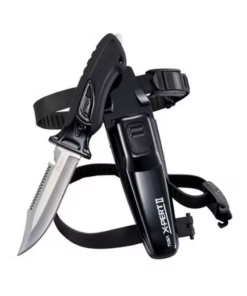
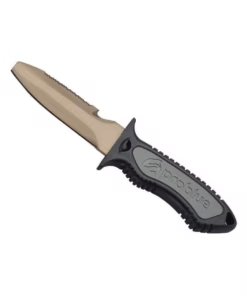
Problue KN-43T Titanium Sharp Tip Diving Knife
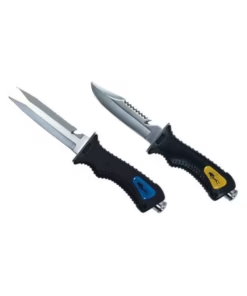
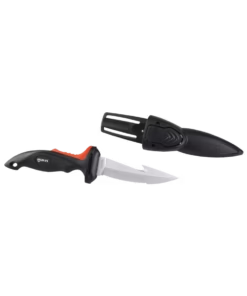
Aropec Cypress-S Stainless Steel Knife
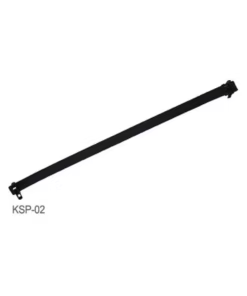
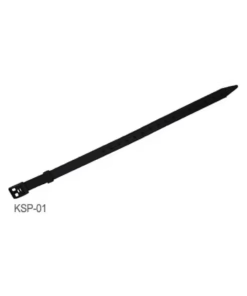
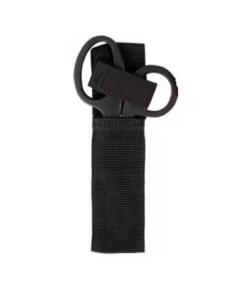
Problue KSP-01 Knife Strap

✓  Free Shipping Over RM150|✓  Manufacturing Defect Exchange Guaranteed|✓  Expert Dive Advice Before & After Purchase|✓  100% Authentic Equipment Every Item

Filter By

Price Range


RM 19 RM 2,000

Filter By

Sub Categories


Filter By

Brands


Showing 1–20 of 73 products
Sort:

Dive Knives & Cutting Tools

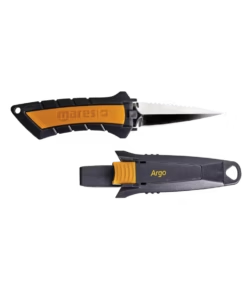
Mares Argo Dive Knife

RM44.00
RM161.00
RM115.00
RM135.00

Dive Knives & Cutting Tools

Aropec Almond-T Titanium BC Knife

RM299.00

Dive Knives & Cutting Tools

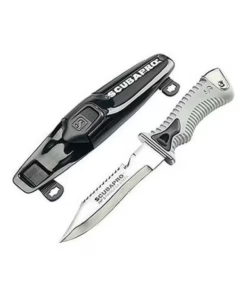
Scubapro Mesh Cutter Dive Knife

RM312.00

Dive Knives & Cutting Tools

Tusa Imprex Mini Knife Blunt Tip

Price range: RM158.00 through RM160.00

Dive Knives & Cutting Tools

Tusa X-pert Knife Point Tip – black

RM220.00

Dive Knives & Cutting Tools

Problue 420 Stainless Steel Knife

RM160.00

Dive Knives & Cutting Tools

Aropec Birch Integral Knife

RM69.00
RM20.00

Dive Knives & Cutting Tools

Scubapro K 6 Stainless Steel Knife

RM522.00

Dive Knives & Cutting Tools

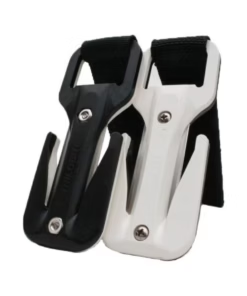
Eezycut Trilobite Dive Knife

Price range: RM45.00 through RM140.00

Dive Knives & Cutting Tools

Problue KSP-01 Knife Strap

RM19.00
RM161.00

Dive Knives & Cutting Tools

Aropec Mimosa Stainless Steel Knife

RM149.00

Dive Knives & Cutting Tools

Problue KN-83T Titanium Diving Knife, 4.5

RM449.00

Dive Knives & Cutting Tools

Mares Force Plus Dive Knife

RM96.00

Dive Knives & Cutting Tools

Aropec Heavy Duty Scissors

RM40.00
RM312.00

Expert Advice

Your Underwater Safety Tool

A dive knife isn't for spearfishing — it's for line entanglement, monofilament ghostnets, and safety emergencies. Compact blunt-tip knives and line cutters fit any BCD and meet Malaysian marine park rules.

Ask About Dive Safety Tools

Blade Types

Line Cutters vs Full Blade Dive Knives: What to Choose

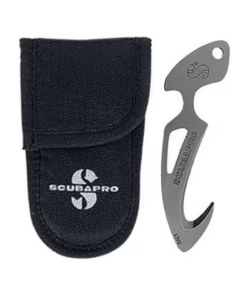
A compact line cutter with a hooked blade meets Malaysian marine park regulations and handles monofilament entanglement. Full blades are heavier, restricted in some parks, and more than most recreational divers need.

Metal

Titanium vs Stainless Steel Dive Knife Blades: Pros and Cons

Titanium blades are lighter and corrosion-free with zero maintenance. Stainless steel blades hold a sharper edge longer and cost significantly less — more practical for most recreational Malaysian divers.

Mounting

Where to Mount a Dive Knife for Safe and Accessible Carry

A BCD chest D-ring mount keeps the knife accessible by either hand. Calf-mounted knives are slower to reach and can snag on line in entanglement scenarios — opposite to their intended purpose.

Malaysia

Malaysian Marine Park Rules on Dive Knives and Cutting Tools

Most Malaysian marine parks permit compact blunt-tip dive knives and line cutters. Spearfishing is prohibited in all marine protected areas. Check specific rules for Pulau Payar, Perhentians, and Redang.

You Might Also Like

Recommended Products

Hand-picked products based on all categories

RM682.00
RM220.00
RM20.00
RM270.00

FAQ

Frequently Asked Questions

Everything you need to know before making a purchase

What type of cutting tool is most practical for recreational diving at Malaysian reef sites?
A line cutter or blunt-tip scissors-style cutting tool is the most practical choice for Malaysian recreational divers, who are most likely to use a cutting tool to free themselves or a buddy from monofilament fishing line u2014 common at Malaysian reef sites near fishing communities. A full dive knife provides the same cutting function with additional utility but requires a larger sheath and adds more bulk to the dive configuration. The critical factor is accessibility u2014 a cutting tool that cannot be reached with one hand in an emergency provides no safety benefit regardless of its cutting capability.
Why do Malaysian dive instructors recommend carrying a cutting tool as standard safety equipment?
Malaysian reef dive sites are frequently crossed by monofilament fishing lines, ghost nets, and lobster pot coring that snag on reef structures and become nearly invisible against the reef background until a diver is entangled. A cutting tool provides the only reliable means of self-rescue from line entanglement without requiring buddy assistance in a stressful, potentially low-visibility situation. The recommendation is strongest at Malaysian sites near fishing communities u2014 many popular sites around the Terengganu islands and parts of coastal Sabah u2014 where entanglement risk is highest.
What is the difference between a dive knife and a dedicated line cutter?
A dive knife with a full blade cuts through rope, webbing, netting, and heavy fishing gear in a single stroke, and serves secondary functions including prying, tapping on the cylinder to signal a buddy, and general tool use. A dedicated line cutter u2014 typically a blunt hook with a recessed serrated edge u2014 is designed solely for monofilament and thin line and cannot cut through thicker materials. For most Malaysian recreational divers, a small fixed-blade knife handles both cutting tasks more comprehensively, while divers who prioritise minimalism carry a line cutter as a lighter, slimmer option.
How should I mount a cutting tool for single-hand access during a Malaysian dive?
A cutting tool mounted on the inside of the non-dominant forearm can be reached and drawn with the dominant hand without releasing grip on any other item of equipment, making it accessible during an emergency regardless of what the other hand is managing. Inner forearm mounting also prevents the sheath from snagging on reef or equipment during the dive. Thigh mounts are popular but harder to access single-handed during active finning, and BCD sternum mounts are accessible but require releasing the clip deliberately with the dominant hand while the other may be occupied.
What blade material resists corrosion best in Malaysian saltwater for dive knives?
316-grade stainless steel provides adequate corrosion resistance for recreational dive knives in Malaysian saltwater when rinsed and dried after every dive. Titanium blades are lighter, harder, and effectively immune to saltwater corrosion but cost significantly more and are less commonly available through Malaysian dive retailers. High-carbon steel holds a sharper edge than stainless but corrodes rapidly in saltwater and requires a strict drying and oiling routine after every dive in Malaysian conditions u2014 a maintenance commitment most recreational divers do not sustain.
Are folding or fixed-blade dive knives better suited to Malaysian liveaboard diving?
Fixed-blade dive knives with a secure sheath are faster to deploy single-handed and have no folding mechanism to corrode or stiffen in Malaysian saltwater, making them more reliable as safety tools. Folding dive knives are more compact for airline travel but require a clean two-step opening sequence u2014 a mechanism stiffened by salt deposits is a genuine handling hazard when the knife needs to be deployed quickly. For safety equipment that must work reliably and immediately when needed, a fixed-blade knife in a secure sheath is the more trusted format at Malaysian dive sites.
What type of cutting tool is most practical for recreational diving at Malaysian reef sites?
A line cutter or blunt-tip scissors-style cutting tool is the most practical choice for Malaysian recreational divers, who are most likely to use a cutting tool to free themselves or a buddy from monofilament fishing line u2014 common at Malaysian reef sites near fishing communities. A full dive knife provides the same cutting function with additional utility but requires a larger sheath and adds more bulk to the dive configuration. The critical factor is accessibility u2014 a cutting tool that cannot be reached with one hand in an emergency provides no safety benefit regardless of its cutting capability.
Why do Malaysian dive instructors recommend carrying a cutting tool as standard safety equipment?
Malaysian reef dive sites are frequently crossed by monofilament fishing lines, ghost nets, and lobster pot coring that snag on reef structures and become nearly invisible against the reef background until a diver is entangled. A cutting tool provides the only reliable means of self-rescue from line entanglement without requiring buddy assistance in a stressful, potentially low-visibility situation. The recommendation is strongest at Malaysian sites near fishing communities u2014 many popular sites around the Terengganu islands and parts of coastal Sabah u2014 where entanglement risk is highest.
What is the difference between a dive knife and a dedicated line cutter?
A dive knife with a full blade cuts through rope, webbing, netting, and heavy fishing gear in a single stroke, and serves secondary functions including prying, tapping on the cylinder to signal a buddy, and general tool use. A dedicated line cutter u2014 typically a blunt hook with a recessed serrated edge u2014 is designed solely for monofilament and thin line and cannot cut through thicker materials. For most Malaysian recreational divers, a small fixed-blade knife handles both cutting tasks more comprehensively, while divers who prioritise minimalism carry a line cutter as a lighter, slimmer option.
How should I mount a cutting tool for single-hand access during a Malaysian dive?
A cutting tool mounted on the inside of the non-dominant forearm can be reached and drawn with the dominant hand without releasing grip on any other item of equipment, making it accessible during an emergency regardless of what the other hand is managing. Inner forearm mounting also prevents the sheath from snagging on reef or equipment during the dive. Thigh mounts are popular but harder to access single-handed during active finning, and BCD sternum mounts are accessible but require releasing the clip deliberately with the dominant hand while the other may be occupied.
What blade material resists corrosion best in Malaysian saltwater for dive knives?
316-grade stainless steel provides adequate corrosion resistance for recreational dive knives in Malaysian saltwater when rinsed and dried after every dive. Titanium blades are lighter, harder, and effectively immune to saltwater corrosion but cost significantly more and are less commonly available through Malaysian dive retailers. High-carbon steel holds a sharper edge than stainless but corrodes rapidly in saltwater and requires a strict drying and oiling routine after every dive in Malaysian conditions u2014 a maintenance commitment most recreational divers do not sustain.
Are folding or fixed-blade dive knives better suited to Malaysian liveaboard diving?
Fixed-blade dive knives with a secure sheath are faster to deploy single-handed and have no folding mechanism to corrode or stiffen in Malaysian saltwater, making them more reliable as safety tools. Folding dive knives are more compact for airline travel but require a clean two-step opening sequence u2014 a mechanism stiffened by salt deposits is a genuine handling hazard when the knife needs to be deployed quickly. For safety equipment that must work reliably and immediately when needed, a fixed-blade knife in a secure sheath is the more trusted format at Malaysian dive sites.