HomeShopDiving EquipmentDive Knives & Cutting Tools › Knives

Knives

Compact dive knives for recreational scuba divers — designed to sit flush against a calf, wrist or BCD strap without adding drag or snagging lines underwater. Serrated and straight-edge profiles available in corrosion-resistant stainless steel and lightweight titanium alloy.

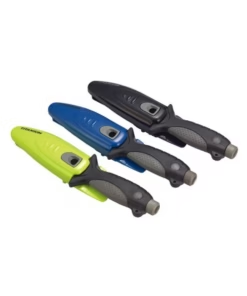
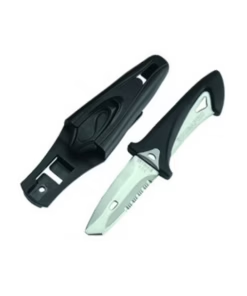
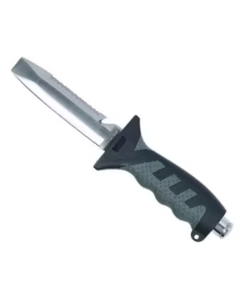
Problue KN-53T 420 Titanium Sharp Tip Knife
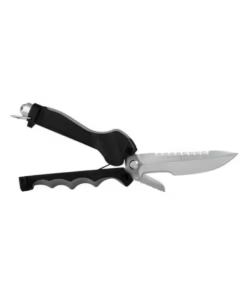
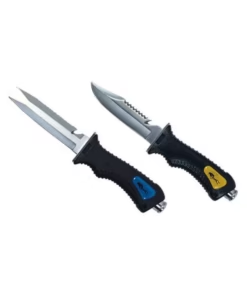
Aropec Tequila 2in1 Scissors and Knife
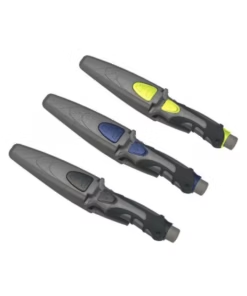
Aropec Mimosa Stainless Steel Knife

✓  Free Shipping Over RM150|✓  Manufacturing Defect Exchange Guaranteed|✓  Expert Dive Advice Before & After Purchase|✓  100% Authentic Equipment Every Item

Filter By

Price Range


RM 49 RM 556

Filter By

Sub Categories


Filter By

Brands


Showing 1–20 of 25 products
Sort:

RM115.00

Dive Knives & Cutting Tools

Problue KN-53T 420 Titanium Sharp Tip Knife

RM493.00

Dive Knives & Cutting Tools

Aropec Birch Integral Knife

RM69.00

Dive Knives & Cutting Tools

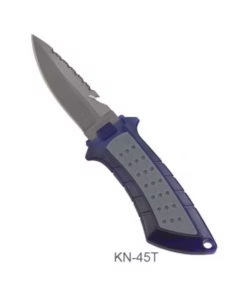
Problue KN-45T Titanium B.C Knife

RM249.00

Dive Knives & Cutting Tools

Aropec Mimosa Stainless Steel Knife

RM149.00

Dive Knives & Cutting Tools

Problue KN-57T Titanium B.C Knife

RM298.00

Dive Knives & Cutting Tools

Aropec Mimosa Titanium Knife

RM150.00
RM298.00
RM312.00

Dive Knives & Cutting Tools

Aropec Tequila 2in1 Scissors and Knife

RM49.00
RM462.00

Dive Knives & Cutting Tools

Mares Force Bat Titanium Dive Knife

RM160.00

Dive Knives & Cutting Tools

Aropec Redbud-T Titanium BC Knife

Price range: RM249.00 through RM282.00
RM556.00
RM161.00

Dive Knives & Cutting Tools

Aropec Almond-T Titanium BC Knife

RM299.00

Dive Knives & Cutting Tools

Apollo Seaword Seaword Mini titanium Knife

RM119.00

Dive Knives & Cutting Tools

Problue 420 Stainless Steel Knife

RM160.00
RM180.00

Expert Advice

A Dive Knife for Every Cutting Need

Dive knives range from small blunt-tip line cutters that meet marine park rules to full-blade knives for technical use. Every open water diver should carry at least a compact line cutter as a safety backup.

Ask About Dive Safety Knives

Blade Edge

Serrated vs Straight Edge Dive Knife Blades: Which Cuts Faster?

Serrated edges cut rope, monofilament, and net material faster with less force — important in an entanglement where adrenaline affects fine motor control. Straight edges are sharper but require more draw force on twisted line.

Visibility

Colour-Coded Knife Handles for Dive Safety Visibility

A bright yellow or neon-handled dive knife is visible in poor visibility and locatable on the dive deck without searching. Dark-handled knives look professional but disappear in sediment stir-up and low-light conditions.

Travel

Travelling With a Dive Knife to Malaysian Dive Destinations

Dive knives must be packed in checked luggage — not carry-on. Declare knives on customs forms when entering Malaysia from overseas. Compact line cutters are less likely to attract attention at inspection.

Maintenance

Maintaining a Stainless Steel Dive Knife After Salt Water Use

Rinse stainless dive knives in fresh water immediately after every dive. Dry and apply a thin coat of food-grade mineral oil to the blade before storage. Stainless resists but doesn't eliminate corrosion in marine environments.

You Might Also Like

Recommended Products

Hand-picked products based on all categories

RM682.00
RM220.00
RM20.00
RM270.00

FAQ

Frequently Asked Questions

Everything you need to know before making a purchase

What blade length is appropriate for a recreational dive knife at Malaysian sites?
A blade length of 9 to 12 centimetres handles the full range of cutting tasks encountered at Malaysian recreational dive sites u2014 long enough to cut through rope or netting in a single stroke, compact enough to carry in a sheath that does not interfere with finning or BCD operation. Blades longer than 15 centimetres are unnecessary for recreational purposes and may require declaration or special handling during airline travel to Malaysian dive destinations. The most common cutting task at Malaysian sites u2014 monofilament and thin gill net u2014 requires no minimum blade length beyond a sharp edge.
What is the difference between serrated, straight, and combination dive knife blades?
Straight blades cut cleanly through nylon webbing, rope, and kelp in a single slicing stroke and are straightforward to maintain with a sharpening stone in the field. Serrated blades grip and saw through braid and monofilament more effectively but are difficult to sharpen without specialist tools. Combination blades offer a straight section for slicing and a serrated portion near the handle for rope sawing u2014 the most versatile choice for Malaysian divers who may encounter a range of entanglement materials from thin monofilament to heavy fishing rope or cray pot line.
How do I care for a dive knife after saltwater diving in Malaysian waters?
Rinse the knife and sheath in fresh water while still on the mounting bracket, then remove the knife from the sheath and allow both to dry separately and completely u2014 a knife stored inside a wet sheath in Malaysian humidity corrodes at the blade-to-sheath contact line where salt concentrates. Apply a thin film of food-grade mineral oil or manufacturer-specified corrosion inhibitor to the blade before storage. Inspect the sheath locking mechanism for salt build-up that could cause the knife to stick inside or release unexpectedly during a dive.
Where should a dive knife be mounted for the safest and most accessible position at Malaysian dive sites?
The most accessible self-rescue mounting position is on the inside of the non-dominant forearm, where the knife can be drawn with the dominant hand without releasing grip on any other equipment being held or managed. Calf mounting is widely used but harder to reach with one hand during active finning, and the low position on the body makes snagging on reef structures more likely during Malaysian wall and overhang dives. BCD-integrated sheaths on the lower left chest are a middle-ground option that balances accessibility with minimal snag risk during most Malaysian dive profiles.
Can I carry a dive knife on a commercial flight to Malaysian dive destinations?
Dive knives must be packed in checked baggage on all commercial flights to Malaysian dive destinations u2014 airline and aviation security regulations prohibit bladed items in carry-on luggage without exception. Airports serving Malaysian dive destinations including Kota Kinabalu, Tawau, Langkawi, and Kuala Terengganu process checked dive bags containing knives routinely. Carry the knife inside its sheath and position it away from the perimeter of the bag to prevent it from being felt during external security screening, which can flag the bag for additional inspection.
How do I assess the blade quality of a second-hand dive knife before purchasing?
Inspect the blade surface for pitting, which indicates saltwater penetration through the blade finish and accelerating subsurface corrosion. Test the edge by drawing the blade lightly across a fingernail u2014 a sharp edge catches and grabs, while a dull edge slides without resistance. Check the handle-to-blade junction for any visible gap or movement, as a loose handle indicates failed adhesive or fastener that could allow blade separation under the force of emergency cutting. The sheath must hold the knife securely with no rattle and release it in a single deliberate draw without requiring tools or excessive force.
What blade length is appropriate for a recreational dive knife at Malaysian sites?
A blade length of 9 to 12 centimetres handles the full range of cutting tasks encountered at Malaysian recreational dive sites u2014 long enough to cut through rope or netting in a single stroke, compact enough to carry in a sheath that does not interfere with finning or BCD operation. Blades longer than 15 centimetres are unnecessary for recreational purposes and may require declaration or special handling during airline travel to Malaysian dive destinations. The most common cutting task at Malaysian sites u2014 monofilament and thin gill net u2014 requires no minimum blade length beyond a sharp edge.
What is the difference between serrated, straight, and combination dive knife blades?
Straight blades cut cleanly through nylon webbing, rope, and kelp in a single slicing stroke and are straightforward to maintain with a sharpening stone in the field. Serrated blades grip and saw through braid and monofilament more effectively but are difficult to sharpen without specialist tools. Combination blades offer a straight section for slicing and a serrated portion near the handle for rope sawing u2014 the most versatile choice for Malaysian divers who may encounter a range of entanglement materials from thin monofilament to heavy fishing rope or cray pot line.
How do I care for a dive knife after saltwater diving in Malaysian waters?
Rinse the knife and sheath in fresh water while still on the mounting bracket, then remove the knife from the sheath and allow both to dry separately and completely u2014 a knife stored inside a wet sheath in Malaysian humidity corrodes at the blade-to-sheath contact line where salt concentrates. Apply a thin film of food-grade mineral oil or manufacturer-specified corrosion inhibitor to the blade before storage. Inspect the sheath locking mechanism for salt build-up that could cause the knife to stick inside or release unexpectedly during a dive.
Where should a dive knife be mounted for the safest and most accessible position at Malaysian dive sites?
The most accessible self-rescue mounting position is on the inside of the non-dominant forearm, where the knife can be drawn with the dominant hand without releasing grip on any other equipment being held or managed. Calf mounting is widely used but harder to reach with one hand during active finning, and the low position on the body makes snagging on reef structures more likely during Malaysian wall and overhang dives. BCD-integrated sheaths on the lower left chest are a middle-ground option that balances accessibility with minimal snag risk during most Malaysian dive profiles.
Can I carry a dive knife on a commercial flight to Malaysian dive destinations?
Dive knives must be packed in checked baggage on all commercial flights to Malaysian dive destinations u2014 airline and aviation security regulations prohibit bladed items in carry-on luggage without exception. Airports serving Malaysian dive destinations including Kota Kinabalu, Tawau, Langkawi, and Kuala Terengganu process checked dive bags containing knives routinely. Carry the knife inside its sheath and position it away from the perimeter of the bag to prevent it from being felt during external security screening, which can flag the bag for additional inspection.
How do I assess the blade quality of a second-hand dive knife before purchasing?
Inspect the blade surface for pitting, which indicates saltwater penetration through the blade finish and accelerating subsurface corrosion. Test the edge by drawing the blade lightly across a fingernail u2014 a sharp edge catches and grabs, while a dull edge slides without resistance. Check the handle-to-blade junction for any visible gap or movement, as a loose handle indicates failed adhesive or fastener that could allow blade separation under the force of emergency cutting. The sheath must hold the knife securely with no rattle and release it in a single deliberate draw without requiring tools or excessive force.