HomeShopDiving EquipmentWetsuits & Exposure Suits › Hoods

Hoods

Heat escapes fastest from an unprotected head, even in Malaysian waters. A 3mm neoprene hood extends bottom time on deeper dives and multi-dive days at sites like Mabul, where surface intervals in the shade don't offset the gradual chill at 25 metres and beyond.

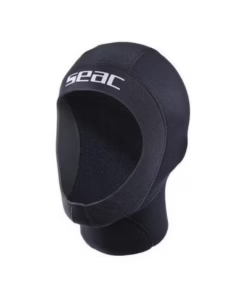
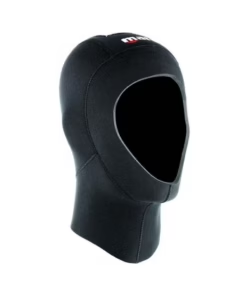
Seac Standard 0.5mm Hood
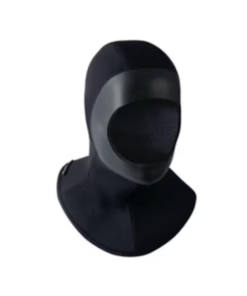
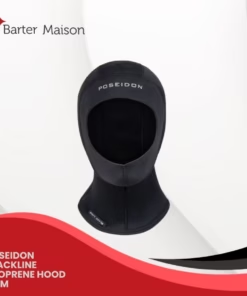
Poseidon Black Line Neoprene Hoods 5mm
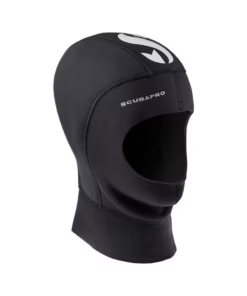
Scubapro Everflex 5/3mm Hood

✓  Free Shipping Over RM150|✓  Manufacturing Defect Exchange Guaranteed|✓  Expert Dive Advice Before & After Purchase|✓  100% Authentic Equipment Every Item

Filter By

Price Range


RM 28 RM 289

Filter By

Sub Categories


Filter By

Brands


Showing 1–16 of 16 products
Sort:

Price range: RM249.00 through RM269.00

Diving Equipment

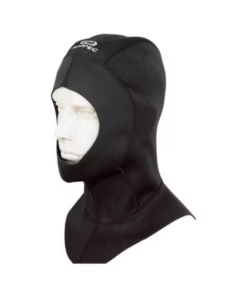
Seac Standard 0.5mm Hood

RM167.00

Diving Equipment

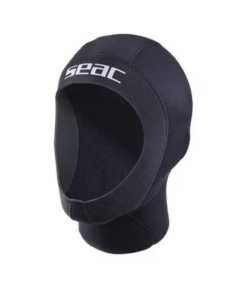
Seac Standard .3mm Hood

RM167.00
RM206.00
RM289.00

Diving Equipment

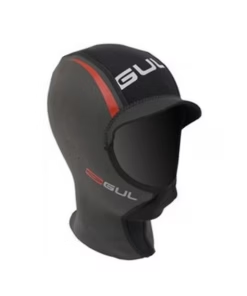
Gul Diving 3mm Hood

RM150.00
RM28.00
RM86.00
RM35.00
RM150.00

Diving Equipment

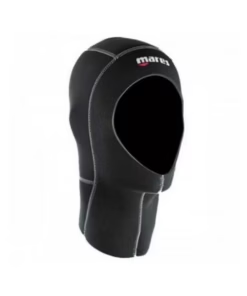
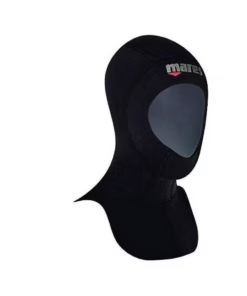
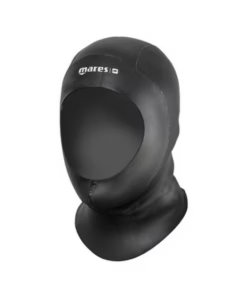
Mares Flexa Hood 6.4.3mm

RM60.00
RM129.00
RM39.00

Diving Equipment

Mares Tech Hood – 6.5.3mm

RM88.00

Diving Equipment

Mares Infinity 30 Hood Man

RM56.00

Expert Advice

Thermal Protection for Your Head and Neck

Even in Malaysian waters, a long dive in a current or deeper dive can drop your core temperature enough to shorten your bottom time. A hood adds essential warmth with minimal added volume.

Ask About Thermal Dive Gear

Thickness

Choosing Hood Thickness for Malaysian Water Temperatures

Malaysian surface waters sit around 28–30°C, but currents at 20–30m depth can drop to 22–24°C on wall dives at Sipadan. A 3mm hood adds meaningful warmth on 60-minute deep dives.

Bib Hoods

Bib Hoods vs Standard Hoods: Which Seals Better Against Flushing?

Bib hoods extend down over your shoulders and tuck under your wetsuit collar, preventing water flushing at the neck. Essential for 5mm+ wetsuit setups and any diver prone to cold neck flushes.

Fit

Getting the Right Hood Fit to Prevent Water Flushing

A hood that's too loose flushes cold water into the neck channel on every kick. Pull the hood flat from front to back with no air bubble at the crown and no folding at the ears.

Care

Neoprene Hood Care After Salt Water Diving

Rinse hoods inside-out after every salt water dive — salt trapped in the inner lining degrades neoprene faster than exterior exposure. Dry flat, not hanging, to prevent skirt stretching.

You Might Also Like

Recommended Products

Hand-picked products based on all categories

RM25.00
RM310.00

Diving Torches & Lights

Snap Sight H2O Man Torch 5LED

RM18.00

FAQ

Frequently Asked Questions

Everything you need to know before making a purchase

Do Malaysian recreational divers ever actually need a hood for thermal protection?
Most Malaysian recreational divers do not need a hood for the warm surface water at peninsula east coast sites like Redang and Tioman. Hoods become relevant at deeper Sabah offshore sites like Layang-Layang, where thermoclines push temperatures below 24 degrees during safety stop decompression at 5 metres after a long bottom time. Divers who feel cold at the end of a 60-minute dive in 25 degree water are likely losing significant heat through the unprotected head, and a hood would meaningfully extend their comfortable dive duration.
What hood thickness suits Malaysian diving at thermocline depths?
A 3mm neoprene hood provides practical thermal protection for Malaysian divers encountering thermoclines at depth without being uncomfortably warm at the surface during the surface intervals typical of Malaysian dive boats. Thicker 5mm hoods are designed for cold-water diving and become oppressively warm between dives in Malaysian ambient air temperatures. Some Malaysian technical divers use a 2mm tropical hood specifically during decompression stops, removing it after the ascent to avoid heat buildup at the surface during transit back to the liveaboard.
How does wearing a neoprene hood affect mask seal and equalisation during a Malaysian dive?
A hood can interfere with mask seal if the neoprene extends over the temporal region where the mask strap crosses u2014 a tight hood pulling the strap forward changes the skirt-to-face pressure distribution and may allow water to enter at the temples. Fitting the mask before putting on the hood, then carefully adjusting the hood over the strap, minimises this interference. Hoods do not directly affect equalisation mechanics but can muffle the sound feedback that some divers use to confirm Eustachian tube opening u2014 worth noting for those who rely on auditory cues during descent.
What is the difference between a full neoprene hood and a bib-style hood for Malaysian diving?
Full hoods cover the head and neck, sealing against the wetsuit collar for the most complete thermal and abrasion protection. Bib-style hoods add a shoulder and upper chest extension that tucks inside the wetsuit collar, preventing the hood from riding up during descent and reducing the water flushing that a plain neck edge allows at Malaysian current-driven sites. Bib-style designs are more popular among experienced Malaysian divers because the improved seal around the neck makes them more effective during drift dives where water continuously flows across the neck during passive drift.
How do I prevent a neoprene hood from trapping air during a Malaysian dive entry?
Air trapped inside a neoprene hood during a negative entry or rapid descent creates positive buoyancy at the head that pushes the diver into a feet-down position and can break the mask seal. Pulling the hood slightly away from the neck just before descent allows trapped air to escape passively. Some hoods have a small perforation at the crown specifically designed to release this air automatically during descent u2014 a useful feature at Malaysian drift sites where a negative entry does not allow time for a manual hood adjustment before entering the current.
How should a neoprene hood fit to minimise water flushing in Malaysian current conditions?
A well-fitting hood seals firmly against the forehead, temples, and neck without painful compression or gaps that allow water to circulate under the neoprene. The face opening should hold the hood in position throughout the head movements of scanning during a drift dive without shifting or lifting, but should not be tight enough to cause a tension headache over a 60-minute dive. Trying hoods on with the wetsuit collar positioned over the hood bib in the shop is the only reliable way to confirm the integrated seal before committing to a purchase.
Do Malaysian recreational divers ever actually need a hood for thermal protection?
Most Malaysian recreational divers do not need a hood for the warm surface water at peninsula east coast sites like Redang and Tioman. Hoods become relevant at deeper Sabah offshore sites like Layang-Layang, where thermoclines push temperatures below 24 degrees during safety stop decompression at 5 metres after a long bottom time. Divers who feel cold at the end of a 60-minute dive in 25 degree water are likely losing significant heat through the unprotected head, and a hood would meaningfully extend their comfortable dive duration.
What hood thickness suits Malaysian diving at thermocline depths?
A 3mm neoprene hood provides practical thermal protection for Malaysian divers encountering thermoclines at depth without being uncomfortably warm at the surface during the surface intervals typical of Malaysian dive boats. Thicker 5mm hoods are designed for cold-water diving and become oppressively warm between dives in Malaysian ambient air temperatures. Some Malaysian technical divers use a 2mm tropical hood specifically during decompression stops, removing it after the ascent to avoid heat buildup at the surface during transit back to the liveaboard.
How does wearing a neoprene hood affect mask seal and equalisation during a Malaysian dive?
A hood can interfere with mask seal if the neoprene extends over the temporal region where the mask strap crosses u2014 a tight hood pulling the strap forward changes the skirt-to-face pressure distribution and may allow water to enter at the temples. Fitting the mask before putting on the hood, then carefully adjusting the hood over the strap, minimises this interference. Hoods do not directly affect equalisation mechanics but can muffle the sound feedback that some divers use to confirm Eustachian tube opening u2014 worth noting for those who rely on auditory cues during descent.
What is the difference between a full neoprene hood and a bib-style hood for Malaysian diving?
Full hoods cover the head and neck, sealing against the wetsuit collar for the most complete thermal and abrasion protection. Bib-style hoods add a shoulder and upper chest extension that tucks inside the wetsuit collar, preventing the hood from riding up during descent and reducing the water flushing that a plain neck edge allows at Malaysian current-driven sites. Bib-style designs are more popular among experienced Malaysian divers because the improved seal around the neck makes them more effective during drift dives where water continuously flows across the neck during passive drift.
How do I prevent a neoprene hood from trapping air during a Malaysian dive entry?
Air trapped inside a neoprene hood during a negative entry or rapid descent creates positive buoyancy at the head that pushes the diver into a feet-down position and can break the mask seal. Pulling the hood slightly away from the neck just before descent allows trapped air to escape passively. Some hoods have a small perforation at the crown specifically designed to release this air automatically during descent u2014 a useful feature at Malaysian drift sites where a negative entry does not allow time for a manual hood adjustment before entering the current.
How should a neoprene hood fit to minimise water flushing in Malaysian current conditions?
A well-fitting hood seals firmly against the forehead, temples, and neck without painful compression or gaps that allow water to circulate under the neoprene. The face opening should hold the hood in position throughout the head movements of scanning during a drift dive without shifting or lifting, but should not be tight enough to cause a tension headache over a 60-minute dive. Trying hoods on with the wetsuit collar positioned over the hood bib in the shop is the only reliable way to confirm the integrated seal before committing to a purchase.