HomeShopDiving EquipmentWetsuits & Exposure Suits › Booties

Booties

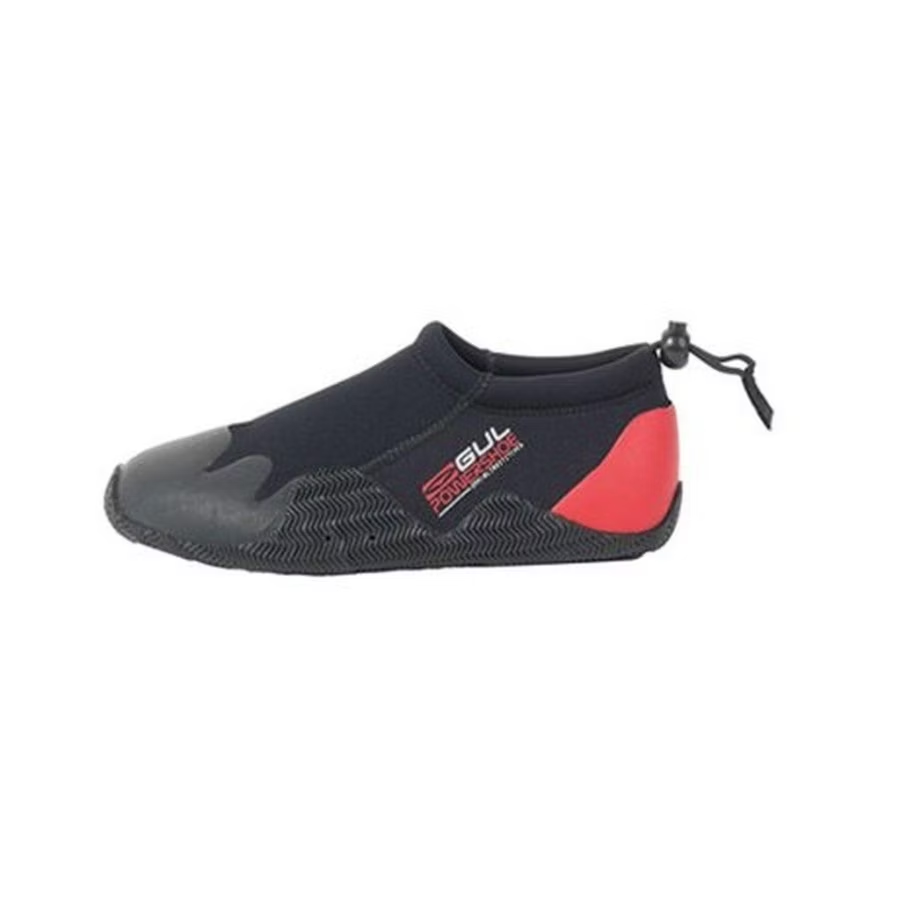
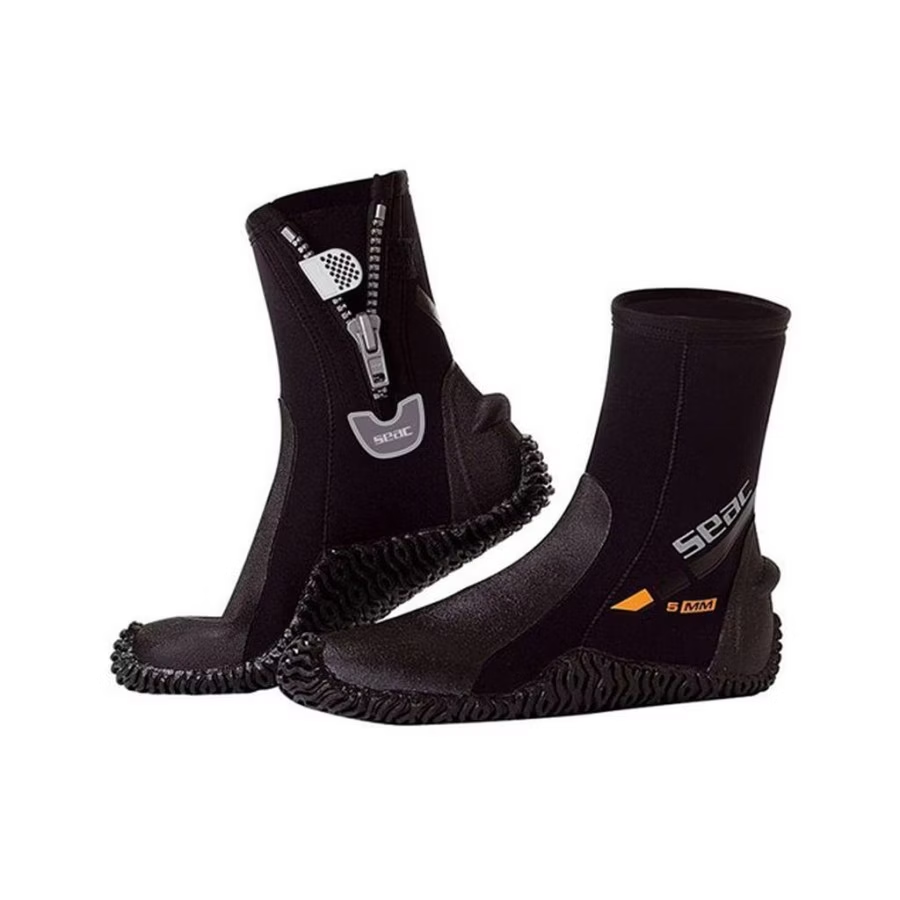
Dive booties sit between your foot and your open-heel fin pocket — they protect against blisters, add insulation and make rocky beach and boat ladder entries far less painful. Matching bootie thickness to your fin pocket size matters more than most divers realise.
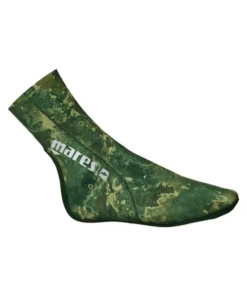
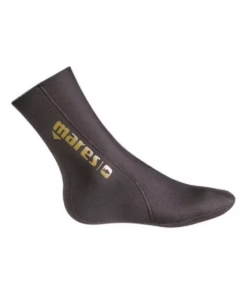
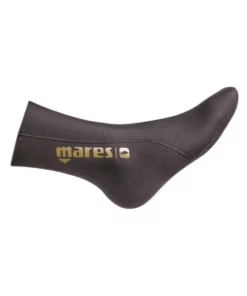
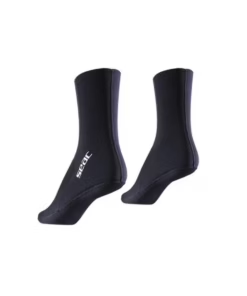
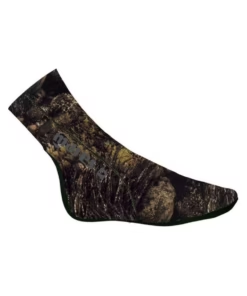
Mares Flex 50 Ultrastretch Socks
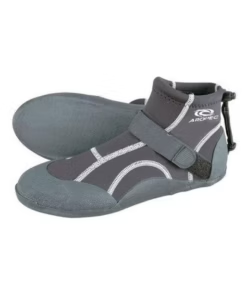
Problue BSC-25 3mm Booties

✓  Free Shipping Over RM150|✓  Manufacturing Defect Exchange Guaranteed|✓  Expert Dive Advice Before & After Purchase|✓  100% Authentic Equipment Every Item

Filter By

Price Range


RM 36 RM 735

Filter By

Sub Categories


Filter By

Brands


Showing 1–20 of 57 products
Sort:

RM147.00
Price range: RM150.00 through RM180.00
RM99.00
RM50.00
Price range: RM60.00 through RM87.00
RM40.00
RM50.00
Price range: RM180.00 through RM183.00

Expert Advice

Boot Up for Open-Heel Fins and Rocky Entries

Dive booties pair with open-heel fins and protect your feet on rocky beach entries that are common at Malaysian dive sites. 3mm booties suit warm Malaysian waters; 5mm for deeper or cooler dive sites.

Ask About Dive Booties

Thickness

3mm vs 5mm Dive Booties for Malaysian Diving Conditions

3mm booties suit Malaysian tropical waters at 28–30°C. 5mm booties are worth the extra thermal protection on deeper wall dives below 25m where temperatures drop and bottom times extend.

Sole Type

Hard Sole vs Soft Sole Dive Booties: Which Do You Need?

Hard sole booties provide grip on rocky beach entries — common at Malaysian dive sites like Tioman. Soft sole booties are slimmer under open-heel fin foot pockets for a closer fin-to-foot fit.

Fin Sizing

How Bootie Thickness Affects Open-Heel Fin Sizing

Open-heel fin foot pockets are sized in bootie thickness increments. Try your fins with the actual booties you plan to dive — a 3mm boot may feel loose in fins sized for 5mm.

Odour Care

Eliminating Neoprene Bootie Odour After Repeated Use

Turn booties inside-out and rinse in fresh water after every dive. For persistent odour, soak inside-out in diluted vinegar for 30 minutes then rinse. Never store wet in a sealed bag.

You Might Also Like

Recommended Products

Hand-picked products based on all categories

RM25.00
RM310.00

Diving Torches & Lights

Snap Sight H2O Man Torch 5LED

RM18.00

FAQ

Frequently Asked Questions

Everything you need to know before making a purchase

What bootie thickness is appropriate for Malaysian warm-water diving?
A 3mm neoprene bootie is the most practical thickness for Malaysian diving u2014 warm enough to prevent foot chill from water circulation inside an open heel fin foot pocket during a 60-minute dive, while thin enough to avoid overheating during surface intervals in tropical ambient temperatures. A 5mm bootie is rarely needed in Malaysia's warm water but may suit divers who feel cold easily during thermocline exposures at Sabah's deeper sites. The 1.5mm tropical bootie format provides insufficient padding for the rocky shore entries common at many Malaysian reef sites.
What sole type should dive booties have for Malaysian dive site conditions?
Hard rubber soles with a defined heel and toe are the most practical for Malaysian diving u2014 boat ladder rungs, coral rubble shore entries, resort jetties, and concrete entry ramps all benefit from slip resistance and impact protection that soft-sole booties cannot provide. Soft-sole booties compress too easily under body weight on rocky Malaysian entries, offering minimal protection over barnacle-covered surfaces. A hard sole with a basic lug tread pattern provides better protection than a soft sole with an aggressive tread design.
How do booties affect the sizing of open heel fins used for Malaysian diving?
The thickness of the bootie directly changes how much space the foot occupies inside the fin foot pocket, and a bootie can shift the required fin size by one to two sizes compared to sizing for a bare foot. Always size open heel fins while wearing the specific booties you plan to dive in u2014 a fin sized for a bare foot will have excessive heel lift with a 3mm bootie, reducing kick efficiency substantially. This is one of the most commonly overlooked fit errors made by divers who purchase fins and booties at different times or from different retailers.
High-cut versus ankle booties u2014 which suits Malaysian liveaboard diving better?
High-cut booties that extend above the ankle protect the Achilles tendon from the upper edge of the open heel fin foot pocket, which rubs during extended kick sessions on long Malaysian drift dives. Ankle-cut booties are faster to put on and take off between dives on a busy liveaboard deck, which matters when surface intervals are short. For Malaysian divers doing three or more dives per day across consecutive days, high-cut booties reduce the cumulative friction that makes the Achilles area painful by the last dive of the week.
How long do neoprene booties last in Malaysian saltwater, and how should I maintain them?
Neoprene booties used regularly in Malaysian saltwater typically last two to four seasons before the neoprene loses buoyancy and compression, and the sole adhesive at the tread junction begins to delaminate. Rinsing booties inside and out in fresh water after every dive and allowing them to dry completely prevents mildew that degrades the neoprene cell structure in Malaysian humidity. Turning booties inside out during drying ensures the inner lining u2014 which contacts both sweat and saltwater u2014 dries as thoroughly as the outer surface.
Is wearing dive booties strictly necessary for Malaysian warm-water recreational diving?
For boat diving using full-foot fins, booties are not required and most divers comfortably go barefoot. Booties become necessary for shore dives where the entry surface includes coral rubble, barnacle-covered rock, or rough concrete, where a barefoot entry risks cuts and lacerations. Open heel fins cannot be dived effectively without a bootie u2014 the bare foot slides within the pocket, reducing kick efficiency, and the adjustable strap creates direct pressure on unprotected skin with repeated use.
What bootie thickness is appropriate for Malaysian warm-water diving?
A 3mm neoprene bootie is the most practical thickness for Malaysian diving u2014 warm enough to prevent foot chill from water circulation inside an open heel fin foot pocket during a 60-minute dive, while thin enough to avoid overheating during surface intervals in tropical ambient temperatures. A 5mm bootie is rarely needed in Malaysia's warm water but may suit divers who feel cold easily during thermocline exposures at Sabah's deeper sites. The 1.5mm tropical bootie format provides insufficient padding for the rocky shore entries common at many Malaysian reef sites.
What sole type should dive booties have for Malaysian dive site conditions?
Hard rubber soles with a defined heel and toe are the most practical for Malaysian diving u2014 boat ladder rungs, coral rubble shore entries, resort jetties, and concrete entry ramps all benefit from slip resistance and impact protection that soft-sole booties cannot provide. Soft-sole booties compress too easily under body weight on rocky Malaysian entries, offering minimal protection over barnacle-covered surfaces. A hard sole with a basic lug tread pattern provides better protection than a soft sole with an aggressive tread design.
How do booties affect the sizing of open heel fins used for Malaysian diving?
The thickness of the bootie directly changes how much space the foot occupies inside the fin foot pocket, and a bootie can shift the required fin size by one to two sizes compared to sizing for a bare foot. Always size open heel fins while wearing the specific booties you plan to dive in u2014 a fin sized for a bare foot will have excessive heel lift with a 3mm bootie, reducing kick efficiency substantially. This is one of the most commonly overlooked fit errors made by divers who purchase fins and booties at different times or from different retailers.
High-cut versus ankle booties u2014 which suits Malaysian liveaboard diving better?
High-cut booties that extend above the ankle protect the Achilles tendon from the upper edge of the open heel fin foot pocket, which rubs during extended kick sessions on long Malaysian drift dives. Ankle-cut booties are faster to put on and take off between dives on a busy liveaboard deck, which matters when surface intervals are short. For Malaysian divers doing three or more dives per day across consecutive days, high-cut booties reduce the cumulative friction that makes the Achilles area painful by the last dive of the week.
How long do neoprene booties last in Malaysian saltwater, and how should I maintain them?
Neoprene booties used regularly in Malaysian saltwater typically last two to four seasons before the neoprene loses buoyancy and compression, and the sole adhesive at the tread junction begins to delaminate. Rinsing booties inside and out in fresh water after every dive and allowing them to dry completely prevents mildew that degrades the neoprene cell structure in Malaysian humidity. Turning booties inside out during drying ensures the inner lining u2014 which contacts both sweat and saltwater u2014 dries as thoroughly as the outer surface.
Is wearing dive booties strictly necessary for Malaysian warm-water recreational diving?
For boat diving using full-foot fins, booties are not required and most divers comfortably go barefoot. Booties become necessary for shore dives where the entry surface includes coral rubble, barnacle-covered rock, or rough concrete, where a barefoot entry risks cuts and lacerations. Open heel fins cannot be dived effectively without a bootie u2014 the bare foot slides within the pocket, reducing kick efficiency, and the adjustable strap creates direct pressure on unprotected skin with repeated use.