HomeShopDiving EquipmentWetsuits & Exposure Suits › Drysuits

Drysuits

Drysuits seal water out entirely, creating an insulating air layer that wetsuits can't match at depth or over extended bottom times. Primarily for cold-water and technical wreck diving, drysuits require their own course but unlock environments that neoprene closes off.

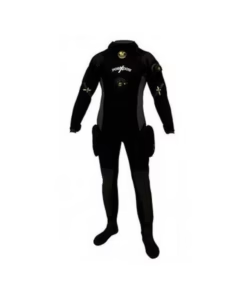
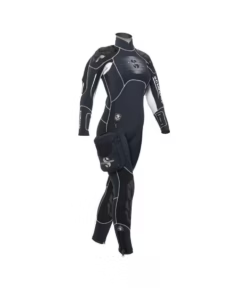
Scubapro NovaScotia SemiDry Suit
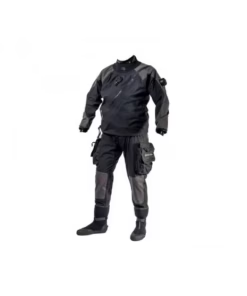
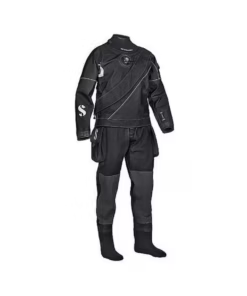
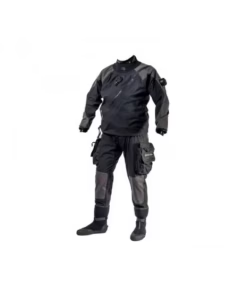
Mares Kevlar Drysuit With Silicone Seals
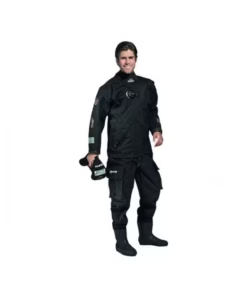
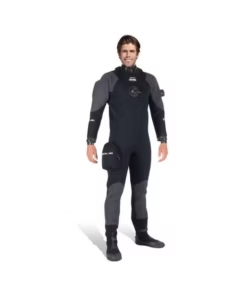
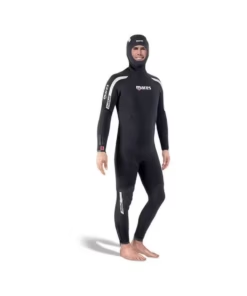
Mares Tech Fit LX UNI Drysuit

✓  Free Shipping Over RM150|✓  Manufacturing Defect Exchange Guaranteed|✓  Expert Dive Advice Before & After Purchase|✓  100% Authentic Equipment Every Item

Filter By

Price Range


RM 79 RM 10,146

Filter By

Sub Categories


Filter By

Brands


Showing 1–10 of 10 products
Sort:

RM1,560.00

Diving Equipment

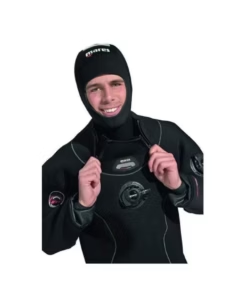
Mares Dry Suit Hood

RM79.00
RM2,527.00
RM2,860.00
RM1,712.00
RM2,120.00
RM5,399.00
RM10,146.00
RM3,496.00
RM1,491.00

Expert Advice

Dive Comfortably in Cold and Technical Waters

Drysuits open up diving in cooler climates, deep technical dives, and drysuit speciality courses. Whether you're exploring European wrecks or doing a technical certification, we stock the drysuits divers rely on.

Ask About Drysuit Diving

Types

Membrane vs Neoprene Drysuits: Key Differences Explained

Membrane drysuits require thermal undersuit layering and compress minimally with depth — making buoyancy more predictable. Neoprene drysuits provide inherent insulation but compress at depth, affecting buoyancy.

Training

Why You Need a Drysuit Specialty Course Before Diving Dry

Drysuit diving requires learning to vent excess air from both the drysuit and BCD simultaneously. Without training, air migration to the feet causes an uncontrolled ascent — a genuine decompression risk.

Undersuits

Choosing the Right Drysuit Undersuit for Your Dive Environment

Undersuit thickness determines thermal protection. 200g suits for temperate water; 400g+ suits for cold water technical diving. Argon inflation improves thermal insulation in the drysuit gas space.

Seals

Drysuit Seal Inspection and Replacement Schedule

Wrist and neck seals are the failure points of any drysuit. Latex seals need replacement every 1–3 years; neoprene seals last longer but compress over time. Inspect seals before every trip abroad.

You Might Also Like

Recommended Products

Hand-picked products based on all categories

Wetsuits & Exposure Suits

Subgear Element XXL 3MM

RM240.00
RM72.00

Diving Mask

Mares Samurai Mask

RM56.00
RM262.00

FAQ

Frequently Asked Questions

Everything you need to know before making a purchase

Do any Malaysian dive sites actually require a drysuit?
For recreational diving at standard Malaysian sites, a drysuit is not necessary u2014 water temperatures of 24 to 30 degrees Celsius fall well within comfortable wetsuit range for standard dive durations. The situation changes for technical divers conducting extended decompression dives at deeper Malaysian sites, where prolonged exposure to thermocline temperatures during multi-stop decompression profiles creates cumulative cooling that a thin wetsuit cannot adequately manage over a multi-day itinerary. Researchers, commercial divers, and videographers on long operational shifts at Malaysian offshore infrastructure are others for whom drysuit use makes practical sense in these waters.
What undergarment weight suits Malaysian water temperatures for drysuit technical diving?
Malaysian water temperatures at technical depths rarely drop below 22 degrees Celsius, requiring significantly less undergarment insulation than cold-water drysuit diving. A light 100 to 150 gram per square metre synthetic undersuit is adequate for most Malaysian technical dive profiles at these temperatures. The undergarment's thickness must be factored into weight calculations, as drysuit undergarments combined with the sealed air inside the suit create substantial positive buoyancy that requires significantly more ballast weight than an equivalent wetsuit configuration at the same site.
How does drysuit buoyancy control differ from a standard wetsuit and BCD setup?
A drysuit uses the air sealed inside the suit itself as a primary buoyancy variable u2014 the diver adds air via an inflator valve and vents it through a shoulder or wrist dump valve to maintain neutral buoyancy. This creates two independent buoyancy systems operating simultaneously: the BCD and the drysuit. Learning to manage both systems without over-inflating either requires dedicated training, and the consequences of drysuit overinflation u2014 a rapid feet-first ascent u2014 are more dangerous and less intuitive to correct than most BCD buoyancy errors.
What maintenance does a drysuit require that a standard wetsuit does not?
A drysuit requires regular inspection and periodic replacement of latex or neoprene neck and wrist seals, which degrade from UV and ozone exposure and can fail silently between dive trips. The suit zip must be lubricated after every dive with the manufacturer's specified wax to prevent the brass teeth from binding or corroding. In Malaysian humidity, storing a drysuit with the zip slightly open and silica gel packs placed inside the suit prevents the condensation buildup that promotes mildew on the inner fabric between trips.
Are membrane or neoprene drysuits better suited to Malaysian technical diving?
Membrane drysuits u2014 made from tri-laminate or compressed nylon fabric u2014 are lighter, pack smaller, and are easier to repair in the field than neoprene drysuits, and they rely entirely on the undergarment for thermal insulation. They compress very little at depth, making buoyancy control more predictable during multi-stop decompression profiles at Malaysian technical sites. Neoprene drysuits provide some intrinsic insulation and a more forgiving fit but are heavier and compress at depth, requiring additional air to compensate during descent u2014 an extra variable to manage in Malaysian technical diving conditions.
What training is required before diving a drysuit at Malaysian dive sites?
Drysuit diving requires a dedicated certification u2014 a PADI Drysuit Diver specialty, SSI Drysuit Diving course, or equivalent TDI qualification u2014 because emergency procedures for drysuit overinflation are entirely different from standard BCD emergencies. No Malaysian resort or liveaboard operator would allow an uncertified diver to use a drysuit at a commercial site. The course covers suit inflator and dump valve operation, recovery from an inverted overinflation position, and the correct interaction between BCD and suit buoyancy u2014 all of which require supervised pool and open water practice sessions before open water use.
Do any Malaysian dive sites actually require a drysuit?
For recreational diving at standard Malaysian sites, a drysuit is not necessary u2014 water temperatures of 24 to 30 degrees Celsius fall well within comfortable wetsuit range for standard dive durations. The situation changes for technical divers conducting extended decompression dives at deeper Malaysian sites, where prolonged exposure to thermocline temperatures during multi-stop decompression profiles creates cumulative cooling that a thin wetsuit cannot adequately manage over a multi-day itinerary. Researchers, commercial divers, and videographers on long operational shifts at Malaysian offshore infrastructure are others for whom drysuit use makes practical sense in these waters.
What undergarment weight suits Malaysian water temperatures for drysuit technical diving?
Malaysian water temperatures at technical depths rarely drop below 22 degrees Celsius, requiring significantly less undergarment insulation than cold-water drysuit diving. A light 100 to 150 gram per square metre synthetic undersuit is adequate for most Malaysian technical dive profiles at these temperatures. The undergarment's thickness must be factored into weight calculations, as drysuit undergarments combined with the sealed air inside the suit create substantial positive buoyancy that requires significantly more ballast weight than an equivalent wetsuit configuration at the same site.
How does drysuit buoyancy control differ from a standard wetsuit and BCD setup?
A drysuit uses the air sealed inside the suit itself as a primary buoyancy variable u2014 the diver adds air via an inflator valve and vents it through a shoulder or wrist dump valve to maintain neutral buoyancy. This creates two independent buoyancy systems operating simultaneously: the BCD and the drysuit. Learning to manage both systems without over-inflating either requires dedicated training, and the consequences of drysuit overinflation u2014 a rapid feet-first ascent u2014 are more dangerous and less intuitive to correct than most BCD buoyancy errors.
What maintenance does a drysuit require that a standard wetsuit does not?
A drysuit requires regular inspection and periodic replacement of latex or neoprene neck and wrist seals, which degrade from UV and ozone exposure and can fail silently between dive trips. The suit zip must be lubricated after every dive with the manufacturer's specified wax to prevent the brass teeth from binding or corroding. In Malaysian humidity, storing a drysuit with the zip slightly open and silica gel packs placed inside the suit prevents the condensation buildup that promotes mildew on the inner fabric between trips.
Are membrane or neoprene drysuits better suited to Malaysian technical diving?
Membrane drysuits u2014 made from tri-laminate or compressed nylon fabric u2014 are lighter, pack smaller, and are easier to repair in the field than neoprene drysuits, and they rely entirely on the undergarment for thermal insulation. They compress very little at depth, making buoyancy control more predictable during multi-stop decompression profiles at Malaysian technical sites. Neoprene drysuits provide some intrinsic insulation and a more forgiving fit but are heavier and compress at depth, requiring additional air to compensate during descent u2014 an extra variable to manage in Malaysian technical diving conditions.
What training is required before diving a drysuit at Malaysian dive sites?
Drysuit diving requires a dedicated certification u2014 a PADI Drysuit Diver specialty, SSI Drysuit Diving course, or equivalent TDI qualification u2014 because emergency procedures for drysuit overinflation are entirely different from standard BCD emergencies. No Malaysian resort or liveaboard operator would allow an uncertified diver to use a drysuit at a commercial site. The course covers suit inflator and dump valve operation, recovery from an inverted overinflation position, and the correct interaction between BCD and suit buoyancy u2014 all of which require supervised pool and open water practice sessions before open water use.