HomeShopDiving EquipmentWetsuits & Exposure Suits › Gloves

Gloves

Dive gloves protect hands from cold water, coral contact and the sharp edges that appear on wrecks and rocky reefs. For Malaysian diving, thin neoprene is usually sufficient — though Kevlar-reinforced palms matter for divers who spend time inside wreck structures or caves.

Mares Amara 20 Gloves
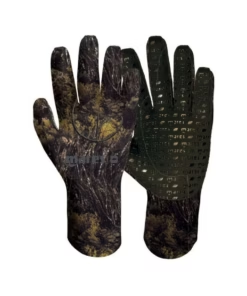
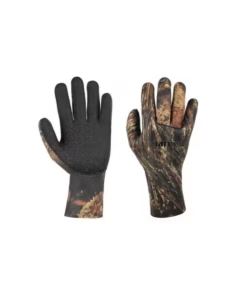
Mares Amara Camo 20 Gloves
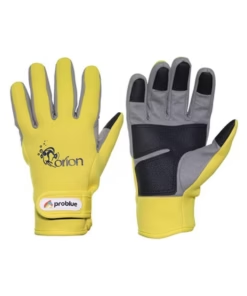
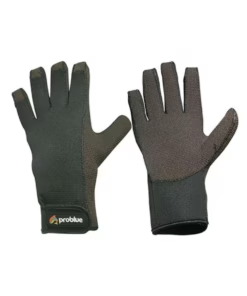
Problue GL-6027 Meridian Amara Gloves - 2.0mm

✓  Free Shipping Over RM150|✓  Manufacturing Defect Exchange Guaranteed|✓  Expert Dive Advice Before & After Purchase|✓  100% Authentic Equipment Every Item

Filter By

Price Range


RM 23 RM 2,399

Filter By

Sub Categories


Filter By

Brands


Showing 41–59 of 59 products
Sort:

RM40.00

Diving Equipment

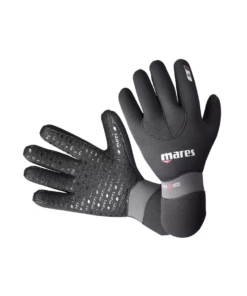
Mares Flexa Fit 5mm Gloves

RM52.00
RM39.00
RM159.00
RM118.00
RM40.00
RM140.00

Diving Equipment

Mares Flexa Touch Gloves

RM106.00
RM40.00
RM180.00

Diving Equipment

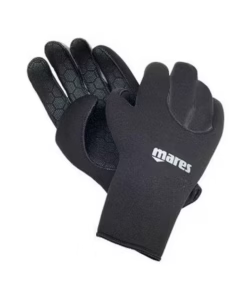
Mares Classic 2mm Gloves

RM23.00

Diving Equipment

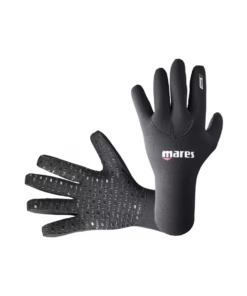
Mares Flexa Classic Gloves

Price range: RM28.00 through RM55.00

Diving Equipment

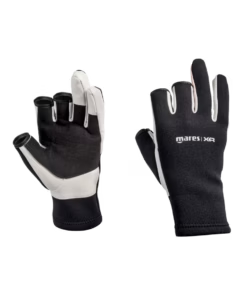
Mares Amara Tek Gloves 2mm

RM44.00

Diving Equipment

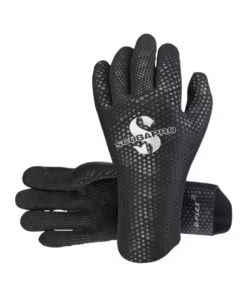
Scubapro D-Flex 2mm Gloves

RM136.00

Expert Advice

Protect Your Hands, Extend Your Dive

Dive gloves protect hands from coral scrapes, stinging hydroids, and cold temperatures on deeper dives. Choose glove thickness based on water temperature — 3mm for Malaysian tropicals, 5mm for cooler sites.

Ask About Dive Gloves

Thickness

Choosing Dive Glove Thickness for Malaysian Water Temperatures

3mm gloves suit Malaysian tropical waters on dives below 20m where hands chill faster than the torso. 5mm gloves are more appropriate for technical diving deeper than 30m or diving outside the tropics.

Marine Parks

Marine Park Rules on Dive Gloves: Why Malaysia Restricts Them

Several Malaysian marine parks restrict or prohibit dive gloves to prevent divers from touching and damaging coral. Check the current rules for Pulau Payar, Redang, and the Perhentians before packing.

Dexterity

Maintaining Equipment Handling Dexterity With Dive Gloves

Thicker gloves reduce tactile sensitivity — making operating BCD inflators, computer buttons, and buckles harder. Divers who wear gloves regularly recommend 3mm over 5mm for equipment dexterity underwater.

Types

Five-Finger Gloves vs Three-Finger Mitts for Colder Water Diving

Five-finger gloves suit most diving environments. Three-finger mitts trap more warm water and reduce heat loss from inter-finger gaps — used by cold-water and technical divers where thermal protection outweighs dexterity.

You Might Also Like

Recommended Products

Hand-picked products based on all categories

RM52.00

Diving Equipment

Gull Coco Open Heel Fins

RM155.00

Diving Equipment

Zeagle Express Tech PAD Kit

RM88.60
Price range: RM199.00 through RM202.00
RM199.00

FAQ

Frequently Asked Questions

Everything you need to know before making a purchase

When are dive gloves worth wearing for recreational diving at Malaysian reef sites?
Dive gloves protect against accidental contact with fire coral, stinging hydroids, and abrasive surfaces during normal buoyancy management near reef structure at Malaysian sites. Divers with well-controlled buoyancy who rarely make reef contact during a dive can reasonably dive without gloves at most Malaysian sites. For divers still building buoyancy control skills, or when navigating through areas with dense hydroid colonies u2014 common at some Mabul macro dive sites u2014 the protection from minor injuries makes gloves a worthwhile addition to the equipment configuration.
What glove thickness is appropriate for recreational diving in Malaysian water temperatures?
At 24 to 30 degrees Celsius, 1.5mm to 2mm neoprene provides adequate thermal protection for most recreational divers during a standard 60-minute dive without creating the hand stiffness that thicker neoprene introduces. Thicker 3mm gloves are noticeably warmer but reduce finger dexterity, affecting reliable operation of BCD inflator buttons, camera shutter controls, and weight pocket release handles. The thinnest glove that provides the protection needed for the specific dive is the most practical choice at Malaysian sites.
Do thin dive gloves significantly affect dexterity when handling equipment underwater?
1.5mm gloves produce a noticeable but manageable reduction in finger sensitivity u2014 a diver can still manipulate a dive computer scroll button, operate a camera, and handle an SMB spool without meaningful difficulty. 3mm and thicker gloves reduce grip precision substantially, which matters when operating small mechanisms like torch switches, reel triggers, or the inflation valve of a delayed SMB at depth. For Malaysian photographers and divers who frequently deploy safety equipment during ascent, thinner five-finger designs that preserve full digit articulation are the more functional choice.
What glove construction provides the best abrasion resistance for Malaysian rocky shore entries?
Gloves with a reinforced palm panel in Amara synthetic leather or textured rubber provide better abrasion resistance against barnacle-covered rock and coral rubble than standard smooth neoprene palms. The reinforcement matters most at the palm heel and thumb base, which are the contact points during a hands-first shore entry or when steadying yourself on an entry rock. Gloves designed primarily for thermal protection have soft neoprene palms that tear quickly on the coarse entry surfaces found at many Malaysian shore dive sites.
Are dive gloves permitted at all Malaysian dive sites including marine protected areas?
Sipadan and other Malaysian marine protected areas prohibit touching or collecting any marine life or substrate u2014 gloves do not create any entitlement to contact the reef, and their use is not a workaround for these regulations. Some Malaysian marine park rangers raise concerns about gloves encouraging casual reef contact behaviour, though gloves themselves are not universally prohibited across all Malaysian parks. The relevant commitment is maintaining buoyancy control that avoids reef contact entirely, regardless of whether gloves are worn.
How do I care for neoprene dive gloves after saltwater diving in Malaysia?
Rinse gloves inside and out in fresh water immediately after use u2014 turning them inside out for the internal rinse removes the sweat and salt that accumulate against the skin surface. Allow gloves to dry completely before storage, either suspended or spread flat, as creased neoprene develops stress cracks at fold lines over time. Storing gloves inside a sealed plastic bag while still damp is the fastest way to generate mildew on neoprene in Malaysian humidity u2014 fully dry before packing without exception.
When are dive gloves worth wearing for recreational diving at Malaysian reef sites?
Dive gloves protect against accidental contact with fire coral, stinging hydroids, and abrasive surfaces during normal buoyancy management near reef structure at Malaysian sites. Divers with well-controlled buoyancy who rarely make reef contact during a dive can reasonably dive without gloves at most Malaysian sites. For divers still building buoyancy control skills, or when navigating through areas with dense hydroid colonies u2014 common at some Mabul macro dive sites u2014 the protection from minor injuries makes gloves a worthwhile addition to the equipment configuration.
What glove thickness is appropriate for recreational diving in Malaysian water temperatures?
At 24 to 30 degrees Celsius, 1.5mm to 2mm neoprene provides adequate thermal protection for most recreational divers during a standard 60-minute dive without creating the hand stiffness that thicker neoprene introduces. Thicker 3mm gloves are noticeably warmer but reduce finger dexterity, affecting reliable operation of BCD inflator buttons, camera shutter controls, and weight pocket release handles. The thinnest glove that provides the protection needed for the specific dive is the most practical choice at Malaysian sites.
Do thin dive gloves significantly affect dexterity when handling equipment underwater?
1.5mm gloves produce a noticeable but manageable reduction in finger sensitivity u2014 a diver can still manipulate a dive computer scroll button, operate a camera, and handle an SMB spool without meaningful difficulty. 3mm and thicker gloves reduce grip precision substantially, which matters when operating small mechanisms like torch switches, reel triggers, or the inflation valve of a delayed SMB at depth. For Malaysian photographers and divers who frequently deploy safety equipment during ascent, thinner five-finger designs that preserve full digit articulation are the more functional choice.
What glove construction provides the best abrasion resistance for Malaysian rocky shore entries?
Gloves with a reinforced palm panel in Amara synthetic leather or textured rubber provide better abrasion resistance against barnacle-covered rock and coral rubble than standard smooth neoprene palms. The reinforcement matters most at the palm heel and thumb base, which are the contact points during a hands-first shore entry or when steadying yourself on an entry rock. Gloves designed primarily for thermal protection have soft neoprene palms that tear quickly on the coarse entry surfaces found at many Malaysian shore dive sites.
Are dive gloves permitted at all Malaysian dive sites including marine protected areas?
Sipadan and other Malaysian marine protected areas prohibit touching or collecting any marine life or substrate u2014 gloves do not create any entitlement to contact the reef, and their use is not a workaround for these regulations. Some Malaysian marine park rangers raise concerns about gloves encouraging casual reef contact behaviour, though gloves themselves are not universally prohibited across all Malaysian parks. The relevant commitment is maintaining buoyancy control that avoids reef contact entirely, regardless of whether gloves are worn.
How do I care for neoprene dive gloves after saltwater diving in Malaysia?
Rinse gloves inside and out in fresh water immediately after use u2014 turning them inside out for the internal rinse removes the sweat and salt that accumulate against the skin surface. Allow gloves to dry completely before storage, either suspended or spread flat, as creased neoprene develops stress cracks at fold lines over time. Storing gloves inside a sealed plastic bag while still damp is the fastest way to generate mildew on neoprene in Malaysian humidity u2014 fully dry before packing without exception.