HomeShopAccessories › Reels & Spools

Reels & Spools

Dive reels run line between a diver and a reference point — whether that's a cave line system, a descent buoy or an SMB on ascent. Safety spools carry 25–50 metres of line in a compact package and clip to a D-ring without taking up significant space on the BCD.

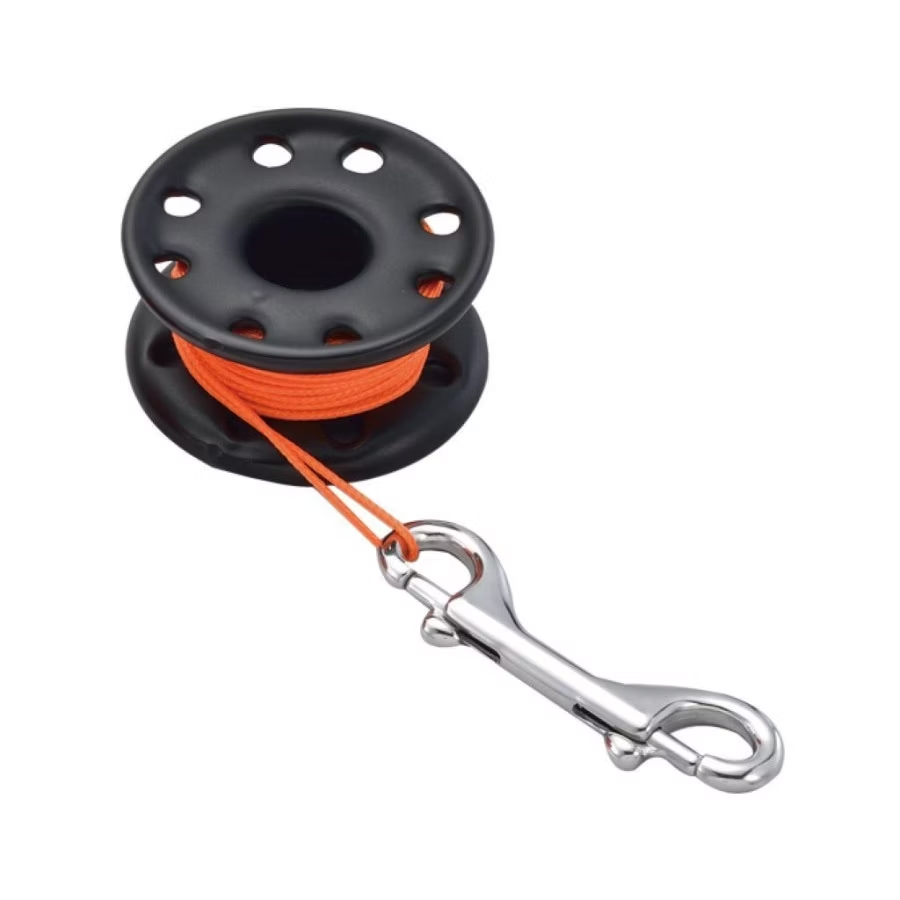
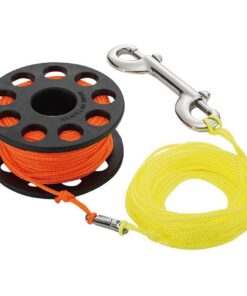
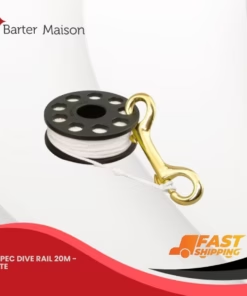
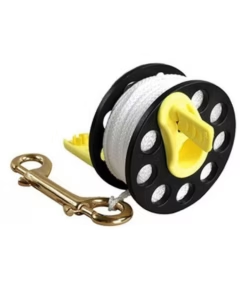
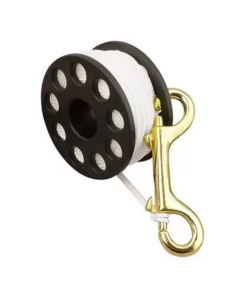
Aropec Spool 20M
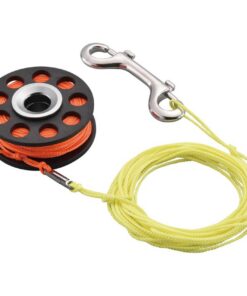
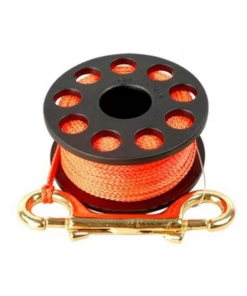
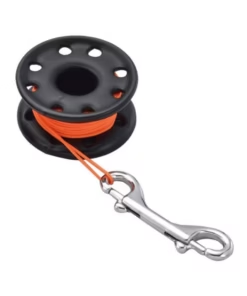
Problue AC-92-6S Stainless Body Fingers Spool
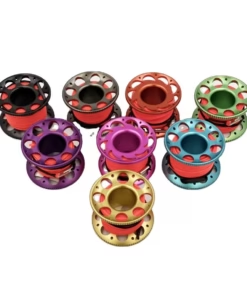
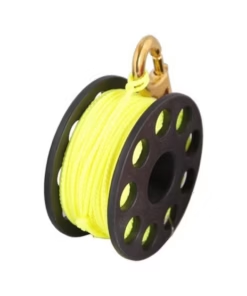
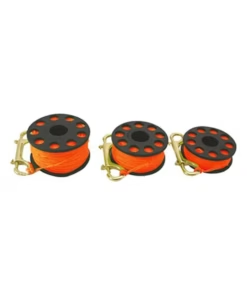
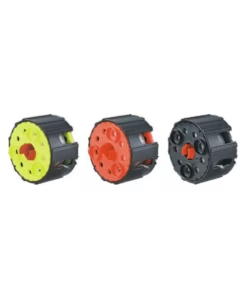
Problue AC-92-2 Fingers Spool

✓  Free Shipping Over RM150|✓  Manufacturing Defect Exchange Guaranteed|✓  Expert Dive Advice Before & After Purchase|✓  100% Authentic Equipment Every Item

Filter By

Price Range


RM 39 RM 326

Filter By

Sub Categories


Filter By

Brands


Showing 1–14 of 14 products
Sort:

Price range: RM39.00 through RM75.00
Price range: RM60.00 through RM66.00
RM55.00
RM326.00
RM78.00
RM139.00

Expert Advice

Line Management for Every Dive Situation

A dive reel unspools a guideline through a wreck or cave and reels it back for a safe exit. A small spool deploys an SMB from depth without tangling. Every diver who goes beyond open water should carry one.

Ask About Dive Reels

Reel vs Spool

When to Use a Reel vs a Spool Underwater

A reel carries more line (30–100m+) for wreck and cave penetration where you lay a guideline and recover it on exit. A small spool carries 20–30m for SMB deployment from depth — the most common recreational use.

SMB Deploy

How to Deploy an SMB From Depth Using a Spool

Clip the spool to your BCD, inflate the SMB orally, attach the spool line, and release the SMB while controlling line feed. Watch the spool for tangles as it unwinds — a runaway spool is the most common deployment error.

Cave Diving

Guideline Reel Technique for Penetration Diving in Wrecks

In wreck and cave environments, the guideline is your exit path. Tie off to a solid point at the entry, maintain tension on the reel, and always leave enough line to return plus a safety reserve.

Line Types

Choosing the Right Line for Dive Reels and Safety Spools

Non-stretch nylon or polyester line is standard for SMB spools. Heavy-gauge line on penetration reels withstands the abrasion of being dragged across rock and debris on entry and exit from Malaysian wrecks.

You Might Also Like

Recommended Products

Hand-picked products based on all categories

Wetsuits & Exposure Suits

Subgear Element XXL 3MM

RM240.00
RM72.00

Diving Mask

Mares Samurai Mask

RM56.00
RM262.00

FAQ

Frequently Asked Questions

Everything you need to know before making a purchase

What is the practical difference between a dive reel and a dive spool?
A dive spool is a hand-held frame holding 10 to 30 metres of line with no locking mechanism u2014 it pays out and retrieves by hand and is primarily used for SMB deployment during recreational dive ascents. A dive reel has a locking mechanism, a larger capacity of 30 to 100-plus metres, and a handle for controlled one-hand retrieval u2014 used for navigation lines at wreck and cave sites and for extended SMB deployments in current. Most Malaysian recreational divers need a spool; technical divers and those entering overhead environments need a reel.
What line length suits recreational diving needs at Malaysian drift and reef sites?
A 20 to 30 metre spool provides adequate line for SMB deployment from a safety stop at 5 metres with sufficient surplus to manage current pull on the SMB during the full ascent. Line lengths shorter than 20 metres risk running out during an ascent slowed by surge or current, leaving the diver without control of the ascending SMB at a critical moment. For wreck navigation at Malaysian sites like the Labuan wrecks, a 30 to 50 metre reel provides enough line for recreational interior exploration while preventing movement beyond safe limits.
How do I use a reel correctly to deploy an SMB during a Malaysian current ascent?
Unclip the reel from the BCD before beginning the SMB inflation sequence and hold it in the non-dominant hand with the spool able to rotate freely. After inflating and releasing the SMB, control the line paying out from the reel with consistent finger tension u2014 preventing the SMB from ascending faster than the line spools. Maintain upward line tension throughout the ascent so the SMB remains taut and vertical, allowing the boat crew to track your position accurately rather than chasing a drifting SMB that has separated from the ascent line.
What Malaysian diving conditions warrant carrying a full reel rather than a simple spool?
A reel is warranted when the dive may require more than 30 metres of line u2014 wreck interior navigation at Malaysian sites like those off Labuan, longer swim-through penetrations at reef sites, or any dive where a navigation line is laid and retrieved. For standard drift dives with an SMB deployment at a safety stop, a 20-metre spool is fully adequate. Carrying a full reel on every Malaysian recreational open-water dive adds unnecessary bulk without adding practical safety benefit for profiles that never involve overhead environments or extended ascent distances.
How do I maintain a dive reel after repeated use in Malaysian saltwater?
Rinse the reel frame, spool, and locking mechanism in fresh water after every dive, paying attention to the lock lever pivot point where salt deposits concentrate and cause binding. Dry the reel completely before storage u2014 a reel stored wet in Malaysian humidity develops corrosion on line guides and brass fittings at the line end. Inspect the line periodically for cuts, abrasion damage, and UV brittleness, replacing it before it breaks at an inconvenient moment during an ascent at a Malaysian drift site.
Are dive reels necessary for recreational diving at Malaysian sites, or primarily technical tools?
For the majority of Malaysian recreational diving at open-reef and current drift sites, a simple spool is entirely adequate for SMB deployment and short navigation line use. Reels become necessary when navigating wreck structures at Malaysian sites where losing the entry point during interior exploration is a real risk, and the line needs to be retrieved reliably after the dive. Carrying a reel is appropriate when the specific dive profile requires it u2014 not as a default addition to every open-water recreational dive where a spool performs all required functions.
What is the practical difference between a dive reel and a dive spool?
A dive spool is a hand-held frame holding 10 to 30 metres of line with no locking mechanism u2014 it pays out and retrieves by hand and is primarily used for SMB deployment during recreational dive ascents. A dive reel has a locking mechanism, a larger capacity of 30 to 100-plus metres, and a handle for controlled one-hand retrieval u2014 used for navigation lines at wreck and cave sites and for extended SMB deployments in current. Most Malaysian recreational divers need a spool; technical divers and those entering overhead environments need a reel.
What line length suits recreational diving needs at Malaysian drift and reef sites?
A 20 to 30 metre spool provides adequate line for SMB deployment from a safety stop at 5 metres with sufficient surplus to manage current pull on the SMB during the full ascent. Line lengths shorter than 20 metres risk running out during an ascent slowed by surge or current, leaving the diver without control of the ascending SMB at a critical moment. For wreck navigation at Malaysian sites like the Labuan wrecks, a 30 to 50 metre reel provides enough line for recreational interior exploration while preventing movement beyond safe limits.
How do I use a reel correctly to deploy an SMB during a Malaysian current ascent?
Unclip the reel from the BCD before beginning the SMB inflation sequence and hold it in the non-dominant hand with the spool able to rotate freely. After inflating and releasing the SMB, control the line paying out from the reel with consistent finger tension u2014 preventing the SMB from ascending faster than the line spools. Maintain upward line tension throughout the ascent so the SMB remains taut and vertical, allowing the boat crew to track your position accurately rather than chasing a drifting SMB that has separated from the ascent line.
What Malaysian diving conditions warrant carrying a full reel rather than a simple spool?
A reel is warranted when the dive may require more than 30 metres of line u2014 wreck interior navigation at Malaysian sites like those off Labuan, longer swim-through penetrations at reef sites, or any dive where a navigation line is laid and retrieved. For standard drift dives with an SMB deployment at a safety stop, a 20-metre spool is fully adequate. Carrying a full reel on every Malaysian recreational open-water dive adds unnecessary bulk without adding practical safety benefit for profiles that never involve overhead environments or extended ascent distances.
How do I maintain a dive reel after repeated use in Malaysian saltwater?
Rinse the reel frame, spool, and locking mechanism in fresh water after every dive, paying attention to the lock lever pivot point where salt deposits concentrate and cause binding. Dry the reel completely before storage u2014 a reel stored wet in Malaysian humidity develops corrosion on line guides and brass fittings at the line end. Inspect the line periodically for cuts, abrasion damage, and UV brittleness, replacing it before it breaks at an inconvenient moment during an ascent at a Malaysian drift site.
Are dive reels necessary for recreational diving at Malaysian sites, or primarily technical tools?
For the majority of Malaysian recreational diving at open-reef and current drift sites, a simple spool is entirely adequate for SMB deployment and short navigation line use. Reels become necessary when navigating wreck structures at Malaysian sites where losing the entry point during interior exploration is a real risk, and the line needs to be retrieved reliably after the dive. Carrying a reel is appropriate when the specific dive profile requires it u2014 not as a default addition to every open-water recreational dive where a spool performs all required functions.