HomeShopAccessories › Clips, D-Rings & Lanyards

Clips, D-Rings & Lanyards

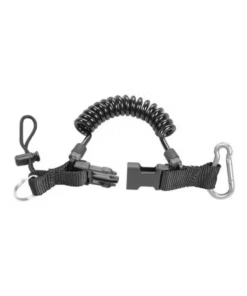
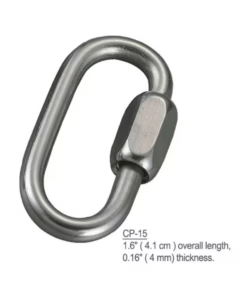
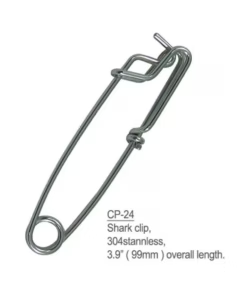
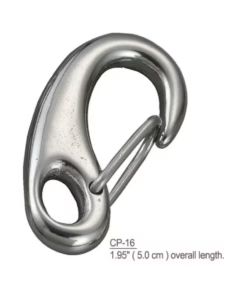
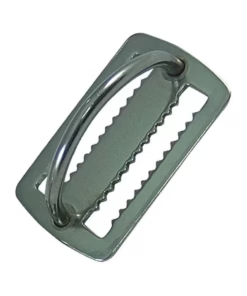
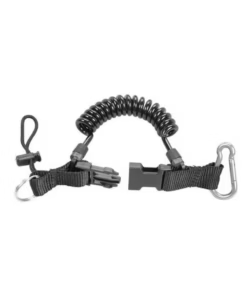
Every piece of equipment dangling unsecured from a BCD is a snag hazard waiting to happen. Stainless bolt snaps, aluminium D-rings, bungee retainers and lanyards are the hardware divers use to keep torches, computers, reels and cameras exactly where they belong.

Problue BG-8580 Nose Clip
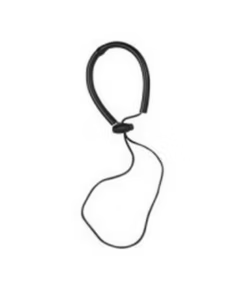
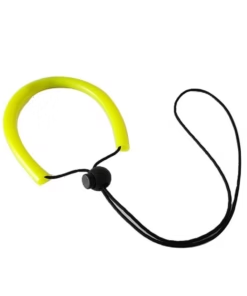
Aropec Wrist Lanyard

✓  Free Shipping Over RM150|✓  Manufacturing Defect Exchange Guaranteed|✓  Expert Dive Advice Before & After Purchase|✓  100% Authentic Equipment Every Item

Filter By

Price Range


RM 2 RM 206

Filter By

Sub Categories


Filter By

Brands


Showing 21–40 of 41 products
Sort:

RM59.00
RM6.00
RM79.00
Out of stock
RM35.00
RM20.00
Price range: RM19.00 through RM30.00
RM49.00
Price range: RM19.00 through RM33.00
RM25.00
RM9.00

Expert Advice

Never Lose a Piece of Dive Gear Again

A 70-metre drop-and-lose scenario ends your dive instantly. Bolt snaps, brass clips, retractors and wrist lanyards secure torches, SMBs, compasses and cameras to your BCD so gear stays with you.

Ask About Dive Gear Management

Metal Types

Brass vs Stainless Steel Bolt Snaps: Which Lasts Longer?

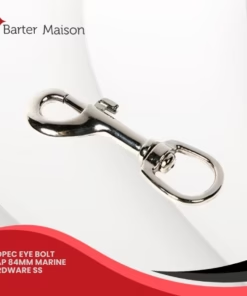
Stainless steel bolt snaps resist corrosion better in long-term salt water use. Brass snaps are lighter and suitable for recreational use. Both require rinsing and lubrication of the spring mechanism.

Retractors

When to Use a Retractor vs a Static Lanyard

Retractors auto-retract to the BCD attachment point when the torch or tool is released — keeping gear close to the body and preventing tangles. Static lanyards suit fixed-position accessories like compasses.

Technical Rigging

Standard Technical Diving Gear Rigging With Bolt Snaps

In technical diving, every accessory is rigged to a specific D-ring position with a consistent gate-up/clip-from-left orientation so gear can be managed in zero-visibility by touch alone.

Salt Care

Preventing Bolt Snap Seizure After Salt Water Diving

Rinse all metal clips in fresh water after every dive, including the spring mechanism. Apply food-grade silicone spray to the gate mechanism twice a season to prevent salt crystallisation seizing the gate.

You Might Also Like

Recommended Products

Hand-picked products based on all categories

Wetsuits & Exposure Suits

Subgear Element XXL 3MM

RM240.00
RM72.00

Diving Mask

Mares Samurai Mask

RM56.00
RM262.00

FAQ

Frequently Asked Questions

Everything you need to know before making a purchase

What clip types are standard for attaching accessories to a BCD for Malaysian recreational diving?
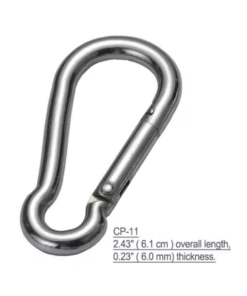
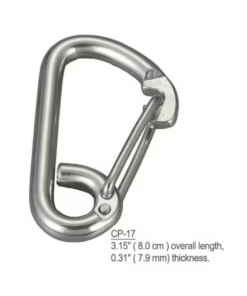
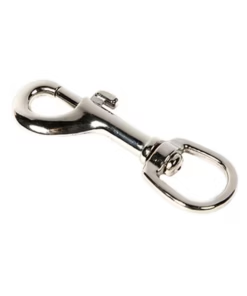
Bolt snaps are the standard primary attachment clip for dive accessories in Malaysian recreational diving u2014 a spring-loaded gate that opens with thumb pressure and closes positively, reliable enough for frequently accessed equipment like torches, spools, and compasses. Double-ended bolt snaps allow clipping between two D-rings without the clip falling free when unclipped from one end. Carabiners are less common in recreational diving because the rotating gate can snag on reef and webbing more easily than the inline bolt snap gate design.
How do I choose the right clip gate type for different diving accessories at Malaysian sites?
Bolt snap gates that open with single thumb pressure suit equipment accessed frequently during a dive u2014 torches, spools, and slates. Screw-gate or twist-lock mechanisms suit items that must not detach accidentally and are accessed only infrequently u2014 backup lights, safety sausages, and secondary masks. Malaysian drift diving conditions where hands may be managing current, camera, or SMB simultaneously require clips operable reliably with one hand and without looking, strongly favouring simple bolt snaps over multi-step locking mechanisms.
Why do Malaysian dive guides prefer bolt snaps over carabiners for equipment attachment?
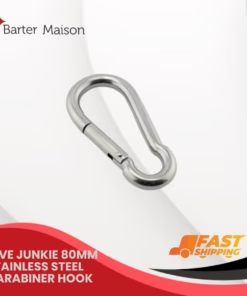
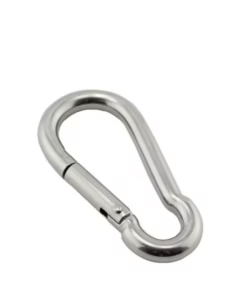
Bolt snaps open in a single inline motion that does not require rotating the gate away from the clip body u2014 a rotating carabiner gate can be snagged by a line, coral branch, or webbing and opened accidentally during a Malaysian reef or wreck dive. Bolt snaps clip and release with one thumb regardless of orientation, which matters when attaching or releasing equipment during a drift while maintaining buoyancy with the other hand. The only functional advantage of a carabiner is a higher load rating, which is irrelevant for the light accessories used in Malaysian recreational diving configurations.
What materials are most corrosion-resistant for clips and D-rings used in Malaysian saltwater?
316-grade stainless steel provides adequate corrosion resistance for clips and D-rings in Malaysian saltwater when rinsed in fresh water after every dive. Brass corrodes faster in saltwater but is softer and less likely to damage equipment it contacts during handling u2014 used in some older configurations but largely replaced by stainless steel in modern dive accessories. Titanium hardware is immune to saltwater corrosion and lighter than stainless steel, increasingly available for dive clips from specialist Malaysian and international dive retailers at a significant price premium over stainless equivalents.
How do lanyards prevent equipment loss during Malaysian drift dives?
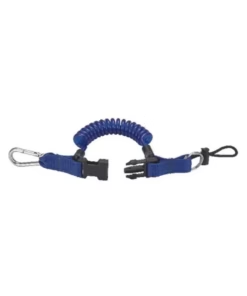
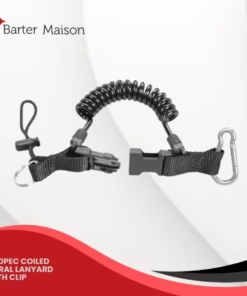
A lanyard connects a piece of equipment to a D-ring or wrist as a tether that prevents loss if the bolt snap releases accidentally during a current entry or rapid manoeuvre. Bungee lanyards are preferred for equipment like torches that are frequently unclipped and used during dives, as the bungee retracts slack when the item is clipped back, preventing the cord from dangling and snagging. Non-elastic cord lanyards are more appropriate for larger items like cameras where bungee tension creates unwanted drag on the equipment during swimming.
Where should D-rings be positioned on a BCD for the most practical gear setup for Malaysian diving?
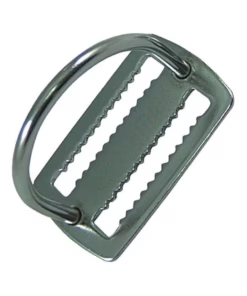
The most used D-ring positions for Malaysian recreational diving are the two chest D-rings for SMB clip and torch, one lower right waist D-ring for a compass or knife sheath, and one left shoulder D-ring for a spool or secondary light. D-rings on the underside of the BCD waist band are less accessible during horizontal drift diving, where reaching beneath the body in current is awkward. When evaluating a BCD for purchase, the placement and gate orientation of each D-ring under realistic horizontal diving positions matters more than the total count of D-rings provided.
What clip types are standard for attaching accessories to a BCD for Malaysian recreational diving?
Bolt snaps are the standard primary attachment clip for dive accessories in Malaysian recreational diving u2014 a spring-loaded gate that opens with thumb pressure and closes positively, reliable enough for frequently accessed equipment like torches, spools, and compasses. Double-ended bolt snaps allow clipping between two D-rings without the clip falling free when unclipped from one end. Carabiners are less common in recreational diving because the rotating gate can snag on reef and webbing more easily than the inline bolt snap gate design.
How do I choose the right clip gate type for different diving accessories at Malaysian sites?
Bolt snap gates that open with single thumb pressure suit equipment accessed frequently during a dive u2014 torches, spools, and slates. Screw-gate or twist-lock mechanisms suit items that must not detach accidentally and are accessed only infrequently u2014 backup lights, safety sausages, and secondary masks. Malaysian drift diving conditions where hands may be managing current, camera, or SMB simultaneously require clips operable reliably with one hand and without looking, strongly favouring simple bolt snaps over multi-step locking mechanisms.
Why do Malaysian dive guides prefer bolt snaps over carabiners for equipment attachment?
Bolt snaps open in a single inline motion that does not require rotating the gate away from the clip body u2014 a rotating carabiner gate can be snagged by a line, coral branch, or webbing and opened accidentally during a Malaysian reef or wreck dive. Bolt snaps clip and release with one thumb regardless of orientation, which matters when attaching or releasing equipment during a drift while maintaining buoyancy with the other hand. The only functional advantage of a carabiner is a higher load rating, which is irrelevant for the light accessories used in Malaysian recreational diving configurations.
What materials are most corrosion-resistant for clips and D-rings used in Malaysian saltwater?
316-grade stainless steel provides adequate corrosion resistance for clips and D-rings in Malaysian saltwater when rinsed in fresh water after every dive. Brass corrodes faster in saltwater but is softer and less likely to damage equipment it contacts during handling u2014 used in some older configurations but largely replaced by stainless steel in modern dive accessories. Titanium hardware is immune to saltwater corrosion and lighter than stainless steel, increasingly available for dive clips from specialist Malaysian and international dive retailers at a significant price premium over stainless equivalents.
How do lanyards prevent equipment loss during Malaysian drift dives?
A lanyard connects a piece of equipment to a D-ring or wrist as a tether that prevents loss if the bolt snap releases accidentally during a current entry or rapid manoeuvre. Bungee lanyards are preferred for equipment like torches that are frequently unclipped and used during dives, as the bungee retracts slack when the item is clipped back, preventing the cord from dangling and snagging. Non-elastic cord lanyards are more appropriate for larger items like cameras where bungee tension creates unwanted drag on the equipment during swimming.
Where should D-rings be positioned on a BCD for the most practical gear setup for Malaysian diving?
The most used D-ring positions for Malaysian recreational diving are the two chest D-rings for SMB clip and torch, one lower right waist D-ring for a compass or knife sheath, and one left shoulder D-ring for a spool or secondary light. D-rings on the underside of the BCD waist band are less accessible during horizontal drift diving, where reaching beneath the body in current is awkward. When evaluating a BCD for purchase, the placement and gate orientation of each D-ring under realistic horizontal diving positions matters more than the total count of D-rings provided.