HomeShopDiving Equipment › Hoses

Hoses

High-pressure and low-pressure hoses connect your regulator's first stage to the instruments and inflators that depend on it. HP hoses feed SPGs and computers; LP hoses supply second stages, octopuses, BCD inflators and drysuit connections. Getting the thread standard right matters.

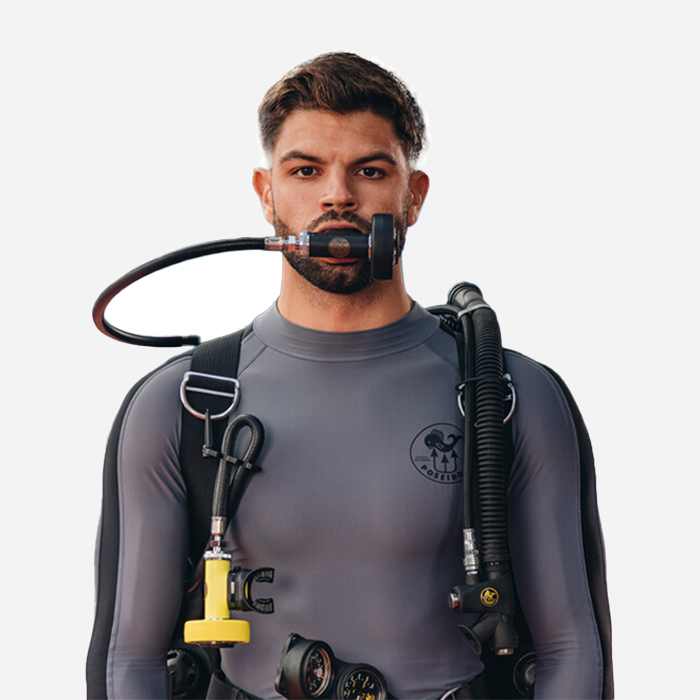
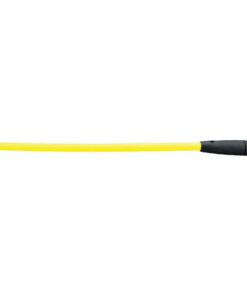
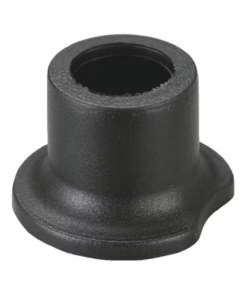
Problue AC-11 Hose Protector
SSI dive training backpack and equipment

✓  Free Shipping Over RM150|✓  Manufacturing Defect Exchange Guaranteed|✓  Expert Dive Advice Before & After Purchase|✓  100% Authentic Equipment Every Item

Filter By

Price Range


RM 0 RM 1,599

Filter By

Sub Categories


Filter By

Brands


Showing 41–60 of 101 products
Sort:

RM95.00
RM19.00
RM279.00
RM199.00
Price range: RM105.00 through RM119.00
RM110.00
RM179.00
RM240.00
RM290.00
RM202.00

Diving Equipment

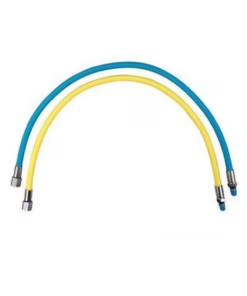
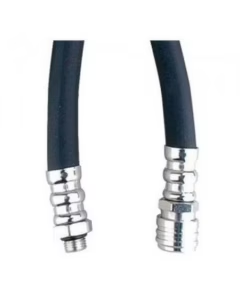
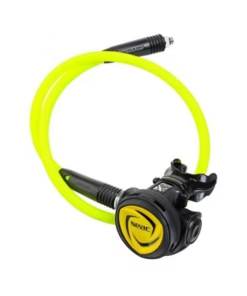
Problue High Pressure Hose

Price range: RM229.00 through RM280.00

Diving Equipment

Poseidon CC Hose (2-P)

RM840.00
RM294.00

Buyer's Guide

The Links in Your Regulator System

Hoses are consumables that wear, crack, and fail over time. High-pressure hoses carry tank pressure to your SPG; low-pressure hoses feed your second stage, BCD inflator and drysuit valve — match length and thread to your setup.

Ask About Regulator Hoses

Inspection

How to Inspect Regulator Hoses for Wear and Failure Risk

Check hose ends for cracking at the swivel fitting — this is where pressure cycling causes material fatigue. Any cracking, bubbling, or hose stiffness indicates replacement is needed before the next dive.

Lengths

Standard Hose Lengths for Recreational and Technical Configurations

Recreational setups use a 60–75cm primary second stage hose. Technical divers use a 210cm long hose for donation in out-of-air emergencies — coiled under bungees across the chest until needed.

Threads

HP and LP Hose Thread Types: Getting the Right Fit

High-pressure hoses use a different thread specification than low-pressure hoses — they are not interchangeable. Both use either 3/8 UNF or 7/16 UNF threads depending on regulator brand — confirm before ordering.

Replacement

When to Replace Regulator Hoses: Annual Inspection Schedule

Replace hoses showing cracking, stiffness, or any bubbling immediately. Hoses without visible wear should be replaced at 3–5 year intervals during scheduled regulator service as a precautionary measure.

You Might Also Like

Recommended Products

Hand-picked products based on all categories

FAQ

Frequently Asked Questions

Everything you need to know before making a purchase

What hose types does a standard Malaysian recreational regulator setup require?
A standard single-tank recreational setup in Malaysia uses one low-pressure hose from the first stage to the primary second stage, one LP hose to the BCD inflator, and one high-pressure hose to the submersible pressure gauge or console. If a standalone octopus alternate air source is used rather than a combined inflator-octopus, a third LP hose connects the octopus to the first stage. This configuration covers all recreational safety requirements without excess hardware that adds bulk and snag risk during Malaysian reef dives.
What is the functional difference between high-pressure and low-pressure regulator hoses?
High-pressure hoses connect the first stage to instruments that measure tank pressure directly u2014 pressure gauges and wireless air-integration transmitter ports u2014 carrying the full tank pressure of 200 bar or more. Low-pressure hoses carry the regulated intermediate pressure from the first stage to second stages and BCD inflators, typically at 8 to 10 bar. The two types use different thread sizes and are not interchangeable u2014 connecting an LP hose to an HP port creates a dangerous pressure mismatch and is an indicator that a regulator has been incorrectly assembled or improperly serviced.
What hose lengths give the most comfortable configuration for Malaysian diving?
The primary second stage hose runs most comfortably between 60 and 75 centimetres u2014 long enough to reach the mouth without pulling the first stage, short enough to prevent the hose from dangling below the BCD and snagging on reef during Malaysian wall dives. The octopus hose should reach 90 to 100 centimetres to provide enough slack for emergency air sharing with a panicked buddy without pulling the donor diver off balance. The BCD inflator hose is standardised at approximately 60 centimetres for most BCD and first stage combinations.
How do I inspect a regulator hose before diving in Malaysian conditions?
Flex the hose along its full length and look for surface whitening, stiffness, or cracking that indicates the outer braid or inner tube has begun to degrade from UV and saltwater exposure. Inspect the swaged metal fittings at each end for corrosion pitting or visible deformation from previous over-tightening or impact. A hose showing any structural compromise should be replaced before the next dive u2014 hose failure at depth causes a sudden uncontrolled gas loss requiring immediate ascent with whatever gas remains in the first stage.
How often should regulator hoses be replaced when diving regularly in Malaysian saltwater?
Manufacturers typically recommend replacing hoses every five years regardless of visible condition, as the inner lining degrades from gas pressure cycles in ways that are not visible externally. Hoses used in Malaysian saltwater that are not consistently rinsed after each dive show accelerated corrosion at the metal end fittings, compressing the replacement interval. A hose that has been significantly kinked at any point u2014 particularly at the high-stress first stage connection u2014 should be replaced at the next service regardless of age, as kinking creates internal tube stress that precedes failure.
What hose construction holds up best in Malaysian tropical conditions?
Thermoplastic hoses with a braided fibre reinforcement and a UV-stabilised outer cover are the most durable for Malaysian conditions, which combine prolonged sun exposure on boat decks, repeated saltwater immersion, and many bending cycles across a high-dive-frequency season. Natural rubber hoses are less UV-resistant and degrade faster in Malaysian tropical heat than synthetic alternatives of equivalent wall thickness. Silicone-reinforced hoses are more flexible in cold water but offer no performance advantage in Malaysian warm conditions and cost more than the braided thermoplastic alternatives readily available from Malaysian dive equipment retailers.
What hose types does a standard Malaysian recreational regulator setup require?
A standard single-tank recreational setup in Malaysia uses one low-pressure hose from the first stage to the primary second stage, one LP hose to the BCD inflator, and one high-pressure hose to the submersible pressure gauge or console. If a standalone octopus alternate air source is used rather than a combined inflator-octopus, a third LP hose connects the octopus to the first stage. This configuration covers all recreational safety requirements without excess hardware that adds bulk and snag risk during Malaysian reef dives.
What is the functional difference between high-pressure and low-pressure regulator hoses?
High-pressure hoses connect the first stage to instruments that measure tank pressure directly u2014 pressure gauges and wireless air-integration transmitter ports u2014 carrying the full tank pressure of 200 bar or more. Low-pressure hoses carry the regulated intermediate pressure from the first stage to second stages and BCD inflators, typically at 8 to 10 bar. The two types use different thread sizes and are not interchangeable u2014 connecting an LP hose to an HP port creates a dangerous pressure mismatch and is an indicator that a regulator has been incorrectly assembled or improperly serviced.
What hose lengths give the most comfortable configuration for Malaysian diving?
The primary second stage hose runs most comfortably between 60 and 75 centimetres u2014 long enough to reach the mouth without pulling the first stage, short enough to prevent the hose from dangling below the BCD and snagging on reef during Malaysian wall dives. The octopus hose should reach 90 to 100 centimetres to provide enough slack for emergency air sharing with a panicked buddy without pulling the donor diver off balance. The BCD inflator hose is standardised at approximately 60 centimetres for most BCD and first stage combinations.
How do I inspect a regulator hose before diving in Malaysian conditions?
Flex the hose along its full length and look for surface whitening, stiffness, or cracking that indicates the outer braid or inner tube has begun to degrade from UV and saltwater exposure. Inspect the swaged metal fittings at each end for corrosion pitting or visible deformation from previous over-tightening or impact. A hose showing any structural compromise should be replaced before the next dive u2014 hose failure at depth causes a sudden uncontrolled gas loss requiring immediate ascent with whatever gas remains in the first stage.
How often should regulator hoses be replaced when diving regularly in Malaysian saltwater?
Manufacturers typically recommend replacing hoses every five years regardless of visible condition, as the inner lining degrades from gas pressure cycles in ways that are not visible externally. Hoses used in Malaysian saltwater that are not consistently rinsed after each dive show accelerated corrosion at the metal end fittings, compressing the replacement interval. A hose that has been significantly kinked at any point u2014 particularly at the high-stress first stage connection u2014 should be replaced at the next service regardless of age, as kinking creates internal tube stress that precedes failure.
What hose construction holds up best in Malaysian tropical conditions?
Thermoplastic hoses with a braided fibre reinforcement and a UV-stabilised outer cover are the most durable for Malaysian conditions, which combine prolonged sun exposure on boat decks, repeated saltwater immersion, and many bending cycles across a high-dive-frequency season. Natural rubber hoses are less UV-resistant and degrade faster in Malaysian tropical heat than synthetic alternatives of equivalent wall thickness. Silicone-reinforced hoses are more flexible in cold water but offer no performance advantage in Malaysian warm conditions and cost more than the braided thermoplastic alternatives readily available from Malaysian dive equipment retailers.