HomeShopDiving EquipmentHoses › LP Hoses

LP Hoses

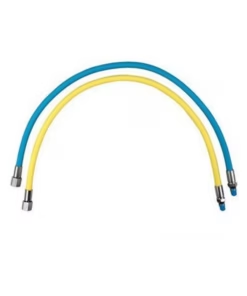
Low-pressure hoses feed second stages, octopuses, BCD inflators and drysuit valves from the first stage. Available in various lengths and thread configurations — choosing the correct length prevents excessive slack without restricting movement or pulling the regulator out of position.

Poseidon Hoses
Ossidabile BR1 Brochure
Aropec Braided Hose Yellow LP - 36 inches 2150PSI

✓  Free Shipping Over RM150|✓  Manufacturing Defect Exchange Guaranteed|✓  Expert Dive Advice Before & After Purchase|✓  100% Authentic Equipment Every Item

Filter By

Price Range


RM 0 RM 530

Filter By

Sub Categories


Filter By

Brands


Showing 1–20 of 35 products
Sort:

RM52.00

Diving Equipment

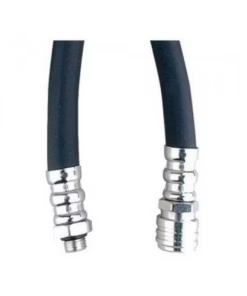
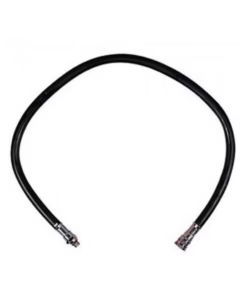
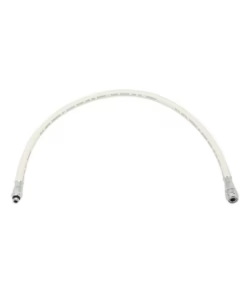
Miflex 56 cm, LP White

RM70.00

Diving Equipment

Ossidabile F1 Flyer

RM0.00
Price range: RM500.00 through RM530.00
RM330.00

Diving Equipment

Ossidabile P1 Folding

RM0.00
RM75.00
RM270.00
RM12.00
Price range: RM105.00 through RM119.00
RM199.00
RM215.00
RM95.00
RM27.27
RM186.00
RM199.00
RM42.00

Expert Advice

Low-Pressure Delivery to Every Breathing Point

LP hoses carry reduced pressure from your first stage to your second stage, octopus, BCD inflator, and drysuit valve. Hose length determines routing comfort — measure your rig before choosing.

Ask About Low Pressure Hoses

Function

How LP Hoses Distribute Breathing Gas Through Your Regulator

LP hoses carry intermediate pressure — typically 9–10 bar over ambient — from the first stage to second stages, BCD inflator, and drysuit valve. Each LP port on the first stage feeds one breathing or inflation point.

Lengths

Choosing LP Hose Length for Your Diving Configuration

Primary second stage hoses run 60–75cm for a clean route from first stage to the mouth. Octopus hoses run 100–120cm so a buddy can comfortably use your alternate while swimming side-by-side.

Routing

LP Hose Routing: Avoiding Kinks and Abrasion on Your BCD

Route LP hoses under BCD shoulder straps and through webbing guides to prevent dangling. Kinked hoses restrict gas flow and accelerate wear at the bend point — particularly the corrugated BCD inflator hose.

Swivel Care

LP Hose Swivel Fitting Care and Replacement Schedule

LP hose swivel fittings contain an o-ring that seats against the first stage port. Replace this o-ring at every regulator service. A small weep from a swivel fitting will become a full leak under diving pressure.

You Might Also Like

Recommended Products

Hand-picked products based on all categories

RM270.00
RM344.00

Diving Equipment

Tusa Solla Open Heel Fins

RM617.00
RM480.00
RM1,826.00

FAQ

Frequently Asked Questions

Everything you need to know before making a purchase

What devices connect to low-pressure ports on a regulator first stage?
Low-pressure ports deliver regulated intermediate pressure u2014 typically 8 to 10 bar u2014 to devices that require breathing-level gas. These include the primary second stage, the octopus alternate air source, and the BCD low-pressure inflator. A standard Malaysian recreational configuration uses two or three LP hoses depending on whether a separate octopus or a combined BCD inflator-octopus unit is used. Any unused LP ports should be capped with port plugs to prevent salt and biological debris from entering the port thread and O-ring groove during Malaysian saltwater diving.
What LP hose length should I use for the primary second stage for Malaysian recreational diving?
A primary second stage LP hose of 60 to 75 centimetres positions the second stage comfortably at the mouth when the first stage is at shoulder level, with enough slack to allow full head rotation without pulling the first stage sideways. Hoses shorter than 60 centimetres restrict head movement during looking around at Malaysian reef sites and can pull the first stage out of alignment with repeated lateral neck movement. The standard hose length included with most regulator sets is calibrated for a medium male torso u2014 divers with longer torsos may benefit from a 75cm or custom-length replacement.
How do I route LP hoses to prevent tangling during Malaysian drift dives?
Route the primary LP second stage hose over the left shoulder and across the chest u2014 the standard routing that keeps the second stage accessible without crossing the field of view during finning. The BCD inflator hose routes directly from the first stage to the left chest inflator, following the shortest available path without crossing the primary second stage hose. The octopus hose routes under the right arm to the right chest D-ring position u2014 the universally expected alternate air source location that a buddy will instinctively reach for in an emergency gas-sharing situation.
What is a swivel fitting on an LP hose and when does it improve diving comfort?
A swivel fitting at one or both ends of an LP hose allows the hose to rotate freely at the connection point without the hose body twisting under tension. This prevents kinking and the stress concentration that accumulates where the hose exits the first stage when the diver's body rotates during swimming u2014 particularly common during Malaysian drift dives where the body frequently twists with shifting current direction. Swivel fittings are most beneficial on the primary second stage hose and the octopus hose, which experience the most rotational movement during typical Malaysian recreational dives.
How do I detect a slow LP hose leak before it becomes a problem during a Malaysian dive?
Immerse the assembled and pressurised regulator in a container of fresh water and observe each hose connection for a steady stream of small bubbles u2014 even a very slow LP leak produces visible bubbles within 30 seconds in still water. A slow LP leak that is inaudible at the surface may become audible at depth where increased pressure differential raises gas flow rate through the fault. Detecting and replacing a leaking LP hose before the dive prevents the slow gas loss that can unexpectedly shorten a Malaysian dive and leave insufficient gas for a controlled ascent and full safety stop.
Are braided LP hoses more durable than standard hoses for Malaysian saltwater diving?
Braided LP hoses use a woven fabric layer over the inner tube that provides crush resistance and reduces the kinking tendency of an unbraced hose. In Malaysian saltwater conditions, the advantage of braiding is most noticeable where hoses pass through tight routing paths near BCD webbing and at the first stage port, where unbraided hoses are most likely to develop kinks under repeated lateral stress. Standard unbraided LP hoses remain adequate for most Malaysian recreational diving if routed carefully and replaced at the manufacturer-recommended service interval.
What devices connect to low-pressure ports on a regulator first stage?
Low-pressure ports deliver regulated intermediate pressure u2014 typically 8 to 10 bar u2014 to devices that require breathing-level gas. These include the primary second stage, the octopus alternate air source, and the BCD low-pressure inflator. A standard Malaysian recreational configuration uses two or three LP hoses depending on whether a separate octopus or a combined BCD inflator-octopus unit is used. Any unused LP ports should be capped with port plugs to prevent salt and biological debris from entering the port thread and O-ring groove during Malaysian saltwater diving.
What LP hose length should I use for the primary second stage for Malaysian recreational diving?
A primary second stage LP hose of 60 to 75 centimetres positions the second stage comfortably at the mouth when the first stage is at shoulder level, with enough slack to allow full head rotation without pulling the first stage sideways. Hoses shorter than 60 centimetres restrict head movement during looking around at Malaysian reef sites and can pull the first stage out of alignment with repeated lateral neck movement. The standard hose length included with most regulator sets is calibrated for a medium male torso u2014 divers with longer torsos may benefit from a 75cm or custom-length replacement.
How do I route LP hoses to prevent tangling during Malaysian drift dives?
Route the primary LP second stage hose over the left shoulder and across the chest u2014 the standard routing that keeps the second stage accessible without crossing the field of view during finning. The BCD inflator hose routes directly from the first stage to the left chest inflator, following the shortest available path without crossing the primary second stage hose. The octopus hose routes under the right arm to the right chest D-ring position u2014 the universally expected alternate air source location that a buddy will instinctively reach for in an emergency gas-sharing situation.
What is a swivel fitting on an LP hose and when does it improve diving comfort?
A swivel fitting at one or both ends of an LP hose allows the hose to rotate freely at the connection point without the hose body twisting under tension. This prevents kinking and the stress concentration that accumulates where the hose exits the first stage when the diver's body rotates during swimming u2014 particularly common during Malaysian drift dives where the body frequently twists with shifting current direction. Swivel fittings are most beneficial on the primary second stage hose and the octopus hose, which experience the most rotational movement during typical Malaysian recreational dives.
How do I detect a slow LP hose leak before it becomes a problem during a Malaysian dive?
Immerse the assembled and pressurised regulator in a container of fresh water and observe each hose connection for a steady stream of small bubbles u2014 even a very slow LP leak produces visible bubbles within 30 seconds in still water. A slow LP leak that is inaudible at the surface may become audible at depth where increased pressure differential raises gas flow rate through the fault. Detecting and replacing a leaking LP hose before the dive prevents the slow gas loss that can unexpectedly shorten a Malaysian dive and leave insufficient gas for a controlled ascent and full safety stop.
Are braided LP hoses more durable than standard hoses for Malaysian saltwater diving?
Braided LP hoses use a woven fabric layer over the inner tube that provides crush resistance and reduces the kinking tendency of an unbraced hose. In Malaysian saltwater conditions, the advantage of braiding is most noticeable where hoses pass through tight routing paths near BCD webbing and at the first stage port, where unbraided hoses are most likely to develop kinks under repeated lateral stress. Standard unbraided LP hoses remain adequate for most Malaysian recreational diving if routed carefully and replaced at the manufacturer-recommended service interval.