HomeShopDiving Equipment › Diving Mask

Diving Mask

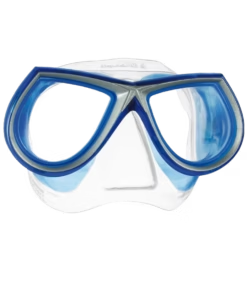
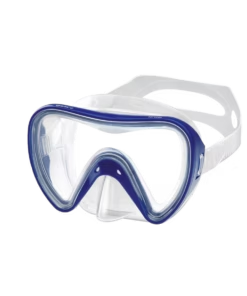
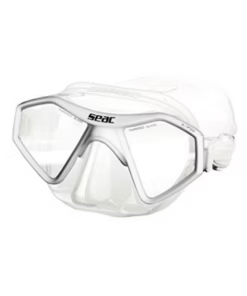
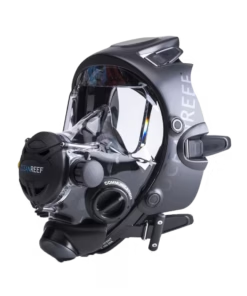
A mask that leaks every five minutes is more annoying than any current in the Coral Triangle. The right fit depends on your face shape, not the frame colour — which is why we stock masks across different skirt profiles, lens types and volume ranges for every kind of diver.

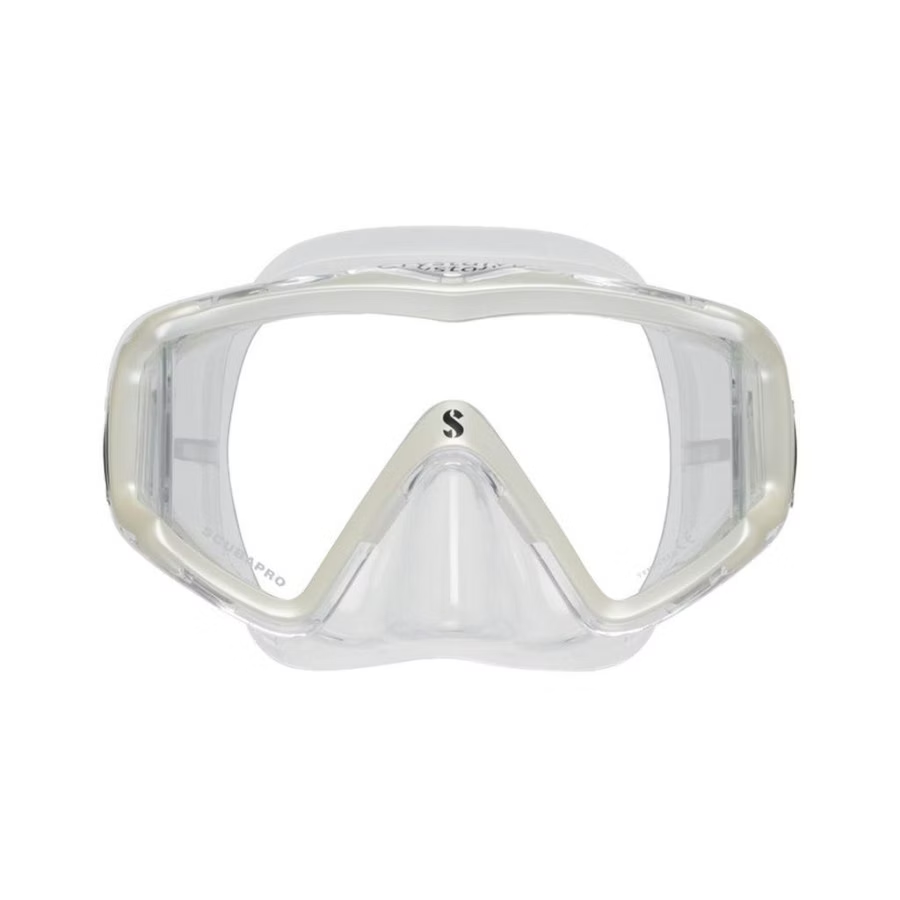
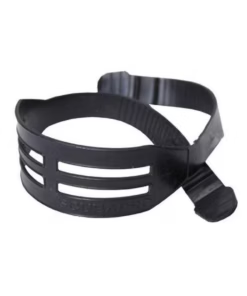
Scubapro Trinidad Frameless mask - black
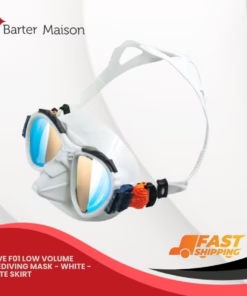
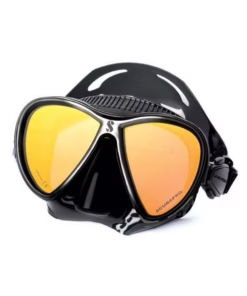
Aropec Lucanidae Mask - White
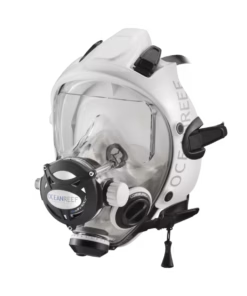
Ocean Reef Neptune Hose Commerical Quick Connection - Male Part Only

✓  Free Shipping Over RM150|✓  Manufacturing Defect Exchange Guaranteed|✓  Expert Dive Advice Before & After Purchase|✓  100% Authentic Equipment Every Item

Filter By

Price Range


RM 0 RM 8,150

Filter By

Sub Categories


Filter By

Brands


Showing 201–220 of 384 products
Sort:

Diving Mask

Scubapro Fino Masks

RM158.00
RM135.00

Diving Equipment

Problue Tiara Pro Mask

RM189.00

Diving Equipment

Tusa Ino Pro Mask

RM0.00
RM38.64
RM160.00
RM52.00
RM320.00
RM156.00

Diving Mask

Mares Vento Mask

RM32.00

Diving Mask

Tusa Serene Mask

RM295.00
RM52.00
RM229.00
RM52.00

Diving Equipment

Dive Junkie M1001 Mask

RM199.00
RM90.00

Diving Equipment

Seac X-frame Frameless Mask

RM229.00
RM630.00
RM1,009.00

Buyer's Guide

Find a Mask That Fits Like a Second Face

Mask fit is personal — silicone skirt shape, nose pocket volume and lens placement all affect comfort and visibility. Test before you dive and choose a mask built for your face and your dive style.

Get Mask Fitting Advice

Fit Test

How to Test a Diving Mask Fit Without Water

Place the mask on your face without the strap and inhale gently through your nose. If the mask stays without strap tension, the skirt seal matches your face profile — a reliable fit indicator.

Lens Types

Tempered Glass vs Polycarbonate Lenses in Dive Masks

Tempered glass lenses are scratch-resistant and optically clear at depth. Polycarbonate lenses are lighter and shatter-resistant but scratch more easily and distort slightly under pressure.

New Mask Prep

Burning or Toothpaste: Treating a New Mask Before First Dive

New mask lenses have a silicone release coating from manufacture that causes fogging. Burn it off with a lighter, scrub with non-gel toothpaste, or use enzymatic defog before first use.

Prescription

Prescription Lens Options for Divers Who Wear Glasses

Dual-lens masks accept glued-in corrective lenses in standard dioptres. Many divers combine contacts with a standard mask. Full custom prescription masks are available for severe corrections.

You Might Also Like

Recommended Products

Hand-picked products based on all categories

RM25.00

Diving Equipment

Mares Tech Hood – 6.5.3mm

RM88.00
RM160.00
RM430.00

FAQ

Frequently Asked Questions

Everything you need to know before making a purchase
How do I choose between dual lens, single lens, and full face masks for Malaysian reef diving?
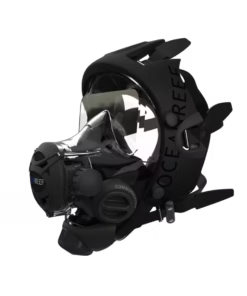
Dual lens masks suit the broadest range of face shapes and accept separate left and right prescription inserts, making them the practical default for recreational divers visiting Malaysian sites. Single lens masks give an uninterrupted field of view that underwater photographers prefer at macro-rich sites like Mabul and Kapalai when composing shots through a camera housing viewfinder. Full face masks are specialist equipment used for underwater communication systems rather than standard recreational reef diving.
How do I test whether a mask will seal on my face before buying?
Place the mask against your face without using the strap, press gently, and inhale slightly through your nose. If the mask holds position without the suction breaking, the skirt geometry matches your facial profile. This test is most reliable on clean, dry skin - testing after sunscreen application or a swim gives falsely favourable results because the slick surface reduces the suction needed to hold the mask. Repeat with the strap fitted and check for pressure points at the nose bridge and cheekbones.
Why does a brand-new mask keep fogging despite defog solution?
New tempered glass lenses carry a thin manufacturing release coating from the moulding process that repels both water and commercial defog solutions. The reliable fix is non-gel white toothpaste applied in small circular motions with a fingertip, left for several minutes, and rinsed - repeated two to three times before the first dive. Once this coating is removed, commercial anti-fog drops or diluted baby shampoo applied before each dive work consistently to prevent fogging.
How does silicone skirt colour affect performance for Malaysian reef diving?
Black silicone skirts reduce peripheral light entering the mask from the sides, lowering internal reflections that interfere with looking through a camera viewfinder or focusing on subjects against bright Malaysian reef backgrounds. Clear silicone skirts allow more ambient light inside the mask, which feels less enclosed in the overhangs and swim-throughs common at sites around Tioman and the Perhentians. For general reef diving without photography, neither colour affects visibility or safety in a way that most divers notice.
What internal mask volume should I consider for equalisation during Malaysian drift dive descents?
Internal mask volume determines how much air must be exhaled through the nose to equalise the mask cavity during descent. Low-volume masks under 150ml require only a brief nose exhale and suit divers with equalisation difficulty or those on fast current-driven descents at Malaysian drift sites where the current sets the descent pace. High-volume panoramic masks need more frequent equalisation during rapid drops - a real inconvenience when there is no opportunity to slow the descent and wait.
What mask accessories improve the experience at Malaysian dive sites?
A rigid protective case is the most essential mask accessory for Malaysian travel diving, where masks are routinely placed in shared gear bins alongside fins and regulators on crowded dive boats. A silicone strap cover prevents hair from tangling in the strap buckle during choppy water entries around Redang and Perhentian. Anti-fog wipes in single-use sachets are more convenient than liquid bottles on liveaboards, where communal water bowls for between-dive rinsing are not always available.
How do I choose between dual lens, single lens, and full face masks for Malaysian reef diving?
Dual lens masks suit the broadest range of face shapes and accept separate left and right prescription inserts, making them the practical default for recreational divers visiting Malaysian sites. Single lens masks give an uninterrupted field of view that underwater photographers prefer at macro-rich sites like Mabul and Kapalai when composing shots through a camera housing viewfinder. Full face masks are specialist equipment used for underwater communication systems rather than standard recreational reef diving.
How do I test whether a mask will seal on my face before buying?
Place the mask against your face without using the strap, press gently, and inhale slightly through your nose. If the mask holds position without the suction breaking, the skirt geometry matches your facial profile. This test is most reliable on clean, dry skin u2014 testing after sunscreen application or a swim gives falsely favourable results because the slick surface reduces the suction needed to hold the mask. Repeat with the strap fitted and check for pressure points at the nose bridge and cheekbones.
Why does a brand-new mask keep fogging despite defog solution?
New tempered glass lenses carry a thin manufacturing release coating from the moulding process that repels both water and commercial defog solutions. The reliable fix is non-gel white toothpaste applied in small circular motions with a fingertip, left for several minutes, and rinsed u2014 repeated two to three times before the first dive. Once this coating is removed, commercial anti-fog drops or diluted baby shampoo applied before each dive work consistently to prevent fogging.
How does silicone skirt colour affect performance for Malaysian reef diving?
Black silicone skirts reduce peripheral light entering the mask from the sides, lowering internal reflections that interfere with looking through a camera viewfinder or focusing on subjects against bright Malaysian reef backgrounds. Clear silicone skirts allow more ambient light inside the mask, which feels less enclosed in the overhangs and swim-throughs common at sites around Tioman and the Perhentians. For general reef diving without photography, neither colour affects visibility or safety in a way that most divers notice.
What internal mask volume should I consider for equalisation during Malaysian drift dive descents?
Internal mask volume determines how much air must be exhaled through the nose to equalise the mask cavity during descent. Low-volume masks under 150ml require only a brief nose exhale and suit divers with equalisation difficulty or those on fast current-driven descents at Malaysian drift sites where the current sets the descent pace. High-volume panoramic masks need more frequent equalisation during rapid drops u2014 a real inconvenience when there is no opportunity to slow the descent and wait.
What mask accessories improve the experience at Malaysian dive sites?
A rigid protective case is the most essential mask accessory for Malaysian travel diving, where masks are routinely placed in shared gear bins alongside fins and regulators on crowded dive boats. A silicone strap cover prevents hair from tangling in the strap buckle during choppy water entries around Redang and Perhentian. Anti-fog wipes in single-use sachets are more convenient than liquid bottles on liveaboards, where communal water bowls for between-dive rinsing are not always available.