HomeShopDiving EquipmentDiving Mask › Full Face Masks

Full Face Masks

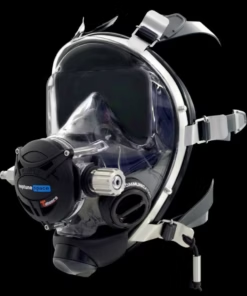
Full-face diving masks integrate the regulator into the mask frame, covering the entire face rather than just the eyes and nose. Used for surface supply diving, cold water operations and scientific diving where jaw fatigue from biting a second stage is a limiting factor.

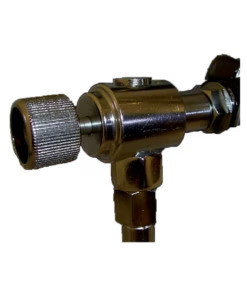
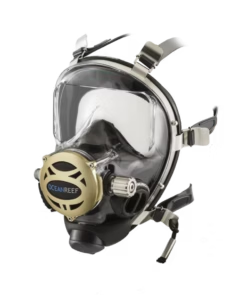
Ocean Reef Visors Light
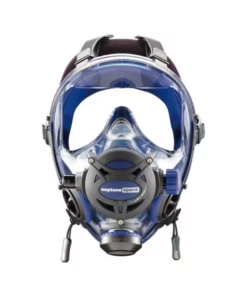
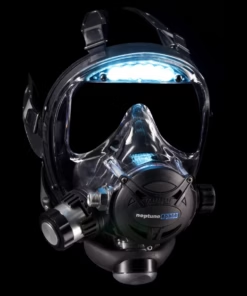
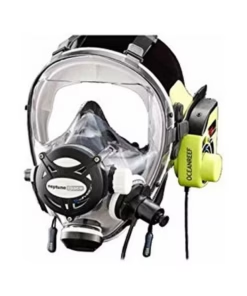
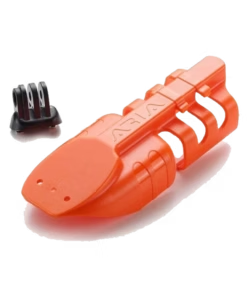
Ocean Reef Neptune Mask Video Camera Support
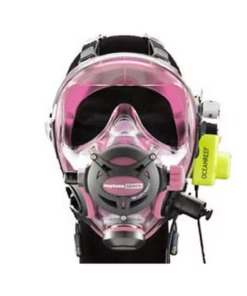
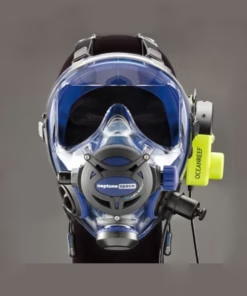
Ocean Reef G.divers Kit (G.divers Pink - S/M + GSM transceiver)

✓  Free Shipping Over RM150|✓  Manufacturing Defect Exchange Guaranteed|✓  Expert Dive Advice Before & After Purchase|✓  100% Authentic Equipment Every Item

Filter By

Price Range


RM 110 RM 6,510

Filter By

Sub Categories


Filter By

Brands


Showing 1–20 of 30 products
Sort:

RM320.00
RM2,990.00
RM320.00
RM2,930.00
RM6,510.00
RM210.00
RM3,260.00
RM6,300.00
RM1,009.00
RM2,460.00

Expert Advice

Complete Breathing and Vision in One System

Full face masks integrate the regulator mouthpiece into the mask body — eliminating mouthpiece fatigue and improving communication underwater. Popular for surface supply diving, cold-water work and dive instruction.

Ask About Full Face Masks

Breathing

How Full Face Mask Regulators Differ From Standard Second Stages

Full face mask regulators use an oral-nasal cup inside the mask to direct exhaled gas to the purge valve. The diver breathes through the nose naturally — eliminating the mouthpiece fatigue of standard second stages.

Clearing

Equalising and Mask Clearing With a Full Face Mask

Equalising requires pinching the nose through the integrated nose pocket. Clearing a flooded full face mask is done by looking up and pressing the purge while blowing — a different technique from standard masks.

Communication

Voice Communication Systems Compatible With Full Face Masks

Most full face dive masks have a port for a wireless transceiver enabling voice communication between divers. Range varies from 10–50m depending on system — used by dive guides, researchers and commercial divers.

Use Cases

When a Full Face Mask Is the Right Choice Over a Standard Mask

Full face masks suit cold-water diving where standard mouthpieces cause jaw fatigue, any diving where communication is operationally important, and surface supply diving where the mask stays on throughout.

You Might Also Like

Recommended Products

Hand-picked products based on all categories

Wetsuits & Exposure Suits

Subgear Element XXL 3MM

RM240.00
RM72.00

Diving Mask

Mares Samurai Mask

RM56.00
RM262.00

FAQ

Frequently Asked Questions

Everything you need to know before making a purchase

In what Malaysian diving situations is a full face mask actually appropriate?
Full face masks are used in Malaysian waters primarily for surface-supplied diving operations, commercial underwater inspection work around port infrastructure and oil facilities, and guided recreational experiences where the operator provides integrated through-water voice communication. Recreational divers encounter them at specialist operators in Sabah offering guided muck dive experiences where a dive guide communicates directly with a diver to direct attention to specific subjects. They are not appropriate for standard recreational sport diving and require dedicated training before use.
How does equalisation work differently with a full face mask?
Standard masks require pinching the nostrils through the nose pocket to block airflow and create the pressure needed for Valsalva equalisation. Full face masks enclose the entire face including the nose, so the diver equalises by simply blowing gently against closed nostrils - the sealed mask creates the pressure differential without any manual grip. While this process is theoretically easier for divers who struggle with nose-pinching, the overall complexity of the mask and its emergency procedures more than offsets this specific advantage.
What communication systems are compatible with full face masks available in Malaysia?
Hardwired and wireless through-water communication units from Ocean Reef, Kirby Morgan, and Dru00e4ger are designed to integrate with specific full face mask models. The unit typically mounts to the mask frame and transmits voice via a microphone system. Operators in Sabah running guided communication dive experiences most commonly use Ocean Reef systems, which are available in multiple frame sizes suited to the range of face geometries found among Malaysian and visiting international divers.
What training is required before using a full face mask for recreational diving in Malaysia?
Full face masks require manufacturer-endorsed or agency-recognised training because emergency procedures differ significantly from standard mask use. Flood clearing requires removing the full face assembly rather than a simple tilt-and-exhale, and second stage failure procedures involve different doffing sequences. Recreational divers should complete a recognised full face mask course before any open water use and should not attempt any overhead penetration - even recreational wreck swim-throughs - in a full face mask without specific technical certification.
How does full face mask fit differ for Malaysian divers compared to European-sized designs?
Full face masks use a multi-strap harness that distributes sealing pressure across the forehead, temples, and chin rather than relying on the nose bridge and cheekbone contact of standard masks. The facial geometry differences between individual divers mean some brands seal better on specific face shapes - narrower, flatter profiles common among Malaysian divers may find the smaller frame sizes in the Ocean Reef range a better fit than standard or large frames designed around broader Western facial structures. Fitting should always be done with the mask pressurised in a controlled test.
What maintenance does a full face mask require after diving in Malaysian saltwater?
Rinse the entire assembly in fresh water immediately after every dive, paying attention to the demand valve port, communication unit connectors, and multi-strap buckle hardware. The inner silicone face seal must dry completely before storage to prevent mould growth inside the enclosed face cavity. Remove and inspect the second stage demand valve insert every few months for salt deposits that reduce breathing performance - a more involved process than servicing a standard second stage because of the integrated mounting.
In what Malaysian diving situations is a full face mask actually appropriate?
Full face masks are used in Malaysian waters primarily for surface-supplied diving operations, commercial underwater inspection work around port infrastructure and oil facilities, and guided recreational experiences where the operator provides integrated through-water voice communication. Recreational divers encounter them at specialist operators in Sabah offering guided muck dive experiences where a dive guide communicates directly with a diver to direct attention to specific subjects. They are not appropriate for standard recreational sport diving and require dedicated training before use.
How does equalisation work differently with a full face mask?
Standard masks require pinching the nostrils through the nose pocket to block airflow and create the pressure needed for Valsalva equalisation. Full face masks enclose the entire face including the nose, so the diver equalises by simply blowing gently against closed nostrils u2014 the sealed mask creates the pressure differential without any manual grip. While this process is theoretically easier for divers who struggle with nose-pinching, the overall complexity of the mask and its emergency procedures more than offsets this specific advantage.
What communication systems are compatible with full face masks available in Malaysia?
Hardwired and wireless through-water communication units from Ocean Reef, Kirby Morgan, and Dru00e4ger are designed to integrate with specific full face mask models. The unit typically mounts to the mask frame and transmits voice via a microphone system. Operators in Sabah running guided communication dive experiences most commonly use Ocean Reef systems, which are available in multiple frame sizes suited to the range of face geometries found among Malaysian and visiting international divers.
What training is required before using a full face mask for recreational diving in Malaysia?
Full face masks require manufacturer-endorsed or agency-recognised training because emergency procedures differ significantly from standard mask use. Flood clearing requires removing the full face assembly rather than a simple tilt-and-exhale, and second stage failure procedures involve different doffing sequences. Recreational divers should complete a recognised full face mask course before any open water use and should not attempt any overhead penetration u2014 even recreational wreck swim-throughs u2014 in a full face mask without specific technical certification.
How does full face mask fit differ for Malaysian divers compared to European-sized designs?
Full face masks use a multi-strap harness that distributes sealing pressure across the forehead, temples, and chin rather than relying on the nose bridge and cheekbone contact of standard masks. The facial geometry differences between individual divers mean some brands seal better on specific face shapes u2014 narrower, flatter profiles common among Malaysian divers may find the smaller frame sizes in the Ocean Reef range a better fit than standard or large frames designed around broader Western facial structures. Fitting should always be done with the mask pressurised in a controlled test.
What maintenance does a full face mask require after diving in Malaysian saltwater?
Rinse the entire assembly in fresh water immediately after every dive, paying attention to the demand valve port, communication unit connectors, and multi-strap buckle hardware. The inner silicone face seal must dry completely before storage to prevent mould growth inside the enclosed face cavity. Remove and inspect the second stage demand valve insert every few months for salt deposits that reduce breathing performance u2014 a more involved process than servicing a standard second stage because of the integrated mounting.