HomeShopAccessoriesBags › Fin Bags

Fin Bags

Fin blades are stiffer than they look and warp permanently if bent the wrong way inside a stuffed luggage bag. A proper fin bag holds blades flat, prevents tip damage and usually includes a vented section so fins can drain and dry before the next dive.

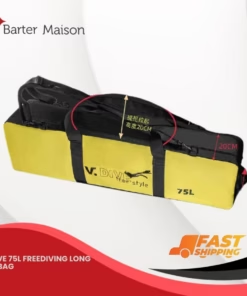
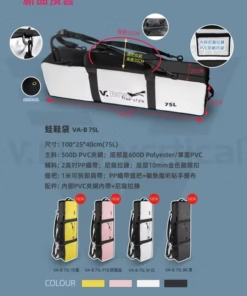
Vdive 75L Freediving Long Fin Bag - Yellow
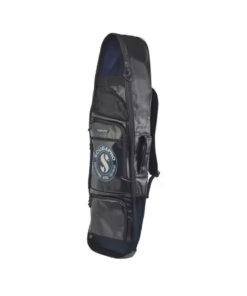
Scubapro Apnea Beach Fins Bag
Problue BG-8576 Fins Bag

✓  Free Shipping Over RM150|✓  Manufacturing Defect Exchange Guaranteed|✓  Expert Dive Advice Before & After Purchase|✓  100% Authentic Equipment Every Item

Filter By

Price Range


RM 52 RM 298

Filter By

Sub Categories


Filter By

Brands


Showing 1–7 of 7 products
Sort:

RM52.00
RM52.00
RM298.00
RM200.00
RM89.00
Out of stock
RM189.00

Expert Advice

Protect Your Fins on Every Trip

Fin blades are fragile at the edges and expensive to replace. A dedicated fin bag keeps them from cracking in the boot of your car or getting crushed under luggage on the flight to Sabah.

Ask About Fin Protection

Sizing

Finding a Fin Bag That Fits Your Blade Length

Freediving fins require bags over 80cm long; standard open-heel fins fit in 60–70cm bags. Measure blade tip to heel strap before buying to avoid a tight fit that cracks the blade.

Materials

Mesh vs Neoprene-Lined Fin Bags: What's the Difference?

Mesh fin bags drain and dry fast but offer no padding. Neoprene-lined bags protect blade edges from cracking during car boot storage and hold their shape over years of use.

Travel

Packing Fins in Airline Luggage Without Blade Damage

Blade edges are the most vulnerable point on any fin. Use a dedicated fin bag nested inside your roller bag to prevent pressure cracks from other equipment in transit.

Care

Rinsing and Drying Fins After Every Salt Water Dive

Salt left on fin blades degrades the rubber at the blade-foot pocket joint over time. Rinse fins in fresh water, store in a fin bag, and leave buckles open to dry fully.

You Might Also Like

Recommended Products

Hand-picked products based on all categories

Wetsuits & Exposure Suits

Subgear Element XXL 3MM

RM240.00
RM72.00

Diving Mask

Mares Samurai Mask

RM56.00
RM262.00

FAQ

Frequently Asked Questions

Everything you need to know before making a purchase

Why should I use a dedicated fin bag rather than packing fins loose in a Malaysian dive bag?
Fins packed loose in a dive bag damage their own blade surfaces against the metal buckles of BCDs and the hard housings of regulators during airline baggage handling, creating abrasion marks on thermoplastic blades and, in the case of fibreglass freediving fins, chipping and cracking. A dedicated fin bag separates the fins from other equipment and protects the blade edges that contact the fin bag rather than hard objects. The fin bag also keeps wet fins isolated from dry items during transit between dives u2014 a significant benefit on Malaysian liveaboards where gear is moved frequently between boat and cabin.
What fin bag size accommodates long-blade freediving fins for Malaysian travel?
Standard scuba fin bags in the 60 to 70 centimetre interior length range do not accommodate freediving fins with blades longer than 65 centimetres. Freediving-specific fin bags in 80 to 100 centimetre lengths are designed for competition-length freediving blades and are available from freediving equipment suppliers servicing Malaysian freediving operators in Kota Kinabalu and Kuala Lumpur. Alternatively, some Malaysian freedivers use a generic sports bag or surf bag with the length required rather than a purpose-made fin bag, accepting reduced padding protection in exchange for the correct dimensions.
What material is most durable for a fin bag used at Malaysian shore dive sites?
Mesh material is the most practical for fin bags used at Malaysian shore dive sites, where fins are typically removed after the dive and placed in the bag while still dripping with saltwater u2014 a mesh bag drains immediately and allows the fins to dry during the walk back to the transport. Solid nylon or polyester fin bags trap saltwater inside the bag, soaking any absorbent materials they contact during transport. A mesh bag with a solid base panel provides the drainage benefits of mesh with slightly more abrasion protection on the base, where the bag contacts rough ground surfaces during Malaysian shore dive transitions.
Are mesh fin bags or solid fabric fin bags better for Malaysian liveaboard diving?
Mesh fin bags are the standard choice for Malaysian liveaboard use, where fins are moved between the equipment storage area, the dive deck, and the water entry multiple times per day in a saltwater environment. Mesh allows wet fins to drain and air-dry between dives rather than remaining saturated inside a closed fabric bag, which promotes mildew growth in Malaysian ambient heat. Solid fabric bags are preferable for airline transit where abrasion protection matters more than drainage, and some Malaysian divers keep both u2014 a mesh bag for the liveaboard and a solid bag for airline packing.
How do I keep a fin bag clean and mildew-free between Malaysian dive trips?
After the last dive of a Malaysian trip, remove the fins, rinse the bag inside and out with fresh water, and hang it open and inverted to drain completely. A mesh fin bag dries faster than any solid fabric bag in Malaysian ambient heat but still requires hanging in a ventilated area rather than being closed and stored in a sealed dive bag immediately after a trip. At the start of the next trip, inspect the interior for any mildew growth at the seams, which can transfer to fin foot pockets if the bag is stored inadequately between seasons u2014 a light brush and rinse removes surface mildew if caught early.
Can a fin bag serve as a general gear bag at a Malaysian dive site?
A fin bag with sufficient interior capacity can accommodate a wetsuit, booties, and small accessories alongside the fins, functioning as a single wet gear bag for a Malaysian shore or resort dive session. The mesh construction that makes fin bags practical for wet fins is equally useful for other wet items u2014 a mask, snorkel, and gloves dry faster in a mesh fin bag than in a closed backpack. The limitation is structural u2014 most fin bags have no rigid support and collapse under the weight of heavy items like a camera or torch, making them unsuitable as the primary carry bag for fragile equipment.