HomeShopDiving EquipmentRegulators › Regulator Accessories

Regulator Accessories

Second-stage covers, regulator bags, purge guards, swivel adaptors and dust caps protect an expensive regulator between service intervals. A single o-ring failure or a dust cap left off during airline travel has ended more than one Malaysian dive trip before it started.
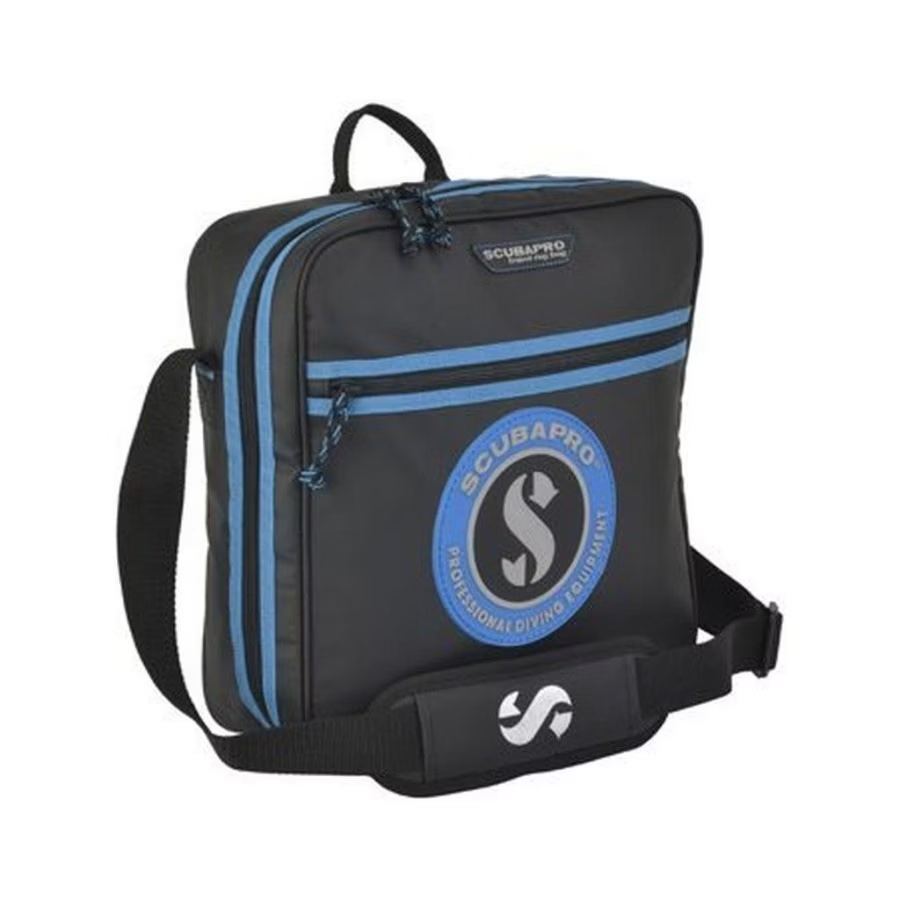
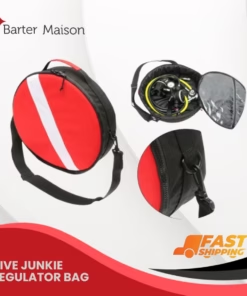
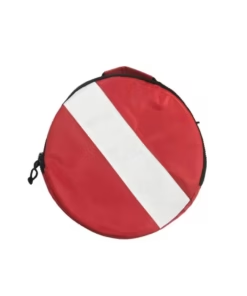
Dive Junkie Regulator Bag
Problue AC-99.S Octopus Holder
Mares Accessories Spare Parts

✓  Free Shipping Over RM150|✓  Manufacturing Defect Exchange Guaranteed|✓  Expert Dive Advice Before & After Purchase|✓  100% Authentic Equipment Every Item

Filter By

Price Range


RM 6 RM 6,049

Filter By

Sub Categories


Filter By

Brands


Showing 1–20 of 66 products
Sort:

Diving Equipment

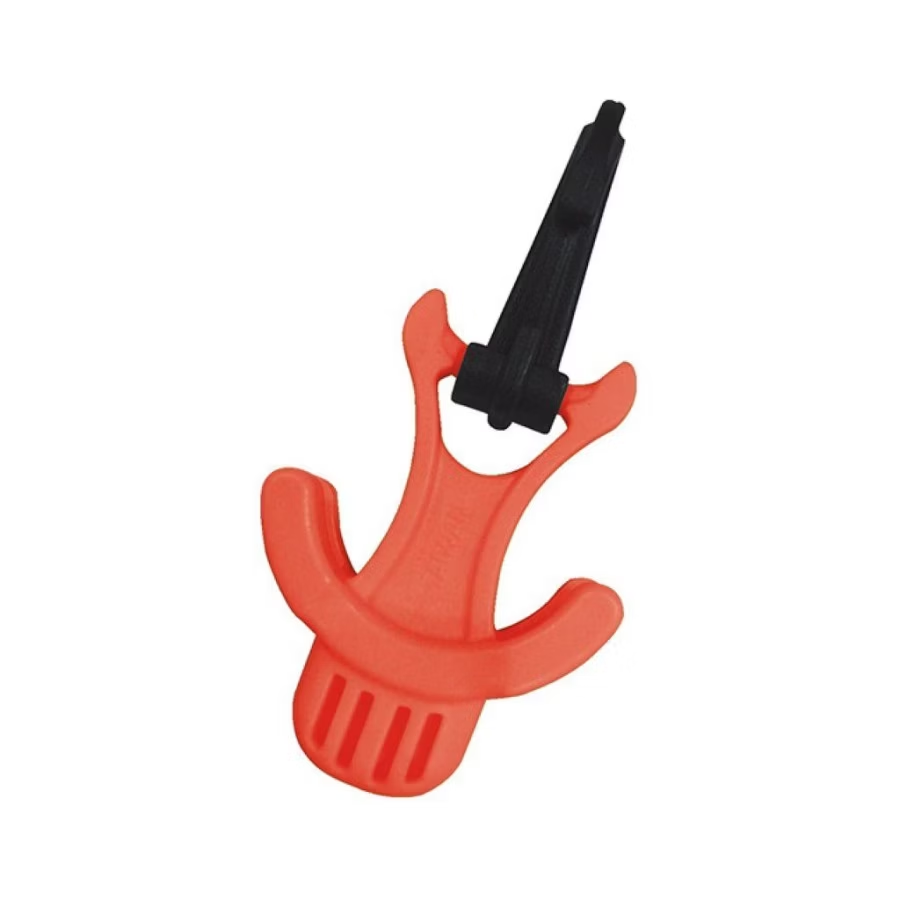
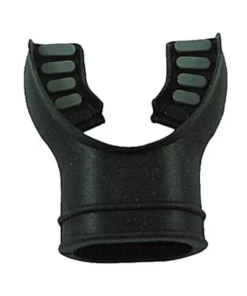
Poseidon SE7EN Mouthpiece

RM6,049.00
RM279.00

Diving Equipment

Aropec Coloured Mouthpiece

RM19.00
RM8.00

Diving Equipment

Aropec Regulator Necklace

RM45.00
RM1,200.00
RM229.00
RM19.00

Diving Equipment

Poseidon Mouthpiece AIR

RM50.00
Price range: RM22.00 through RM139.00

Diving Equipment

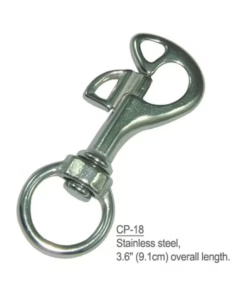
Problue CP-31 Swivel Snaps

RM6.00
RM81.00
RM40.00

Buyer's Guide

Extend the Life and Performance of Your Regulator

The right accessories protect your regulator between dives, improve its comfort in the water, and help it last a decade with proper care. Mouthpieces, hose protectors, octopus holders and regulator bags keep your breathing system performing.

Ask About Regulator Upgrades

Hose Protectors

Hose Protectors: Preventing the Most Common Regulator Failure

Regulator hose protectors reinforce the hose at the swivel fitting — the highest-stress point on any hose. They prevent the cracking that causes slow leaks at the most inconvenient time on a dive trip.

Octopus Holders

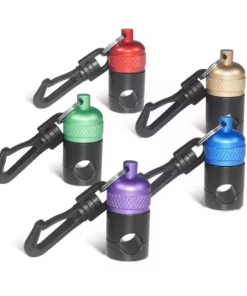
Octopus Holders: Securing Your Alternate Second Stage

An unsecured octopus drags along the reef, collects sediment into the purge valve, and is harder to find in an out-of-air emergency. A velcro or magnetic holder on the BCD chest keeps the alternate accessible and protected.

Regulator Bags

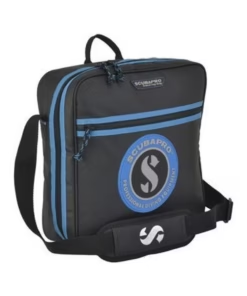
Regulator Bags: Why Your Regulator Deserves Padded Storage

A regulator bag prevents the first stage from banging against cylinder valves and console gauges in transit. Silicone dust caps protect first stage ports from contamination between dives and during dry storage.

Post-Dive Care

Post-Dive Regulator Care: What to Do After Every Salt Water Dive

Cap the first stage inlet before immersing in the rinse tank, then rinse second stages by pressing purge. Never press the purge button with the first stage submerged — this floods the internals with water.

You Might Also Like

Recommended Products

Hand-picked products based on all categories

Price range: RM199.00 through RM219.00
RM396.00

FAQ

Frequently Asked Questions

Everything you need to know before making a purchase

What regulator accessories are genuinely useful for diving in Malaysia?
A neoprene second stage cover protects the demand valve housing from impact during rough dive boat transfers and rocky shore entries around Sabah and Tioman. A regulator hose retainer - a short bungee cord - holds the primary second stage against the chest during drift dives at sites like Layang-Layang, preventing it from dangling and snagging on coral or fan structures. A mesh regulator bag that allows air circulation prevents the mould growth that develops inside sealed fabric bags stored in Malaysian humidity between trips.
How do I protect regulator hoses from damage during transit on Malaysian dive boats?
Regulator hoses are most vulnerable to kinking during the transition from the gearing-up bench to the water entry point on a heaving liveaboard deck. Wrapping the assembled regulator in a neoprene sleeve or using hose protectors at the first stage port connections prevents the sharp bends that lead to hose cracking over months of use. Avoid stowing the regulator with the second stage hanging freely - the weight of the second stage over time creates a permanent set in the hose at the port connection point.
Why are port plugs and dust caps important when storing a regulator between Malaysian dive trips?
Unused low-pressure and high-pressure ports left open in Malaysian coastal air - even without submersion - accumulate salt and biological material at the O-ring groove within weeks, accelerating corrosion and O-ring degradation. The yoke dust cap prevents the inlet filter from becoming contaminated between trips, which reduces airflow quality and filter service life. These are small, inexpensive fittings that meaningfully extend the interval between required services for divers who travel between dive seasons.
When should I replace tank valve O-rings, and where can they be sourced in Malaysia?
Replace tank valve O-rings when they show visible flattening, cracking, or when you hear air escaping at the first stage yoke connection after fully hand-tightening. Standard scuba tank valve O-ring sizes are widely available at Malaysian dive shops and hardware stores in Kuala Lumpur, Penang, Kota Kinabalu, and Kuching. Carrying a small selection of standard O-ring sizes is advisable on liveaboards operating in Semporna, where local sourcing can take a full day depending on availability.
What mouthpiece upgrades are available for second stages and do they make a practical difference?
Aftermarket silicone mouthpieces in a range of bite tab sizes and firmness ratings are available for most standard second stage thread sizes from dive shops across Malaysia. A mouthpiece even marginally too wide or too firm causes jaw fatigue that compounds significantly over 60-minute drift dives repeated four times daily on a Malaysian liveaboard. Replacing a stock mouthpiece with a correctly fitted silicone alternative is one of the lowest-cost comfort improvements available, with replacement units typically costing less than RM30.
Are silicone or nitrile O-rings better for Malaysian saltwater regulator connections?
Nitrile rubber O-rings are the manufacturer-specified choice for most regulators and are more resistant to petroleum-based lubricant contamination and elevated oxygen environments, making them the correct specification for nitrox use at Malaysian dive operators. Silicone O-rings are softer and compress more readily at lower yoke torque - useful when the yoke is hand-tightened rather than tool-tightened on a moving dive boat. For nitrox diving in Semporna or Sabah, nitrile O-rings are the safer choice as some silicone formulations are less compatible with elevated oxygen concentrations.
What regulator accessories are genuinely useful for diving in Malaysia?
A neoprene second stage cover protects the demand valve housing from impact during rough dive boat transfers and rocky shore entries around Sabah and Tioman. A regulator hose retainer u2014 a short bungee cord u2014 holds the primary second stage against the chest during drift dives at sites like Layang-Layang, preventing it from dangling and snagging on coral or fan structures. A mesh regulator bag that allows air circulation prevents the mould growth that develops inside sealed fabric bags stored in Malaysian humidity between trips.
How do I protect regulator hoses from damage during transit on Malaysian dive boats?
Regulator hoses are most vulnerable to kinking during the transition from the gearing-up bench to the water entry point on a heaving liveaboard deck. Wrapping the assembled regulator in a neoprene sleeve or using hose protectors at the first stage port connections prevents the sharp bends that lead to hose cracking over months of use. Avoid stowing the regulator with the second stage hanging freely u2014 the weight of the second stage over time creates a permanent set in the hose at the port connection point.
Why are port plugs and dust caps important when storing a regulator between Malaysian dive trips?
Unused low-pressure and high-pressure ports left open in Malaysian coastal air u2014 even without submersion u2014 accumulate salt and biological material at the O-ring groove within weeks, accelerating corrosion and O-ring degradation. The yoke dust cap prevents the inlet filter from becoming contaminated between trips, which reduces airflow quality and filter service life. These are small, inexpensive fittings that meaningfully extend the interval between required services for divers who travel between dive seasons.
When should I replace tank valve O-rings, and where can they be sourced in Malaysia?
Replace tank valve O-rings when they show visible flattening, cracking, or when you hear air escaping at the first stage yoke connection after fully hand-tightening. Standard scuba tank valve O-ring sizes are widely available at Malaysian dive shops and hardware stores in Kuala Lumpur, Penang, Kota Kinabalu, and Kuching. Carrying a small selection of standard O-ring sizes is advisable on liveaboards operating in Semporna, where local sourcing can take a full day depending on availability.
What mouthpiece upgrades are available for second stages and do they make a practical difference?
Aftermarket silicone mouthpieces in a range of bite tab sizes and firmness ratings are available for most standard second stage thread sizes from dive shops across Malaysia. A mouthpiece even marginally too wide or too firm causes jaw fatigue that compounds significantly over 60-minute drift dives repeated four times daily on a Malaysian liveaboard. Replacing a stock mouthpiece with a correctly fitted silicone alternative is one of the lowest-cost comfort improvements available, with replacement units typically costing less than RM30.
Are silicone or nitrile O-rings better for Malaysian saltwater regulator connections?
Nitrile rubber O-rings are the manufacturer-specified choice for most regulators and are more resistant to petroleum-based lubricant contamination and elevated oxygen environments, making them the correct specification for nitrox use at Malaysian dive operators. Silicone O-rings are softer and compress more readily at lower yoke torque u2014 useful when the yoke is hand-tightened rather than tool-tightened on a moving dive boat. For nitrox diving in Semporna or Sabah, nitrile O-rings are the safer choice as some silicone formulations are less compatible with elevated oxygen concentrations.