HomeShopDiving Equipment › Regulators

Regulators

The regulator delivers tank pressure as breathable air at ambient pressure — it is the piece of equipment where quality directly correlates to performance and comfort underwater. First stages, second stages, octopuses and full sets from brands that divers and instructors rely on.

Poseidon Jetstream Regulator
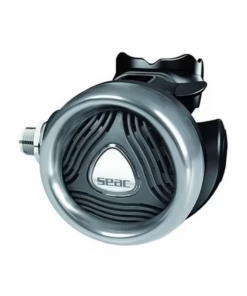
Seac DX200 Ice 230 BAR INT Regulator
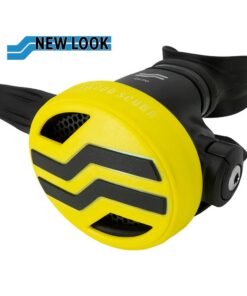
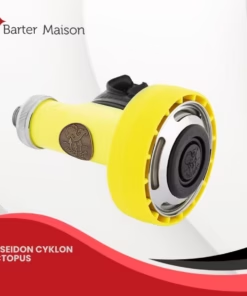
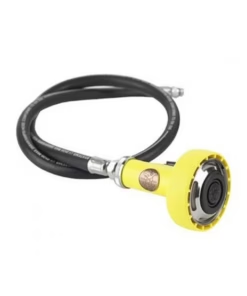
Poseidon Cyklon Metal Yellow 2nd Stage Regulator

✓  Free Shipping Over RM150|✓  Manufacturing Defect Exchange Guaranteed|✓  Expert Dive Advice Before & After Purchase|✓  100% Authentic Equipment Every Item

Filter By

Price Range


RM 2 RM 12,458

Filter By

Sub Categories


Filter By

Brands


Showing 161–180 of 336 products
Sort:

RM648.00
RM1,999.00
RM2,132.00
RM3,182.00
RM240.00
RM192.00
RM565.00
Price range: RM295.00 through RM335.00
RM15.00
Out of stock
RM79.00

Diving Equipment

Mares Abyss Octopus – NR

RM328.00
RM220.00
RM2,300.00

Diving Equipment

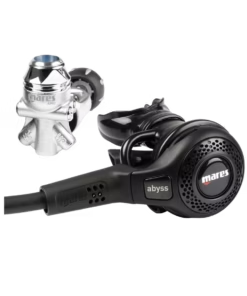
Mares R2S-VR Regulator

RM335.00
RM5,997.00
RM949.00
RM759.00
Price range: RM39.00 through RM55.00

Buyer's Guide

The Most Important Equipment Choice You'll Make

A regulator is the only barrier between you and the ocean at depth. We stock first stages, second stages, octopus systems, and complete sets from the brands that dive professionals across Malaysia rely on for every dive.

Get Regulator Buying Advice

Balanced

Balanced vs Unbalanced Regulators: What It Means for Your Breathing

Balanced first stages maintain consistent intermediate pressure regardless of cylinder pressure — so breathing effort stays constant from a full 200-bar cylinder to reserve at 50 bar. Unbalanced designs breathe harder as the tank empties.

Cold Water

Environmental Sealing for Diving in Malaysian Conditions

Environmentally sealed first stages are filled with silicone oil that blocks silt contamination in Malaysian dive conditions. Even in warm Malaysian waters, environmental sealing extends first stage service life significantly.

Service

Understanding Regulator Service Intervals for Malaysian Diving

Malaysian salt water accelerates internal o-ring degradation. Service annually — or after 100 dives. Regulators used on Borneo liveaboards or dive trips 3+ times a year need stricter adherence to service intervals.

Brands

Regulator Brands with Authorised Service Centres in Malaysia

Scubapro, Mares, Aqualung, and Apeks regulators are all serviced by authorised technicians in Malaysia. Buying a brand with local service infrastructure means genuine parts and factory-specification rebuilds.

You Might Also Like

Recommended Products

Hand-picked products based on all categories

Diving Equipment

Mares Excel + Fins

RM180.00

Dive Computers

Mares EOS 15RZ Torch

RM428.00

Gauges & Consoles

Tusa Single Pressure Gauge

RM636.00
RM186.00
RM169.00

FAQ

Frequently Asked Questions

Everything you need to know before making a purchase

Should I buy a complete regulator set or build one from individual components?
Complete regulator sets pair a first stage, primary second stage, and octopus from the same manufacturer, ensuring tuning compatibility and simplifying future servicing at one technician appointment. Assembling individual components makes sense when you have specific performance requirements that no manufacturer packages together - such as pairing a technical-grade first stage with a recreational second stage. For most Malaysian recreational divers starting with their first personal regulator, a mid-range complete set from a brand with a service centre in KL or Kota Kinabalu is the practical starting point.
What is the difference between DIN and yoke regulator connections for diving in Malaysia?
Yoke connections clamp over the outside of a tank valve and are the standard fitting across virtually all Malaysian dive operators, rental shops, and liveaboards from Redang to Semporna. DIN connections thread directly into the valve for a more secure seal, preferred for technical diving at elevated pressures. If you own a DIN regulator for international technical diving, carry a DIN-to-yoke adaptor so you can connect to any Malaysian tank without issue - most local operators do not stock DIN valves and cannot adapt them on site.
How do Malaysian conditions affect how often a regulator needs servicing?
Annual servicing or every 100 dives - whichever comes first - is the standard recommendation from most manufacturers. Malaysia's saltwater and humidity cause salt to crystalise inside port connections and valve seats between dives, accelerating O-ring and seat wear beyond what temperate-water diving causes. Rinsing the regulator thoroughly in fresh water after every saltwater session dramatically slows this accumulation. Always request the full service history before buying a second-hand regulator - a missing history means budgeting for an immediate full service before the first dive.
Which regulator brands have service centres accessible from major Malaysian diving regions?
Brands with authorised service agents in peninsular Malaysia and Sabah include Scubapro, Aqualung, Mares, and Cressi, with multiple service points in the Klang Valley covering most peninsula-based divers. For divers based in Kota Kinabalu or Tawau, confirming service availability locally matters as much as brand preference - a KK dive shop that services Mares but not Scubapro makes Mares the practical choice for a Semporna-based diver. Importing a regulator for warranty service adds weeks to any repair timeline and removes the option during a dive trip.
What regulator breathing specifications actually matter at Malaysian recreational dive depths?
At 18 to 30 metres depth, which covers the vast majority of Malaysian dive sites including all Sipadan dive zones, breathing resistance is the specification with the most noticeable real-world impact. Any regulator rated to CE EN250 - requiring less than 3 joules per litre breathing effort at 50 metres - exceeds what recreational diving at Malaysian depths demands. Intermediate pressure stability across the tank pressure range, from full to near-empty, is the next relevant specification for divers doing three-dive days on Malaysian liveaboards.
What are the risks of buying a second-hand regulator without service documentation?
A regulator without documented service history could have been stored wet, used with contaminated compressor air, serviced with petroleum lubricants incompatible with nitrox, or simply exceeded its service interval without maintenance. Internal corrosion from moisture storage is invisible externally but causes first stage component failure under pressure at depth. Factor the full cost of an immediate service into the purchase price of any unknown-history second-hand regulator - for mid-range models, this service cost can be substantial relative to the asking price.
Should I buy a complete regulator set or build one from individual components?
Complete regulator sets pair a first stage, primary second stage, and octopus from the same manufacturer, ensuring tuning compatibility and simplifying future servicing at one technician appointment. Assembling individual components makes sense when you have specific performance requirements that no manufacturer packages together u2014 such as pairing a technical-grade first stage with a recreational second stage. For most Malaysian recreational divers starting with their first personal regulator, a mid-range complete set from a brand with a service centre in KL or Kota Kinabalu is the practical starting point.
What is the difference between DIN and yoke regulator connections for diving in Malaysia?
Yoke connections clamp over the outside of a tank valve and are the standard fitting across virtually all Malaysian dive operators, rental shops, and liveaboards from Redang to Semporna. DIN connections thread directly into the valve for a more secure seal, preferred for technical diving at elevated pressures. If you own a DIN regulator for international technical diving, carry a DIN-to-yoke adaptor so you can connect to any Malaysian tank without issue u2014 most local operators do not stock DIN valves and cannot adapt them on site.
How do Malaysian conditions affect how often a regulator needs servicing?
Annual servicing or every 100 dives u2014 whichever comes first u2014 is the standard recommendation from most manufacturers. Malaysia's saltwater and humidity cause salt to crystalise inside port connections and valve seats between dives, accelerating O-ring and seat wear beyond what temperate-water diving causes. Rinsing the regulator thoroughly in fresh water after every saltwater session dramatically slows this accumulation. Always request the full service history before buying a second-hand regulator u2014 a missing history means budgeting for an immediate full service before the first dive.
Which regulator brands have service centres accessible from major Malaysian diving regions?
Brands with authorised service agents in peninsular Malaysia and Sabah include Scubapro, Aqualung, Mares, and Cressi, with multiple service points in the Klang Valley covering most peninsula-based divers. For divers based in Kota Kinabalu or Tawau, confirming service availability locally matters as much as brand preference u2014 a KK dive shop that services Mares but not Scubapro makes Mares the practical choice for a Semporna-based diver. Importing a regulator for warranty service adds weeks to any repair timeline and removes the option during a dive trip.
What regulator breathing specifications actually matter at Malaysian recreational dive depths?
At 18 to 30 metres depth, which covers the vast majority of Malaysian dive sites including all Sipadan dive zones, breathing resistance is the specification with the most noticeable real-world impact. Any regulator rated to CE EN250 u2014 requiring less than 3 joules per litre breathing effort at 50 metres u2014 exceeds what recreational diving at Malaysian depths demands. Intermediate pressure stability across the tank pressure range, from full to near-empty, is the next relevant specification for divers doing three-dive days on Malaysian liveaboards.
What are the risks of buying a second-hand regulator without service documentation?
A regulator without documented service history could have been stored wet, used with contaminated compressor air, serviced with petroleum lubricants incompatible with nitrox, or simply exceeded its service interval without maintenance. Internal corrosion from moisture storage is invisible externally but causes first stage component failure under pressure at depth. Factor the full cost of an immediate service into the purchase price of any unknown-history second-hand regulator u2014 for mid-range models, this service cost can be substantial relative to the asking price.