HomeShopDiving EquipmentDive Computers › Wrist Computers

Wrist Computers

Wrist-mount dive computers leave both hands free and display all the data you need — current depth, max depth, no-decompression limit, ascent rate and dive time — at a glance. Available with air, nitrox and multi-gas modes depending on the model and certification level.

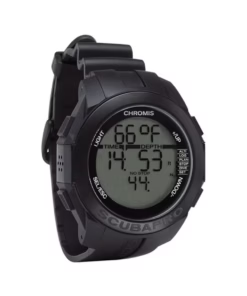
Scubapro Chromis Dive Computer
Mares Icon HD 4.0 Black Edition Dive Computer
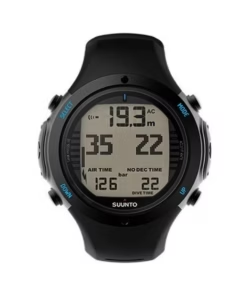
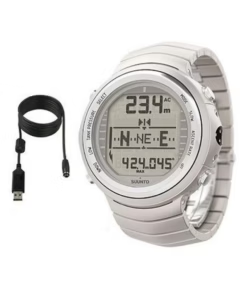
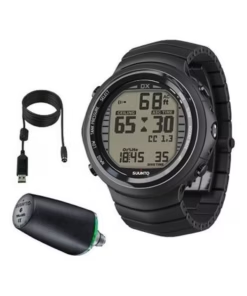
Suunto D4i Dive Computer - with USB

✓  Free Shipping Over RM150|✓  Manufacturing Defect Exchange Guaranteed|✓  Expert Dive Advice Before & After Purchase|✓  100% Authentic Equipment Every Item

Filter By

Price Range


RM 8 RM 4,896

Filter By

Sub Categories


Filter By

Brands


Showing 1–20 of 47 products
Sort:

RM1,076.00
RM665.00
RM550.00
RM2,154.00
RM1,300.00
RM360.00
RM264.00

Dive Computers

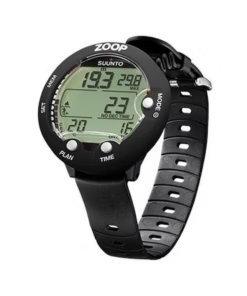
Suunto Zoop without USB

RM299.00
RM4,336.00
RM40.00
RM460.00
RM14.00
RM170.00

Expert Advice

Your NDL on Your Wrist

Wrist computers eliminate the need to read console instruments — all your critical dive data is a glance away. Air integration, digital compasses and full nitrox modes come standard on modern wrist units.

Ask About Wrist Dive Computers

Air Integration

Wireless Air Integration in Wrist Computers: How It Works

A wireless transmitter in the first stage HP port broadcasts tank pressure to the wrist computer. The computer displays remaining pressure, SAC rate, and estimated time remaining alongside NDL data.

Multi-Gas

Wrist Computers for Nitrox and Multi-Gas Diving

Nitrox-enabled wrist computers allow you to set oxygen percentage for enriched air dives, extending no-decompression limits on repetitive reef dives in Malaysia where 3+ dives per day is standard.

Battery

Wrist Computer Battery Life: What to Check Before a Dive Trip

Most wrist computers show a battery indicator. Replace or recharge before any dive trip — not mid-trip. Carry the correct replacement battery and o-ring kit for trips longer than 3 days.

Logging

Connecting Your Wrist Computer to a Dive Log App

Most modern wrist computers connect via Bluetooth or USB to apps like Subsurface or manufacturer apps. Log every dive including gas mix, temperature, and visibility notes immediately after surfacing.

You Might Also Like

Recommended Products

Hand-picked products based on all categories

Price range: RM199.00 through RM219.00
RM396.00

FAQ

Frequently Asked Questions

Everything you need to know before making a purchase

What display technology reads most clearly in Malaysia's bright midday surface conditions?
High-contrast positive-display LCD screens - dark digits on a light background - are significantly more readable in direct Malaysian midday sun than negative displays with light figures on a dark background. Transflective LCD technology uses ambient light to enhance the display rather than being washed out by it, which is the most practical technology for Malaysian dive boats where the computer is reviewed on a bright open deck before each descent. OLED displays offer excellent contrast in low light for night dives but can wash out in direct tropical sunlight.
What wrist strap material holds up best through a full Malaysian liveaboard week?
Silicone straps are the standard for dive computer wrist straps in saltwater environments - they resist salt, sweat, and the repeated wet-dry cycles of a five-day Malaysian liveaboard without degrading. Natural rubber straps show surface tackiness and cracking within a few seasons of regular saltwater use. Titanium and stainless steel bracelet straps are durable but heavier and can cause skin irritation on wrists that are repeatedly wetted and dried through three to four daily dives in tropical heat.
How should I configure the backlight for night diving at Malaysian resort sites?
Motion-activated backlight that triggers with a wrist rotation is adequate for daytime dives where depth and NDL are referenced periodically. For night dives at Malaysian sites like Mabul's night dive corridors - where simultaneously managing a torch, camera, and ongoing NDL monitoring is the norm - a persistent backlight mode that stays on throughout the dive is the more practical setting. Check battery drain in persistent mode before a trip with multiple consecutive night dives, as battery life is significantly reduced.
Is air integration on a wrist computer worth it for Malaysian diving?
Air-integrated wrist computers display tank pressure alongside depth and NDL on one unit, removing the need to consult a separate pressure gauge and enabling the computer to calculate real-time air-time-remaining based on actual breathing rate. The practical benefit is most tangible during complex multi-level dives at Malaysian wreck sites where tracking gas and NDL simultaneously on one display reduces cognitive load. The trade-off is the additional maintenance of a wireless transmitter - rinsing the O-ring groove after every saltwater dive.
Can a wrist dive computer track freediving sessions separately from scuba dive logs?
Many current wrist computers include a dedicated freediving mode that records breath-hold profiles with separate surface interval tracking, independent from the scuba dive log. This suits Malaysian divers who mix scuba liveaboard schedules with recreational freediving sessions during surface intervals or on dedicated freediving days at sites like Tunku Abdul Rahman Marine Park in Sabah. Residual nitrogen from earlier scuba dives remains in the tissues and is not reset by switching to freediving mode - standard post-scuba surface intervals still apply.
What conservatism level is appropriate for repetitive reef diving across a Malaysian dive week?
Medium conservatism on most wrist computer algorithms provides a practical balance for Malaysian multi-dive days - it shortens NDL relative to the algorithm's baseline but not so severely that afternoon dives become impractically brief. Divers who are older, less fit, or planning dehydrating surface activities between dives benefit from higher conservatism. Ending each dive with at least 5 minutes of NDL remaining, regardless of computer setting, adds a behaviour-level safety buffer beyond what the algorithm itself provides.
What display technology reads most clearly in Malaysia's bright midday surface conditions?
High-contrast positive-display LCD screens u2014 dark digits on a light background u2014 are significantly more readable in direct Malaysian midday sun than negative displays with light figures on a dark background. Transflective LCD technology uses ambient light to enhance the display rather than being washed out by it, which is the most practical technology for Malaysian dive boats where the computer is reviewed on a bright open deck before each descent. OLED displays offer excellent contrast in low light for night dives but can wash out in direct tropical sunlight.
What wrist strap material holds up best through a full Malaysian liveaboard week?
Silicone straps are the standard for dive computer wrist straps in saltwater environments u2014 they resist salt, sweat, and the repeated wet-dry cycles of a five-day Malaysian liveaboard without degrading. Natural rubber straps show surface tackiness and cracking within a few seasons of regular saltwater use. Titanium and stainless steel bracelet straps are durable but heavier and can cause skin irritation on wrists that are repeatedly wetted and dried through three to four daily dives in tropical heat.
How should I configure the backlight for night diving at Malaysian resort sites?
Motion-activated backlight that triggers with a wrist rotation is adequate for daytime dives where depth and NDL are referenced periodically. For night dives at Malaysian sites like Mabul's night dive corridors u2014 where simultaneously managing a torch, camera, and ongoing NDL monitoring is the norm u2014 a persistent backlight mode that stays on throughout the dive is the more practical setting. Check battery drain in persistent mode before a trip with multiple consecutive night dives, as battery life is significantly reduced.
Is air integration on a wrist computer worth it for Malaysian diving?
Air-integrated wrist computers display tank pressure alongside depth and NDL on one unit, removing the need to consult a separate pressure gauge and enabling the computer to calculate real-time air-time-remaining based on actual breathing rate. The practical benefit is most tangible during complex multi-level dives at Malaysian wreck sites where tracking gas and NDL simultaneously on one display reduces cognitive load. The trade-off is the additional maintenance of a wireless transmitter u2014 rinsing the O-ring groove after every saltwater dive.
Can a wrist dive computer track freediving sessions separately from scuba dive logs?
Many current wrist computers include a dedicated freediving mode that records breath-hold profiles with separate surface interval tracking, independent from the scuba dive log. This suits Malaysian divers who mix scuba liveaboard schedules with recreational freediving sessions during surface intervals or on dedicated freediving days at sites like Tunku Abdul Rahman Marine Park in Sabah. Residual nitrogen from earlier scuba dives remains in the tissues and is not reset by switching to freediving mode u2014 standard post-scuba surface intervals still apply.
What conservatism level is appropriate for repetitive reef diving across a Malaysian dive week?
Medium conservatism on most wrist computer algorithms provides a practical balance for Malaysian multi-dive days u2014 it shortens NDL relative to the algorithm's baseline but not so severely that afternoon dives become impractically brief. Divers who are older, less fit, or planning dehydrating surface activities between dives benefit from higher conservatism. Ending each dive with at least 5 minutes of NDL remaining, regardless of computer setting, adds a behaviour-level safety buffer beyond what the algorithm itself provides.