HomeShopApparel › Vests

Vests

Snorkelling vests and surface buoyancy aids for guests, non-swimmers and snorkelling tours where participants need visible floatation without the bulk of a full BCD. Also practical as a precaution on open-water family snorkelling trips at Malaysian beach resort areas.

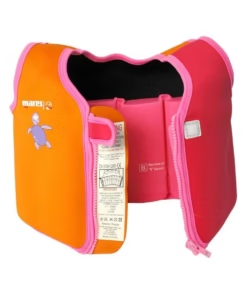
Mares Floating Jacket Bundle
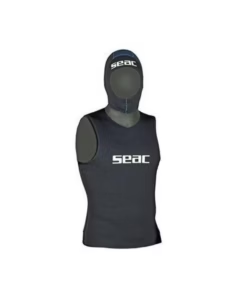
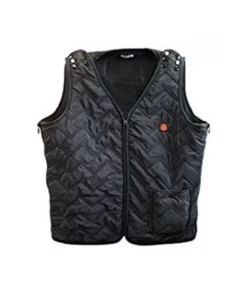
Mares FD Soft Shell Body Warmer
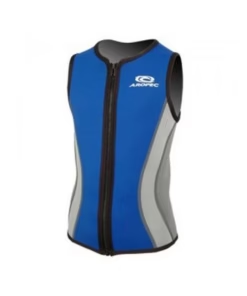
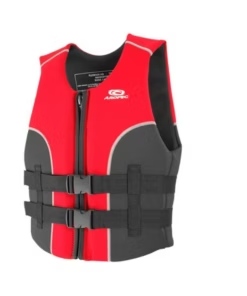
Aropec Saver Adult Neoprene/NBR Life Vest - 2mm

✓  Free Shipping Over RM150|✓  Manufacturing Defect Exchange Guaranteed|✓  Expert Dive Advice Before & After Purchase|✓  100% Authentic Equipment Every Item

Filter By

Price Range


RM 48 RM 552

Filter By

Sub Categories


Filter By

Brands


Showing 1–12 of 12 products
Sort:

RM204.00
RM332.00
RM481.00
RM48.00
RM180.00
RM180.00
RM552.00

Expert Advice

Surface Buoyancy for Open Water Swimmers

Buoyancy vests and surface vests provide positive flotation for swimmers, snorkellers, and children at the surface. A lightweight foam vest adds safety during surface swims at dive sites and resort beaches across Malaysia.

Ask About Surface Buoyancy

Standards

Buoyancy Aid Standards for Open Water Swimming and Snorkelling

Snorkelling vests provide limited positive buoyancy — enough to keep a non-swimmer at the surface but not rated as full personal flotation devices. They're categorised as buoyancy aids, not life jackets. Know the limitation before use.

Children

Snorkel Vests for Children at Malaysian Resort Beaches

Children's snorkel vests provide reassuring surface buoyancy for young swimmers exploring Malaysian resort reef areas. Fit must be snug without restricting movement — a loose vest can ride up and restrict breathing if a child is face-down in the water.

Inflation

Manual vs Oral Inflation in Snorkel Vests

Oral inflation vests allow you to add or release air while snorkelling — adjusting buoyancy at the surface. Some vests have a fixed buoyancy foam core that doesn't adjust. Variable inflation suits confident swimmers; foam core suits complete beginners.

Use Case

When a Snorkel Vest Is More Appropriate Than a BCD

A snorkel vest suits surface snorkelling, swimming, and non-diving water activities. They're not designed for scuba diving, freediving, or any underwater activity where buoyancy must be actively controlled. For any form of diving, use a rated BCD.

You Might Also Like

Recommended Products

Hand-picked products based on all categories

FAQ

Frequently Asked Questions

Everything you need to know before making a purchase

What type of vest do Malaysian divers typically wear for surface intervals?
Lightweight lycra or thin neoprene vests (1u20132mm) are the most common surface interval garment worn by divers at Malaysian resorts during surface intervals. They provide UV protection, minimal thermal comfort, and an extra layer against BCD harness chafe without adding meaningful bulk or weight to your luggage. On liveaboards out of Semporna, a thin vest worn over a rashguard is sufficient for even a three-night trip.
Is a neoprene vest worth bringing for night dives in Malaysian waters?
Water temperature in Malaysian dive sites ranges from 27u201330u00b0C year-round at recreational depths. A 1u20132mm neoprene vest over a rashguard or alone provides mild core insulation that prevents chill-induced fatigue during 60+ minute night dives. If you are already wearing a 3mm shorty or full suit, an additional vest is unnecessary. Divers running thin on bottom time due to cold should check their core temperature management before extending bottom time.
Do vests protect against BCD harness chafe on long liveaboard trips?
Yes u2014 this is the primary functional reason experienced liveaboard divers bring a thin vest. Three or four dives per day over a week at a site like Layang-Layang means the BCD shoulder straps and waistband contact the same skin areas repeatedly. A fitted lycra or thin neoprene vest distributes this contact force and eliminates skin abrasion. A vest is also more comfortable than a full-length wetsuit under a BCD if you find 3mm too warm at the surface.
Can I use a standard gym or compression vest for diving in Malaysia?
Compression vests designed for sports use (like running or cycling tops) can substitute in a pinch, but they typically lack UPF ratings, are made from materials that degrade faster under saltwater, and dry more slowly than dive-specific lycra. For a one-off trip where you already own compression athletic wear, it is practical. For regular dive travel, a dive-specific vest pays back its modest extra cost in durability and UV protection performance.
What is the difference between a buoyancy aid vest and a thermal protection vest for diving?
Buoyancy aid vests u2014 like those worn by kayakers or boat passengers u2014 provide flotation but are not rated as life jackets for open water survival. They are not used while diving. Thermal protection vests are non-buoyant insulating garments worn under or instead of a wetsuit. The two categories share the word 'vest' but serve completely different functions. When purchasing from a dive retailer, the listing will specify whether the item is a thermal vest or a personal flotation device.
Are vests sold on Barter Maison suitable for freediving as well as scuba diving?
Thin vests that provide thermal protection without restricting movement are popular among freedivers who cannot wear thick neoprene at depth u2014 the buoyancy at the surface creates resistance during the duck dive. A 1mm or 1.5mm neoprene vest or lycra vest provides some warmth without the hydrodynamic resistance of a full 3mm wetsuit for freediving. Many freedivers at Perhentian and Tioman wear a vest-only setup for shallow dives in warmer months.