
Sunscreen
Best Reef Safe Sunscreen Malaysia 2026: iLab Mineral & Safe Sea for Divers
If you’re diving Malaysian reefs, the sunscreen you wear before entering the water affects more than your skin. Oxybenzone and octinoxate — two of the most common chemical UV filters — are toxic to coral larvae and have been linked to reef bleaching across Southeast Asia. Malaysia’s best dive sites, from Sipadan’s walls to Tioman’s bommies and Perhentian’s turtle grounds, depend on healthy coral. Choosing the right reef safe sunscreen Malaysia divers can trust protects both you and the reef. This guide covers what to look for, the best products available in Malaysia, and how to use them correctly as a diver.
What Makes a Sunscreen Reef Safe?
A genuine reef safe sunscreen uses only mineral UV filters — zinc oxide and/or titanium dioxide — instead of chemical filters. Mineral filters physically block UV rays by sitting on top of the skin. They don’t dissolve readily into the water column, and they don’t carry the same toxicity risk to coral polyps, fish larvae, and marine invertebrates that chemical filters do.
Filters to avoid when buying sunscreen for diving or snorkelling in Malaysia:
- Oxybenzone (benzophenone-3) — causes coral bleaching and DNA damage in coral larvae at very low concentrations
- Octinoxate (ethylhexyl methoxycinnamate) — banned in Hawaii, Palau, and several other dive destinations for reef toxicity
- Homosalate, octocrylene, avobenzone — chemical filters with emerging evidence of marine harm
What to look for instead:
- Mineral-based — zinc oxide or titanium dioxide as the only UV filters
- Broad-spectrum SPF 50+ — tropical sun at sea level in Malaysia is intense year-round
- Water-resistant — rated for 40 or 80 minutes in water
- Non-nano zinc oxide — larger particle size is less likely to be ingested by coral filter feeders
Best Reef Safe Sunscreen Malaysia: iLab & Safe Sea
Barter Maison stocks two brands of reef safe sunscreen in Malaysia: iLab, a Malaysian mineral sunscreen brand, and Safe Sea, an Israeli brand with unique jellyfish-sting protection. Both are mineral-based, oxybenzone-free, and suited to tropical water conditions.
iLab Sunscreen Malaysia — Best Mineral Sunscreen for Divers

iLab is a Malaysian brand formulated specifically for active outdoor use in tropical conditions. The Max-Spectrum range uses 100% mineral UV filters — zinc oxide and titanium dioxide — and is free from oxybenzone, octinoxate, and parabens. The formula is engineered to be lightweight and non-greasy, which matters for divers: a thick or oily sunscreen applied near the mask seal will contaminate the silicone skirt, cause fogging, and break the mask’s watertight seal.
The iLab range available at Barter Maison:
- iLab Mineral Sunscreen Stick SPF50+ — Tan (RM79). Solid stick format, no white cast, clean application. Best for face, nose, ears, and the back of the neck — areas exposed above the wetsuit. Easy to reapply on a dive boat without mess.
- iLab Mineral Sunscreen Stick SPF50+ — Light Beige 13.9g (RM95). Tinted stick for a more natural finish on fair to medium skin. Compact enough to carry in a BCD pocket or dive bag.
- iLab Mineral Sunscreen Stick SPF50+ — Beige 30g (RM153). Larger format for extended trips — liveaboards or multi-day dive holidays where you’ll be applying and reapplying daily.
- iLab Invisible Sunscreen Face & Body Lotion SPF50+ (RM129). No-white-cast lotion for full body coverage before putting on a wetsuit or rashguard. Absorbs quickly without leaving residue on neoprene.
- iLab Sunscreen Spray SPF50+ 80ml (RM120). Spray format for fast application on arms and legs. Practical for reapplication on a moving dive boat.
iLab is made in Malaysia and sold directly by Barter Maison — authorised stock, not a grey market reseller. If you search for iLab sunscreen Malaysia, this is the primary authorised outlet outside of the iLab brand’s own channels.
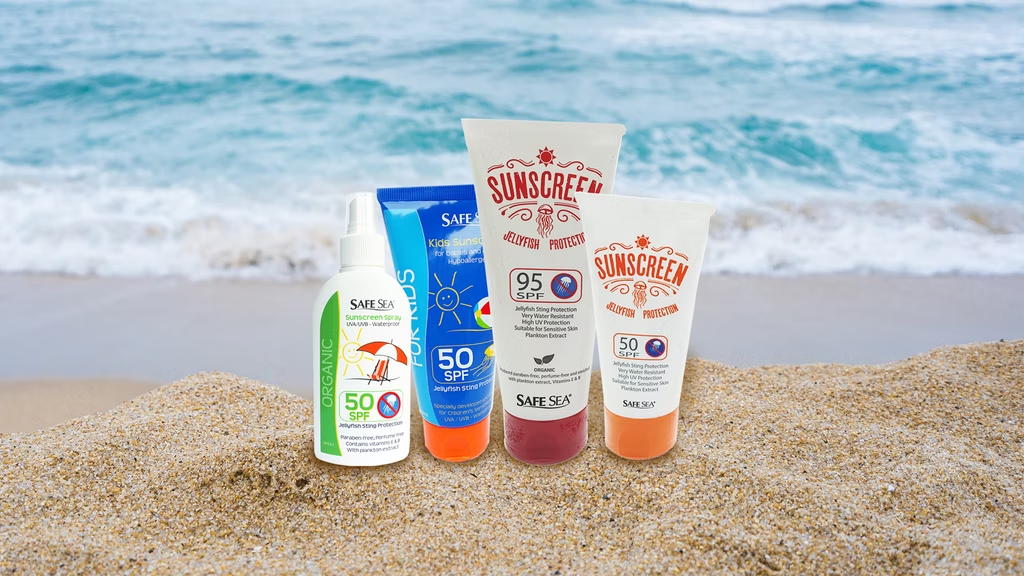
Safe Sea Jellyfish Protection Sunscreen — Best for Snorkelling & Shallow Water

Safe Sea is an Israeli sunscreen brand with a unique dual function: broad-spectrum UV protection combined with an active ingredient that inhibits jellyfish nematocysts (stinging cells) from firing on contact with skin. If you’re snorkelling at Redang, Lang Tengah, or the Perhentian Islands during jellyfish season, Safe Sea is the only sunscreen that offers passive protection against stings while also protecting the reef.
- Safe Sea Jellyfish Protection SPF50 — 50ml (RM53). Travel-size. Fits in a carry-on and covers a weekend snorkelling trip. Good starting option if you want to try the brand.
- Safe Sea Jellyfish Protection SPF95 — 100ml (RM89). High-factor for extended surface time or open-water snorkelling in strong midday sun. SPF 95 is meaningful if you burn easily or spend 3–4 hours in the water.
- Safe Sea Organic SPF50 Spray — 100ml (RM89). Spray format for fast full-body coverage. Organic-certified.
iLab vs Safe Sea: Which Should You Buy?
Both are reef safe and suitable for Malaysian dive conditions. The choice depends on how you dive:
- Choose iLab if you’re scuba diving (below the surface), want a no-white-cast finish, prefer a Malaysian-made brand, or need multiple formats (stick for face, lotion for body, spray for quick reapplication).
- Choose Safe Sea if you’re snorkelling or freediving in shallow water where jellyfish contact is a real possibility — Redang and Lang Tengah both have periodic jellyfish blooms between March and October.
Many divers who do both scuba and snorkelling carry iLab for diving days and Safe Sea for snorkelling days. Both can be ordered together with free shipping over RM500.
How to Use Sunscreen Correctly as a Diver
Even the best reef safe sunscreen won’t work if applied incorrectly — and applied in the wrong place, it will actively ruin your dive by fogging your mask.
- Apply 20–30 minutes before entering the water — mineral sunscreens need time to bind to skin before water exposure. Don’t apply on the boat and jump straight in.
- Avoid the mask seal zone entirely — forehead, temples, nose bridge, and cheeks where the skirt sits. Any product here will transfer to the silicone and cause fogging or leak. Apply sunscreen first, let it dry, then fit your mask.
- Use a stick for the face — precise application, no drips into eyes, no contamination of the mask skirt. The iLab mineral sticks are ideal for this.
- Cover the back of the neck and ears — areas above the wetsuit that are often overlooked and get full sun on a surface interval.
- Reapply after every dive or every 80 minutes — water-resistant formulas break down with repeated water entry, mask removal, and towel drying.
- For spray formats: spray onto hands first — never spray directly onto your face. Apply with hands to avoid inhaling propellant.
Frequently Asked Questions
Is iLab sunscreen actually reef safe?
Yes. iLab’s Max-Spectrum range uses only mineral UV filters (zinc oxide and titanium dioxide) and contains no oxybenzone, octinoxate, or other chemical UV filters associated with coral reef damage. It meets the criteria for reef-safe certification used in jurisdictions like Hawaii and Palau.
Can I use mineral sunscreen with a scuba mask?
Yes, but placement matters. Apply sunscreen to all exposed skin and let it fully absorb (10–15 minutes) before putting on your mask. Avoid the mask seal area — forehead, temples, nose, and cheekbones. If any product transfers to the silicone skirt, rinse the skirt with fresh water before putting the mask on.
What SPF do I need for diving in Malaysia?
SPF 50+ is the minimum for tropical conditions. Malaysia sits close to the equator — UV index regularly reaches 11–13 (extreme) between 10am and 3pm at sea level. Higher SPF matters most for snorkellers and freedivers who spend significant time at or near the surface. Scuba divers below 5m receive minimal UV exposure, but surface intervals can be long on multi-dive days.
Where can I buy reef safe sunscreen in Malaysia?
Barter Maison stocks both the full iLab range and Safe Sea sunscreens with free shipping on orders over RM500. Both brands are authorised stock — not grey-market imports. iLab and Safe Sea can be ordered alongside dive gear (fins, masks, wetsuits) in a single order.

This is very helpful! I never realise normal sunscreen can hurt the reefs, so now I want to switch to mineral type before my next trip to Perhentian.
I’m glad to see such a detailed guide about reef safe sunscreen in Malaysia! It’s so important for divers and snorkellers here to consider the impact of their products on our precious coral reefs. The breakdown of what makes a sunscreen truly reef safe, especially with the science behind why certain ingredients are harmful to corals, is super useful.
I also appreciate the comparison between iLab and Safe Sea, since many of us do both diving and snorkelling when we travel. The tips about how to apply sunscreen to avoid mask fog and contamination are things you rarely see in normal guides—really shows a deep understanding of actual diver life! Props to supporting local brands too. I’ll definitely be choosing mineral-based next dive trip.
This all sounds good in theory, but are these mineral sunscreens really as effective for sun protection as the normal chemical types? I’ve tried some mineral ones before and always found them greasy or they leave a white cast, which isn’t comfortable when diving. How do we know they really work the same under harsh Malaysia sun?
Great question! I used to worry about the white cast too, but iLab’s stick is specially made to blend better for different skin tones and isn’t greasy at all. As for protection, as long as it says “SPF 50+” and is broad spectrum, it blocks a similar range of UV as chemical types. I’ve spent hours on dive boats with no burn using mineral-only sunscreen.
Thanks for sharing your experience, Amanda. I’m still not convinced until I try it during a long snorkelling session. Hope more people can post long term results here!
I second Amanda—used iLab on my Perhentian trip in March and it worked well, no sunburn even after two dives and a snorkel. The non-greasy part is true, but you must reapply as stated.
I agree it’s frustrating if mineral sunscreen leaves marks, especially on dark skin. Has anyone here tried the Safe Sea sprays? Do they really go on clear or still leave some residue?
I used Safe Sea spray before at Redang, and it didn’t leave much residue, just make sure to rub it in properly. Still, some stickiness compared to chemical, but worth for peace of mind for the reefs.
Moderator here: Let’s keep the focus on the effectiveness and eco-impact of reef safe sunscreens discussed in the blog. Please share your direct experience with iLab or Safe Sea, and avoid unrelated sunscreen brands or off-topic debates. Thanks!
Thanks, Megan! Can we also discuss application methods that reduce contamination of dive gear? Always struggled to keep my mask fog-free.
Thanks for sharing about the mask seal area tips! Last time my mask always fogged up, now I know why. Going to try the iLab stick next dive.
Is Safe Sea sunscreen suitable for kids who want to snorkel in shallow water? I worry about jellyfish and sunburn for my children.
Yes, Safe Sea sunscreen is a good choice for children who snorkel, as it provides both UV protection and helps prevent jellyfish stings. Just make sure to apply it on all exposed skin about 20–30 minutes before they enter the water for best results.